Balloon Sinuplasty: Pros, Cons, and Patient Reviews—Is It Worth It?
If you deal with constant congestion, facial pressure, post-nasal drip, or recurring sinus infections, you’ve probably seen balloon sinuplasty come up as a “less invasive” option than traditional sinus surgery. The big question is simple: does it actually work—and is it the right fit for your type of sinus problem?
Below is a patient-friendly, evidence-based overview of the pros, cons, recovery, and what people commonly report in balloon sinuplasty reviews—so you can make a more confident decision (and avoid treating the wrong problem with the wrong procedure).
Key Takeaways (Quick Read)
- Balloon sinuplasty can be “worth it” for the right candidates—especially those with chronic sinusitis and documented blocked sinus drainage pathways.
- Many studies report ~80–90% meaningful symptom improvement in appropriately selected patients, with low complication rates reported in published summaries. Source: https://www.ncbi.nlm.nih.gov/pmc/articles/PMC3738804/
- Recovery is often faster than traditional sinus surgery, but results can be mixed if symptoms aren’t primarily caused by sinus blockage.
- The best outcomes tend to come from accurate diagnosis + good procedure selection + strong aftercare (because inflammation can come back even after an opening is widened).
If you’re exploring options locally, you can learn more about balloon sinuplasty at Sleep and Sinus Centers of Georgia here: https://sleepandsinuscenters.com/balloon-sinuplasty
Quick Answer—Is Balloon Sinuplasty Worth It?
When it’s “worth it” (most common winning scenario)
In general, balloon sinuplasty is worth it when:
- You have chronic sinusitis symptoms that haven’t improved with appropriate medical therapy.
- An exam and imaging (often CT) show blocked sinus drainage pathways that can realistically be opened with balloon dilation.
- Your expectations are realistic: the goal is meaningful improvement (fewer infections, less pressure, better drainage and airflow)—not necessarily “perfect sinuses forever.”
A helpful way to think about it: balloon dilation is like gently widening a “pinched” doorway so traffic can move again. If the doorway is truly the main bottleneck, opening it can make a big difference. If the issue is more like “smoke in the room” (ongoing inflammation from allergies, irritants, or another condition), widening the doorway may not solve the underlying cause.
In appropriately selected patients, published research summaries often report ~80–90% meaningful symptom improvement, with complication rates that are generally low in experienced hands. Source: https://www.ncbi.nlm.nih.gov/pmc/articles/PMC3738804/
When it might not be worth it
It may be less likely to help if:
- You have more severe or complex sinus disease that requires tissue removal to fully open the sinus pathways.
- You have large nasal polyps or patterns of chronic rhinosinusitis that usually respond better to other targeted treatments.
- Your symptoms are being driven primarily by a non-sinus cause (for example, migraine, TMJ, or nerve-related facial pain), even if they “feel like” sinus pressure.
One practical example: some people have “sinus headaches” that line up more closely with migraine patterns—pressure, light sensitivity, weather triggers—yet their CT shows minimal sinus blockage. In that situation, balloon dilation may not match the problem you’re actually trying to fix.
For a deeper overview of symptoms, diagnosis, and when procedures make sense, see our chronic sinusitis guide: https://sleepandsinuscenters.com/chronic-sinusitis
Bottom line: it’s often worth it when imaging confirms obstruction and your symptoms match true sinus disease.

What Is Balloon Sinuplasty (And How Is It Different From “Sinus Surgery”)?
Simple explanation of the procedure
Balloon sinuplasty is a minimally invasive technique that widens narrowed sinus drainage pathways. A small balloon is guided into the natural sinus opening and gently inflated to dilate the passage, helping mucus drain more effectively. Because it’s tissue-sparing, it typically involves less cutting than traditional approaches.
If you’ve ever had your ears “pop” after pressure changes, the concept is similar: restore a normal opening so pressure and drainage can equalize more naturally—done in a controlled, targeted way in the sinuses. Learn more about the procedure itself here: https://sleepandsinuscenters.com/balloon-sinuplasty
Common sinuses treated
- Frontal sinuses (forehead area)
- Maxillary sinuses (cheek area)
- Sphenoid sinuses (deep behind the nose)
Balloon sinuplasty vs traditional endoscopic sinus surgery (high-level)
Balloon sinuplasty
- Approach: Dilates the natural opening.
- Invasiveness: Typically less tissue disruption.
- Best for: Documented narrowing/obstruction in select sinuses.
- Downtime: Often shorter.
- Key to success: Correct diagnosis + good candidate selection.
Traditional endoscopic sinus surgery (ESS)
- Approach: Opens sinuses by removing targeted tissue/bone as needed.
- Invasiveness: Often more extensive, depending on disease severity.
- Best for: More complex disease, polyps, extensive inflammation, anatomy issues.
- Downtime: Often longer (varies by extent).
- Key to success: Correct diagnosis + appropriate surgical plan.
Long-term outcomes for either approach depend heavily on the underlying diagnosis and whether ongoing inflammation (like allergies) is also addressed. Source: https://www.ncbi.nlm.nih.gov/pmc/articles/PMC3738804/
Choose the technique that matches your diagnosis, anatomy, and goals—not just the one that sounds “less invasive.”

Symptoms That May Improve After Balloon Sinuplasty
Classic chronic sinusitis symptoms
Many people seek balloon dilation due to:
- Facial pressure or pain
- Nasal congestion and reduced airflow
- Thick drainage or post-nasal drip
- Recurrent sinus infections
- Reduced sense of smell (in some cases)
A common “good candidate” pattern is: symptoms linger for months, treatments help only temporarily, and imaging shows one or more sinus drainage pathways that stay narrowed or blocked.
“Surprising” symptoms some people report improving
In patient discussions and general balloon sinuplasty reviews, some people also mention:
- Ear pressure or fullness (often linked to nasal/sinus inflammation)
- Pressure that seems worse with weather changes
Important note: not all headaches or facial pressure are sinus-related. That’s one reason objective evaluation matters before deciding on any procedure—because “pressure” can come from sinuses, but also from migraine and other causes.
Improvement is most consistent when symptoms truly stem from blocked sinus drainage pathways.
What Causes Chronic Sinus Problems (And Why Balloon Sinuplasty Helps Some People)
The core issue: poor sinus drainage
Many chronic sinus problems come down to a cycle:
1) Inflammation causes narrowing
2) Drainage worsens
3) Mucus becomes trapped
4) Pressure and/or infections occur
5) Inflammation continues
Balloon dilation can help break that cycle when the main problem is a physically narrowed drainage pathway.
Contributing causes and triggers
- Allergies and chronic rhinitis
- Recurrent viral infections
- Structural issues (like a deviated septum or naturally narrow drainage pathways)
- Environmental irritants (smoke, pollution)
It’s also common to have more than one contributor at once—like narrow anatomy and allergies. That’s why some people do great after balloon dilation but still need ongoing allergy control to keep symptoms from creeping back.
Why diagnosis matters before any procedure
Symptoms alone can be misleading. A thorough evaluation helps clarify whether the issue is truly sinus blockage or something that mimics it—so the recommended treatment matches the real cause. Source: https://www.ncbi.nlm.nih.gov/pmc/articles/PMC3738804/
Treat the cause you actually have—confirmed by exam and imaging—to get the best odds of lasting relief.
Pros of Balloon Sinuplasty (Patient-Friendly Benefits)
1) Minimally invasive approach
A key benefit of balloon sinuplasty is that it can open sinus pathways with less tissue removal than more traditional surgical methods. In published literature, complication rates are generally reported as low in appropriately selected patients. Source: https://www.ncbi.nlm.nih.gov/pmc/articles/PMC3738804/
2) Quick recovery time
Many patients describe a relatively short recovery time, often returning to routine activities quickly (though individual experiences vary based on anatomy, number of sinuses treated, and anesthesia approach).
3) High satisfaction in the right candidates
When the problem is truly obstruction-driven chronic sinusitis and the right sinuses are treated, satisfaction tends to be high—one reason people searching “is balloon sinuplasty worth it” often see many positive stories alongside the mixed ones.
The biggest advantage is targeted relief with a shorter, often smoother recovery when you’re a good candidate.

Cons of Balloon Sinuplasty (Limitations to Know Up Front)
1) Not for every type of sinus disease
Some sinus conditions need additional treatments (medical or surgical), especially when disease is widespread or driven by factors beyond simple narrowing.
2) Results vary—some people report little improvement
If symptoms are coming from allergies, migraine/TMJ patterns, reflux irritation, or generalized nasal inflammation without true blockage, dilation may not address the root cause.
3) Symptom recurrence can happen
Even after a successful procedure, ongoing inflammation can bring symptoms back. Many people still need maintenance strategies (like allergy control or rinses) to reduce recurrence.
Think of balloon dilation as improving the plumbing—not turning off inflammation by itself.
Balloon Sinuplasty Risks and Complications (What Patients Should Know)
Common, usually mild side effects
- Nasal soreness or pressure
- Mild bleeding
- Temporary congestion for several days
Less common risks
- Infection
- No improvement or partial improvement
- Recurrence over time
Serious complications are generally described as uncommon in published summaries, particularly with appropriate evaluation and technique. Source: https://www.ncbi.nlm.nih.gov/pmc/articles/PMC3738804/
Factors that influence risk
- Provider experience and proper technique
- Correct diagnosis and imaging confirmation
- Smoking status and uncontrolled inflammation (like allergies)
If you’re risk-averse, one practical step is making sure the recommendation is tied to objective findings—i.e., an explanation of which sinus openings are narrowed and how dilation is expected to help your specific symptoms.
Understanding your personalized risk profile—and how your provider plans to reduce it—matters as much as the procedure itself.
Balloon Sinuplasty Reviews—What Real Patients Commonly Say (The Good, The Bad, and The Mixed)
Positive themes
- Improved nasal breathing
- Less facial pressure and fewer flare-ups
- Fewer “sinus infections” and less antibiotic use
- Better sleep and daytime energy (often as a secondary benefit)
You’ll often see simple, practical wins: “I stopped waking up congested,” or “I didn’t need antibiotics every other month.” Those are the kinds of improvements many patients mean by “worth it.”
Mixed/negative themes
- Discomfort during or after the procedure (varies widely)
- Improvement that’s real but smaller than hoped
- No meaningful change (often tied to diagnosis mismatch)
- Rare anecdotal reports of worsened or different pressure sensations
Why experiences vary so much
- Different diagnoses all labeled as “sinus issues”
- Different sinuses treated (and different degrees of blockage)
- Coexisting conditions (allergies, migraine, TMJ, reflux)
- Different follow-up care and inflammation control
If you’d like to read experiences specific to Sleep and Sinus Centers of Georgia, see our patient testimonials: https://sleepandsinuscenters.com/balloon-sinuplasty-testimonials
Patient stories make the most sense when you compare them to your own diagnosis, anatomy, and goals.
Who Is a Good Candidate for Balloon Sinuplasty?
Signs you may be a good fit
- Chronic sinusitis symptoms that persist despite appropriate medical treatment
- CT and/or nasal endoscopy shows obstruction that dilation can address
- Recurrent acute infections with documented blockage
Who may not be a good fit
- Extensive nasal polyps
- Severe structural issues that need other procedures (for example, septum or turbinate work, or more extensive endoscopic surgery)
- Symptoms that don’t match objective sinus findings
Questions an ENT should answer before recommending it
- Which sinuses are blocked on my CT?
- What is the goal for me—fewer infections, less pressure, improved airflow, or all of the above?
- What are the alternatives if I’m not satisfied with the result?
If the plan isn’t specific, ask for a clearer link between findings → procedure → expected outcome.

What to Expect: Procedure, Recovery, and Aftercare
Before the procedure
Evaluation usually includes:
- Symptom history and prior treatments
- Nasal exam (sometimes nasal endoscopy)
- Imaging when needed
- Medication review (especially blood thinners and nasal medications)
Day of procedure—high level
Balloon dilation can be performed with local anesthesia or other anesthesia approaches depending on the plan. The balloon is positioned, inflated to open the pathway, then removed. The goal is to open the natural passage, allow drainage/airflow to normalize, then keep inflammation controlled during healing. For more details on our approach, visit: https://sleepandsinuscenters.com/balloon-sinuplasty
Recovery timeline (typical)
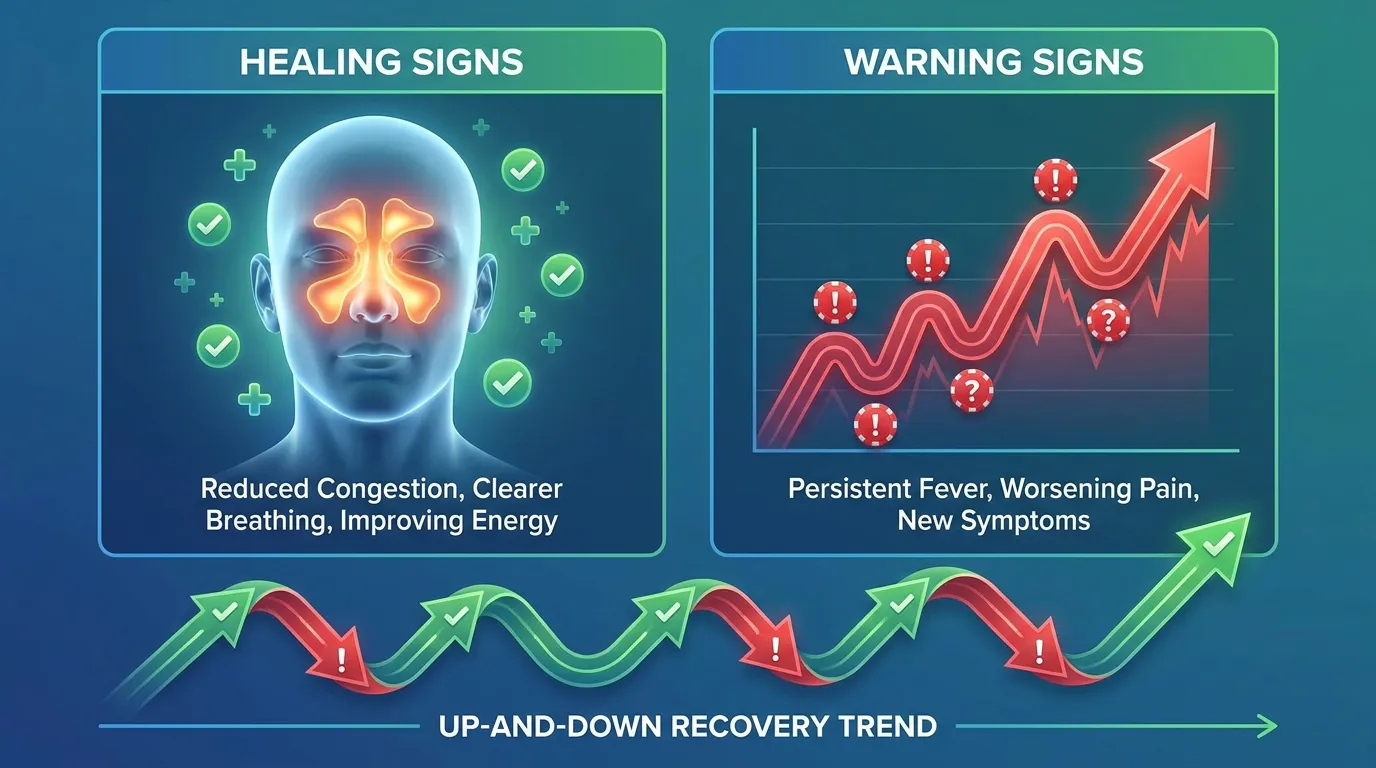
- First 24–48 hours: congestion, mild bleeding, pressure
- First week: gradual improvement; follow-up may include checking healing and gently clearing buildup if needed
- 1–6 weeks: continued healing; inflammation control matters for long-term comfort
Aftercare reminders (educational, not medical advice)
Many care plans include saline rinses and temporary activity adjustments. It’s also important to know what should prompt a call to the office—such as fever, heavy bleeding, severe worsening pain, or vision changes.
Good aftercare and inflammation control often determine how durable your results feel day to day.

Lifestyle Tips to Improve Results (And Reduce Recurrence)
- Manage inflammation triggers (especially allergies if relevant)
- Use sinus-friendly habits if recommended (hydration, humidity, nasal hygiene routines)
- Avoid smoking/vaping, which can worsen inflammation
- Seek re-evaluation if symptoms repeatedly return or if facial pain persists despite open sinuses (which can suggest a non-sinus cause)
Small daily habits can turn short-term relief into long-term control.
Alternatives to Balloon Sinuplasty (When “Less Invasive” Isn’t Enough)
Medical management options
- Saline rinses
- Intranasal steroid sprays
- Allergy management when appropriate
- Antibiotics only when clearly indicated
Procedural/surgical alternatives
- Endoscopic sinus surgery (ESS) for more complex disease patterns
- Septoplasty/turbinate reduction when anatomy is a major contributor
- Polyp-focused treatment plans when relevant
A thorough discussion of alternatives ensures the treatment plan matches your specific pattern of disease.
FAQs About Balloon Sinuplasty
What is the balloon sinuplasty success rate?
Many studies report ~80–90% of appropriately selected patients experience meaningful symptom improvement. Source: https://www.ncbi.nlm.nih.gov/pmc/articles/PMC3738804/
How long does balloon sinuplasty last?
Many people maintain relief long-term, but results can vary depending on ongoing inflammation, anatomy, and follow-through with medical management when needed.
Is balloon sinuplasty painful?
Discomfort varies by individual and anesthesia approach. Some people report pressure and soreness for a short period, while others describe a smoother experience.
What are balloon sinuplasty risks and complications?
Most commonly: temporary congestion, mild bleeding, soreness, infection risk, and the possibility of recurrence or limited improvement. Serious complications are generally uncommon in published summaries. Source: https://www.ncbi.nlm.nih.gov/pmc/articles/PMC3738804/
Can balloon sinuplasty fix nasal polyps?
Balloon dilation is typically not a standalone solution for large polyps, and other targeted treatments may be more appropriate depending on the situation.
Conclusion—How to Decide if Balloon Sinuplasty Is Right for You
A simple decision checklist
- Do I have objective sinus blockage on CT/endoscopy?
- Have I tried appropriate medical therapy first?
- Do my symptoms match sinus disease (vs. migraine/TMJ/allergy-only patterns)?
- Has my ENT explained realistic outcomes, tradeoffs, and alternatives?
If you’d like an evaluation focused on confirming the diagnosis and walking through personalized options, book an appointment here: https://sleepandsinuscenters.com/appointments
A precise diagnosis + the right procedure + consistent aftercare is the formula most likely to deliver lasting relief.
This article is for educational purposes only and is not medical advice. Please consult a qualified healthcare provider for diagnosis and treatment.
Don’t let allergies slow you down. Schedule a comprehensive ENT and allergy evaluation at Sleep and Sinus Centers of Georgia. We’re here to find your triggers and guide you toward lasting relief.