Balloon Sinuplasty for Mold Sinusitis Treatment: Benefits, Recovery, and Results
Many people search for Balloon Sinuplasty for Mold Sinusitis Treatment because their symptoms reliably flare in damp environments—older buildings, basements, musty bedrooms, or during long rainy stretches. Note: “Mold sinusitis” is not a formal medical diagnosis but a lay term people use for sinus symptoms triggered by mold exposure. The tricky part is that it can describe everything from allergy-driven inflammation to true fungal disease.
Below is a patient-friendly guide to what balloon sinuplasty can (and can’t) do, how candidacy is determined, what recovery is like, and what options may fit better when fungal disease is suspected. Individual assessment by a qualified clinician is essential because treatment is personalized.
Bottom line: The right procedure depends on the exact diagnosis behind your “mold-related” sinus symptoms.
Quick takeaway (for skimmers)
- Balloon sinuplasty can be an excellent option for selected patients with chronic rhinosinusitis (CRS) who haven’t improved with appropriate medical therapy. It works by gently dilating blocked sinus drainage pathways, typically with less tissue disruption and faster recovery than more traditional sinus surgery.
- Important limitation: Balloon dilation is generally not indicated—and is contraindicated in many cases—for fungal sinusitis or allergic fungal sinusitis (AFS), which are commonly listed as exclusions in clinical references. These conditions often require a different approach because material needs to be removed—not just a pathway widened. Sources: [1–4]
If you’re trying to figure out whether Balloon Sinuplasty for Mold Sinusitis Treatment makes sense for you, the key is clarifying what “mold sinusitis” really means in your case, and having a physician determine candidacy.
If fungal disease is suspected, balloon dilation is usually not the right tool.
What people mean by “mold sinusitis” (and why the wording matters)
Mold exposure vs. true fungal sinus infection
“Mold” can affect the nose and sinuses in more than one way, and those differences matter for procedure choice:
- Mold as an irritant or allergen: Breathing in spores can inflame the nasal lining, leading to swelling, congestion, and extra mucus—especially in people with allergies or asthma.
- Chronic sinusitis that flares around mold: Someone may have underlying chronic sinusitis (also called chronic rhinosinusitis/CRS) and notice symptoms spike after exposure. Learn more on our chronic sinusitis overview page: https://sleepandsinuscenters.com/chronic-sinusitis
- Allergic fungal sinusitis (AFS): A distinct diagnosis involving an allergic reaction to fungus in the sinuses, often with thick “allergic mucin,” nasal polyps, and characteristic findings on exam and CT imaging.
- Invasive fungal sinusitis: Rare but urgent, most concerning in people who are immunocompromised. This is not a “wait it out” situation.
For additional background, see our post on how mold exposure can trigger sinusitis: https://sleepandsinuscenters.com/blog/how-mold-exposure-can-trigger-sinusitis
Different “mold” scenarios call for different treatments—accurate diagnosis guides the plan.
Why the distinction changes the procedure recommendation
Balloon dilation is best studied for CRS where the main issue is narrowed or blocked drainage pathways—think of a sink that won’t drain because the pipe opening is pinched. In contrast, fungal conditions (especially AFS) often involve thick debris/mucin and/or polyps that need to be physically removed, not merely opened up.
That’s why balloon sinuplasty is frequently described as not appropriate—and often contraindicated—when AFS is suspected. Sources: [3–4]
If the problem is debris that must be cleared, opening the doorway alone won’t solve it.

Symptoms: when mold-related sinus problems may look like chronic sinusitis
Common symptoms patients report
Whether the trigger is mold, pollen, dust, or another irritant, CRS-type symptoms often include:
- Nasal congestion or obstruction
- Facial pressure or fullness
- Thick drainage and postnasal drip
- Reduced sense of smell
- Headache, fatigue, “brain fog”
- Cough (often worse at night)
A common pattern patients describe is: “I feel okay, then I clean out the basement, or spend time in a damp building, and everything clogs up for days.” That pattern can be consistent with allergies or CRS—but it doesn’t confirm fungal disease on its own.
Red flags that deserve urgent evaluation (not a wait-and-see situation)
Seek urgent medical attention if symptoms include:
- Swelling around the eye or vision changes
- High fever with severe headache or stiff neck
- Confusion or severe lethargy
- Black/dusky nasal tissue (rare, but concerning)
- Immunocompromised status plus rapidly worsening symptoms (raises concern for invasive fungal disease)
Similar symptoms can have very different causes—red flags should be assessed urgently.
Causes & triggers: how mold fits into chronic sinus inflammation
Why mold can worsen symptoms
Mold can contribute to sinus symptoms through:
- Allergic inflammation: Swelling increases mucus and narrows drainage pathways.
- Irritant effects: The nasal lining can become reactive and congested even without a true infection.
- Co-triggers: Symptoms may be amplified by dust mites, pet dander, pollen, smoke, and strong odors.
One practical way to think about this: mold doesn’t have to “infect” you to make you miserable. For many people, it’s enough to trigger inflammation that narrows the drainage openings the sinuses rely on. When that happens, pressure and congestion tend to snowball.
Structural or medical factors that keep symptoms going
Some people have ongoing symptoms because of factors that make drainage harder, such as:
- Naturally narrow sinus drainage pathways
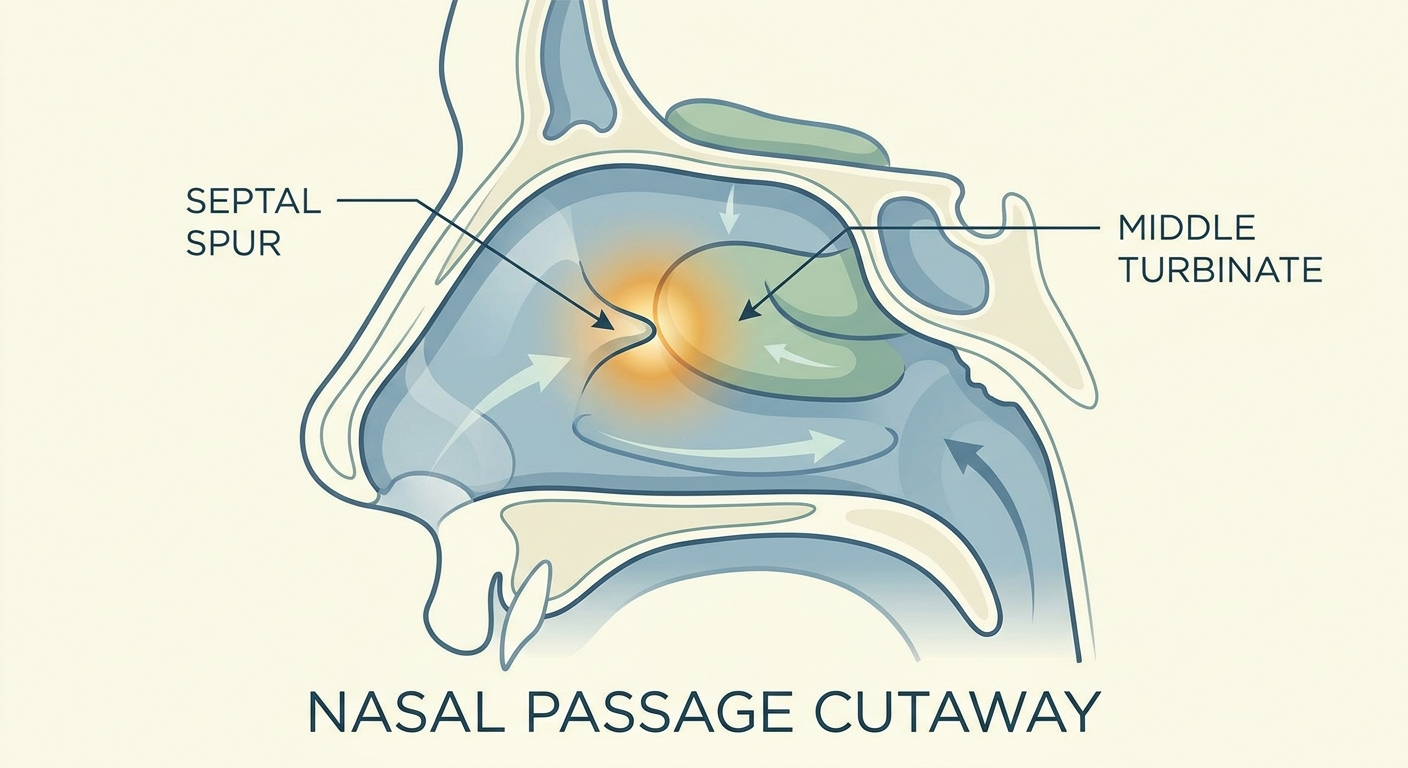
- Deviated septum or turbinate swelling
- Nasal polyps
- Reflux or chronic rhinitis patterns
- Immune and inflammatory factors (varies by patient)
Reducing triggers helps, but anatomy and inflammation patterns often need targeted care too.

Diagnosis: how ENTs determine whether balloon sinuplasty is appropriate
What an ENT evaluation usually includes
Because symptoms alone can’t reliably distinguish CRS from AFS, an ENT evaluation typically includes:
- Symptom history (CRS is typically diagnosed when symptoms last 12 or more weeks)
- Nasal exam, often with nasal endoscopy
- A sinus CT scan to map blockage patterns and inflammation
- Allergy assessment when appropriate—especially when symptoms are clearly environment-triggered (including mold)
When mold seems like a major driver, allergy testing can be a helpful next step to clarify sensitivities and guide long-term prevention: https://sleepandsinuscenters.com/allergy-testing. Allergy testing is typically guided by a clinician and is not recommended for everyone with sinus symptoms.
Clues that may suggest allergic fungal sinusitis (AFS) instead
AFS can look similar to routine CRS at first, but the evaluation may reveal features more typical of AFS, such as:
- Nasal polyps plus thick, tenacious mucus
- CT patterns that suggest more extensive inflammatory material
- Recurrent symptoms despite standard CRS-directed care
Because AFS is commonly listed as an exclusion/contraindication for balloon dilation, these clues change the procedure conversation significantly. Sources: [3–4]
Imaging and endoscopy findings often determine whether balloon dilation is even on the table.

What balloon sinuplasty is (and how it works)
Simple explanation of the procedure
Balloon sinuplasty is a minimally invasive sinus procedure designed to improve ventilation and drainage. A small balloon is guided into a sinus opening and inflated to dilate the drainage pathway, then removed. The goal is to restore natural drainage while preserving surrounding tissue. Sources: [1–3]
Clinicians often explain it like this: it’s similar to widening a dented garden hose so water can flow again—without replacing the whole hose.
To learn more, visit our balloon sinuplasty page: https://sleepandsinuscenters.com/balloon-sinuplasty
Which sinuses may be treated
Depending on anatomy and disease pattern, balloon dilation may be performed in sinuses such as:
- Maxillary sinuses (cheek area)
- Frontal sinuses (forehead area)
- Sphenoid sinuses (deeper behind the nose)
The technique widens natural drainage pathways while aiming to conserve tissue.
Is balloon sinuplasty a treatment for mold sinusitis?
This is the core question behind Balloon Sinuplasty for Mold Sinusitis Treatment—and the answer depends on what “mold sinusitis” means in your situation.
When it may help (the “yes, potentially” scenario)
Balloon dilation may help when:
- Mold exposure is triggering symptoms, but the underlying diagnosis is non-fungal CRS
- CT shows blocked or narrowed drainage pathways
- Symptoms persist despite appropriate medical management (including saline rinses, nasal sprays, and allergy-focused treatment plans)
In other words: balloon dilation can help the plumbing problem (drainage/ventilation) even if mold is one of the things that inflames the lining. Sources: [1–3,5]
When it’s usually not recommended (the “no” scenario)
Balloon sinuplasty is generally not recommended—and may be contraindicated—when allergic fungal sinusitis (AFS) is suspected or diagnosed. Why?
- AFS often includes thick allergic mucin and debris that must be removed
- Polyps may need to be addressed
- More extensive endoscopic surgery is often required to open and clean the sinuses thoroughly
That’s why AFS is frequently listed as a contraindication/exclusion in balloon sinuplasty references. Sources: [3–4]
What to do if you suspect fungal/AFS disease
Because symptoms overlap, it’s best to avoid self-diagnosis. An ENT evaluation with endoscopy and CT imaging is typically the most direct path to clarifying whether the problem is CRS, AFS, polyps, or something else—and which treatment options make sense.
Balloon dilation can be great for drainage problems, but AFS usually needs a different surgical strategy.
Benefits of balloon sinuplasty (for the right patient)
Minimally invasive approach
For appropriate CRS candidates, balloon dilation is considered less disruptive to tissue than traditional approaches—one reason many patients look for alternatives to more extensive sinus surgery. Sources: [1–2]
Faster recovery and return to routine
Many patients are able to return to normal routines relatively quickly compared to more extensive surgery (recovery varies based on individual factors and the details of the procedure).
Symptom and quality-of-life improvement in selected CRS patients
Clinical literature supports meaningful symptom improvement and quality-of-life gains for selected patients with CRS who haven’t responded to medical therapy. Sources: [3–5]
How long results can last
Results vary, but some studies and patient reports suggest relief lasting years—often 2–5+—especially when ongoing triggers (like allergies and environmental exposure) are also addressed. Sources: [1–3]
If you think you might be a candidate, review our overview and discuss options with a clinician: https://sleepandsinuscenters.com/balloon-sinuplasty
When diagnosis and candidacy are a match, balloon dilation can offer durable, minimally invasive relief.

Balloon sinuplasty recovery: what to expect
The first 24–48 hours
Common experiences can include:
- Congestion and pressure
- Mild drainage
- Fatigue
Many describe it as feeling “stuffy and tender, like the start of a cold,” rather than severe surgical pain.
The first week
It’s common to notice:
- Ongoing stuffiness
- Crusting
- Mild bleeding or spotting
Following post-procedure instructions and keeping follow-up visits helps support smooth healing.
Weeks 2–6: healing and symptom stabilization
As swelling settles, many people notice:
- Gradually improved nasal breathing
- Clearer drainage
- Fewer flare sensations
When to seek urgent help
Seek urgent medical attention if you experience heavy bleeding, high fever, severe worsening pain, vision symptoms, neck stiffness, or concerning neurologic changes.
Recovery is typically quick and manageable, but urgent symptoms should be evaluated promptly.
Risks and complications (rare, but important)
Common/expected side effects
- Temporary discomfort
- Congestion
- Minor bleeding
Less common but more serious risks
While major complications are generally reported as low, they are not zero and can include infection, significant bleeding, or rare complications involving the eye area or the barrier between the nose and brain. Sources: [1,3–4]
The overall safety profile is favorable, but every procedure carries risks that should be discussed with your surgeon.
Alternatives and complementary treatments for “mold sinus” symptoms
Medical treatment options (often first-line)
Depending on the underlying diagnosis, common non-surgical approaches can include:
- Saline irrigation
- Intranasal corticosteroid sprays
- Other clinician-directed therapies when appropriate
- Managing comorbid allergic rhinitis/asthma patterns
If mold is a major trigger: allergy-focused care
If symptoms reliably flare around mold exposure, testing for mold allergies and targeted management can be an important part of reducing future flare-ups: https://sleepandsinuscenters.com/allergy-testing. Your clinician will determine whether and when testing is appropriate.
When endoscopic sinus surgery (ESS) may be a better fit
ESS may be a better match than Balloon Sinuplasty for Mold Sinusitis Treatment when imaging or endoscopy suggests:
- Allergic fungal sinusitis or fungal debris
- Significant polyps
- Extensive disease requiring tissue removal and thorough sinus cleanout Sources: [3–4]
Medical therapy, allergy management, and the right surgical approach often work best in combination.

Lifestyle & home tips: reducing mold exposure to prevent sinus flare-ups
Moisture control checklist
- Keep indoor humidity in a healthier range (many resources discuss ~30–50%)
- Address leaks quickly and dry water-damaged areas promptly
- Use bathroom and kitchen ventilation consistently
Cleaning & air quality tips (practical and realistic)
- HEPA filtration can help reduce airborne particles in some environments
- Maintain HVAC filters on schedule
- Reduce dust buildup to lower the total allergen load
Habit tips for symptom control
- Use a rinse routine if it’s part of your clinician-directed plan
- Shower after heavy outdoor exposure when mold/pollen seasons overlap
- Track patterns (rainy days, basement time, leaf piles, musty rooms)
Lowering moisture and particle load indoors can reduce the frequency and intensity of flares.
FAQs
Can balloon sinuplasty cure mold sinusitis?
Balloon Sinuplasty for Mold Sinusitis Treatment can improve drainage and CRS symptoms in selected patients, but it isn’t a “mold remover,” and it’s generally not indicated for allergic fungal sinusitis. Sources: [1,3–4]
How do I know if I have allergic fungal sinusitis?
Symptoms overlap with chronic sinusitis. Diagnosis typically relies on ENT evaluation, nasal endoscopy, and a sinus CT scan.
How long does balloon sinuplasty last?
Many patients experience relief for years, but durability depends on correct diagnosis and ongoing trigger control (including allergies and environmental exposures). Sources: [1–2]
Is balloon sinuplasty safer than traditional sinus surgery?
It’s generally considered minimally invasive with low major complication rates in published literature, but safety depends on anatomy, diagnosis, and appropriate patient selection. Sources: [1,3–4]
What if my symptoms come back after balloon sinuplasty?
Reassessment can help identify drivers like ongoing mold exposure, untreated allergies, polyps, or an alternate diagnosis that needs a different strategy.
Good questions to your ENT can clarify diagnosis, candidacy, and next steps if symptoms persist.
When to see an ENT (and what to ask at your visit)
Appointment triggers
- Symptoms lasting longer than 12 weeks
- Repeated “sinus infections”
- A reduced sense of smell that doesn’t resolve
- Symptoms strongly tied to damp or moldy environments
Questions to bring
- Do my CT/endoscopy findings look like CRS, polyps, or fungal disease?
- Am I a candidate for balloon dilation, or is another option a better fit?
- Should we consider allergy testing for mold and other triggers?
- What home steps matter most for preventing flare-ups after treatment?
If you’d like diagnostic clarity (endoscopy/CT when appropriate) and a tailored treatment plan, book an appointment with Sleep and Sinus Centers of Georgia: https://sleepandsinuscenters.com/appointments. You can also explore our services at https://www.sleepandsinuscenters.com/.
If symptoms persist or escalate, a focused ENT assessment is the fastest path to answers and relief.
Conclusion + next step
Balloon Sinuplasty for Mold Sinusitis Treatment can be highly beneficial for the right person—especially when “mold sinusitis” is actually non-fungal chronic rhinosinusitis with blocked drainage. It’s minimally invasive, often involves a faster recovery, and can provide durable relief for many patients.
But if “mold sinusitis” is actually allergic fungal sinusitis, balloon dilation is typically not the right procedure, and a comprehensive ENT-guided plan is essential.
If you’re ready to clarify your diagnosis and match the treatment to your specific findings, schedule a visit here: https://sleepandsinuscenters.com/appointments
Right diagnosis, right procedure, better long-term results.
Sources
Sources include major academic medical centers and peer-reviewed reviews.
1. Cleveland Clinic. Balloon Sinuplasty https://my.clevelandclinic.org/health/treatments/21977-balloon-sinuplasty
2. Johns Hopkins Medicine. Balloon Sinuplasty https://www.hopkinsmedicine.org/health/treatment-tests-and-therapies/balloon-sinuplasty
3. NCBI Bookshelf (2023). Balloon Sinuplasty https://www.ncbi.nlm.nih.gov/books/NBK546671/
4. PMC (2014). Review on balloon sinuplasty evidence/considerations https://pmc.ncbi.nlm.nih.gov/articles/PMC3738804/
5. Penn State publication summary. Balloon sinuplasty: a minimally invasive option… https://pure.psu.edu/en/publications/balloon-sinuplasty-a-minimally-invasive-option-for-patients-with-/
Disclaimer
This article is for educational purposes only and is not medical advice. Please consult a qualified healthcare provider for diagnosis and treatment.
Don’t let allergies slow you down. Schedule a comprehensive ENT and allergy evaluation at Sleep and Sinus Centers of Georgia. We’re here to find your triggers and guide you toward lasting relief.