Balloon Sinuplasty Complications: Risks, Side Effects, and What to Expect
Balloon sinuplasty is widely viewed as a minimally invasive option for people with chronic sinus symptoms—especially when medications alone haven’t brought lasting relief. Even so, balloon sinuplasty complications can happen, and it’s worth understanding what’s normal during recovery, what’s less common, and which warning signs deserve prompt medical attention.
A helpful way to think about balloon dilation is this: it’s like gently widening a pinched drinking straw so fluid can flow again—without “cutting out” the straw. That lower-tissue-disruption approach is a big reason the procedure is often described as lower risk than more extensive surgery. But “lower risk” doesn’t mean “no risk,” and knowing the difference can make recovery less stressful.
Educational note: This article is for general information and isn’t a substitute for individualized care. Your ENT team is the best source for guidance based on your anatomy, imaging, and medical history.

Key Takeaways (Quick Summary)
- Most people experience temporary side effects like congestion, mild bleeding, pressure, and fatigue.
- Serious complications are uncommon, and events like CSF leak or significant eye/orbital swelling are considered very rare.
- Red flags often include heavy bleeding, fever with worsening pain, clear watery drainage, severe headache/stiff neck, or vision changes/eye swelling.
- Good pre-op planning (medication review + imaging) and consistent aftercare can help lower risk.
Balloon Sinuplasty Side Effect vs. Complication (Simple Guide)
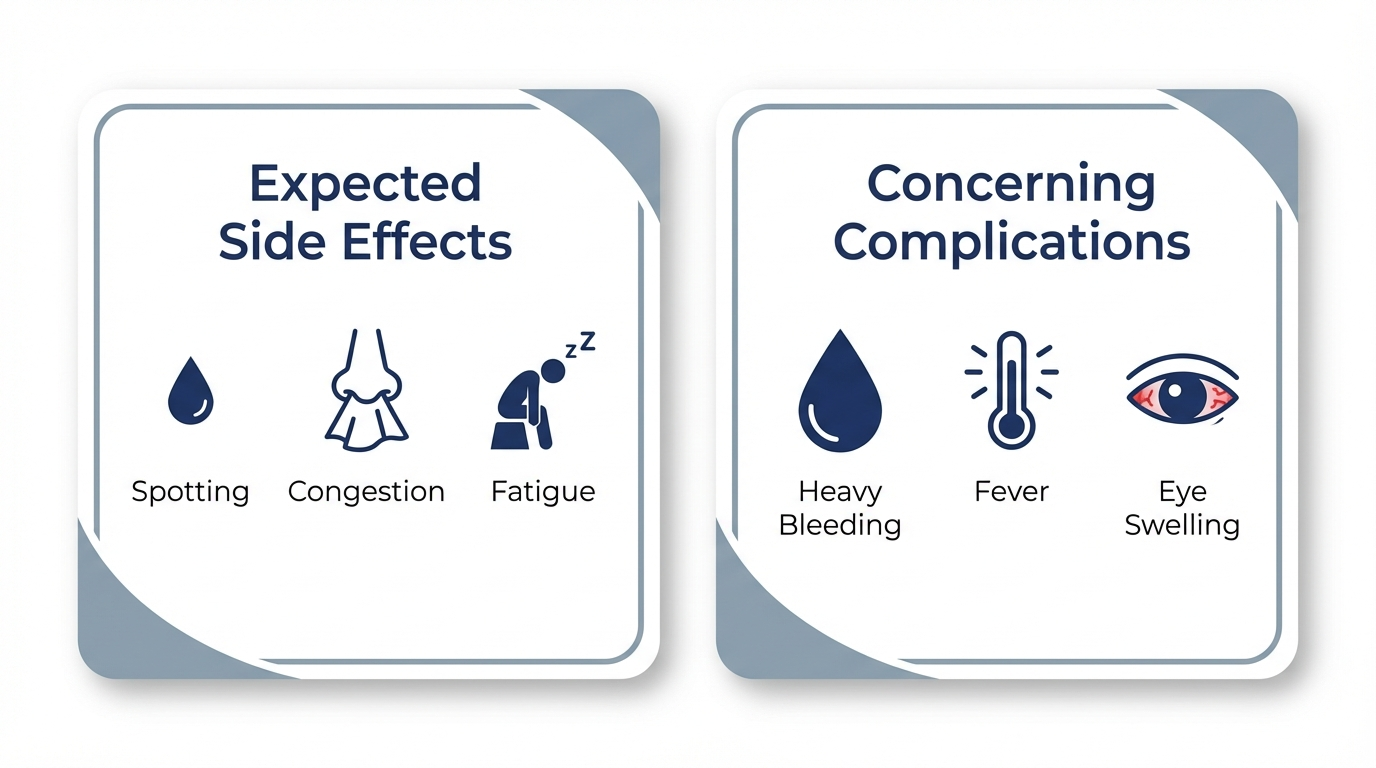
Light spotting, mild bloody mucus — Expected side effect; common early healing; monitor and follow your post-procedure instructions.
Congestion/pressure for a few days — Expected side effect; swelling during healing; use recommended comfort measures (often saline care).
Worsening pain + fever — Possible complication; could suggest infection or inflammation; contact your ENT team for guidance.
Heavy bleeding that won’t slow or soaks through dressings — Possible complication; bleeding beyond typical; seek urgent clinical evaluation—do not try to manage heavy bleeding at home.
Clear watery drainage, worse when leaning forward — Serious warning sign; possible CSF leak (rare); seek emergency evaluation.
Eye swelling, double vision, decreased vision — Serious warning sign; possible orbital involvement; seek emergency evaluation.
(Recovery expectations and general risks are outlined by Cleveland Clinic: https://my.clevelandclinic.org/health/treatments/21977-balloon-sinuplasty)
Understanding Balloon Sinuplasty (and Why It’s Considered “Low Risk”)
What balloon sinuplasty treats
Balloon sinuplasty is designed to help open blocked sinus drainage pathways in people with ongoing sinus symptoms (often called chronic sinusitis), such as:
- facial pressure/fullness
- nasal congestion
- thick drainage/post-nasal drip
- reduced sense of smell
For many patients, medication-only care (like saline, nasal steroid sprays, or allergy management) improves symptoms. When symptoms persist—or when imaging shows sinus drainage pathways remain narrowed—an in-office or outpatient procedure may be considered. Learn more about the balloon sinuplasty procedure: https://sleepandsinuscenters.com/balloon-sinuplasty
How the procedure works (simple step-by-step)
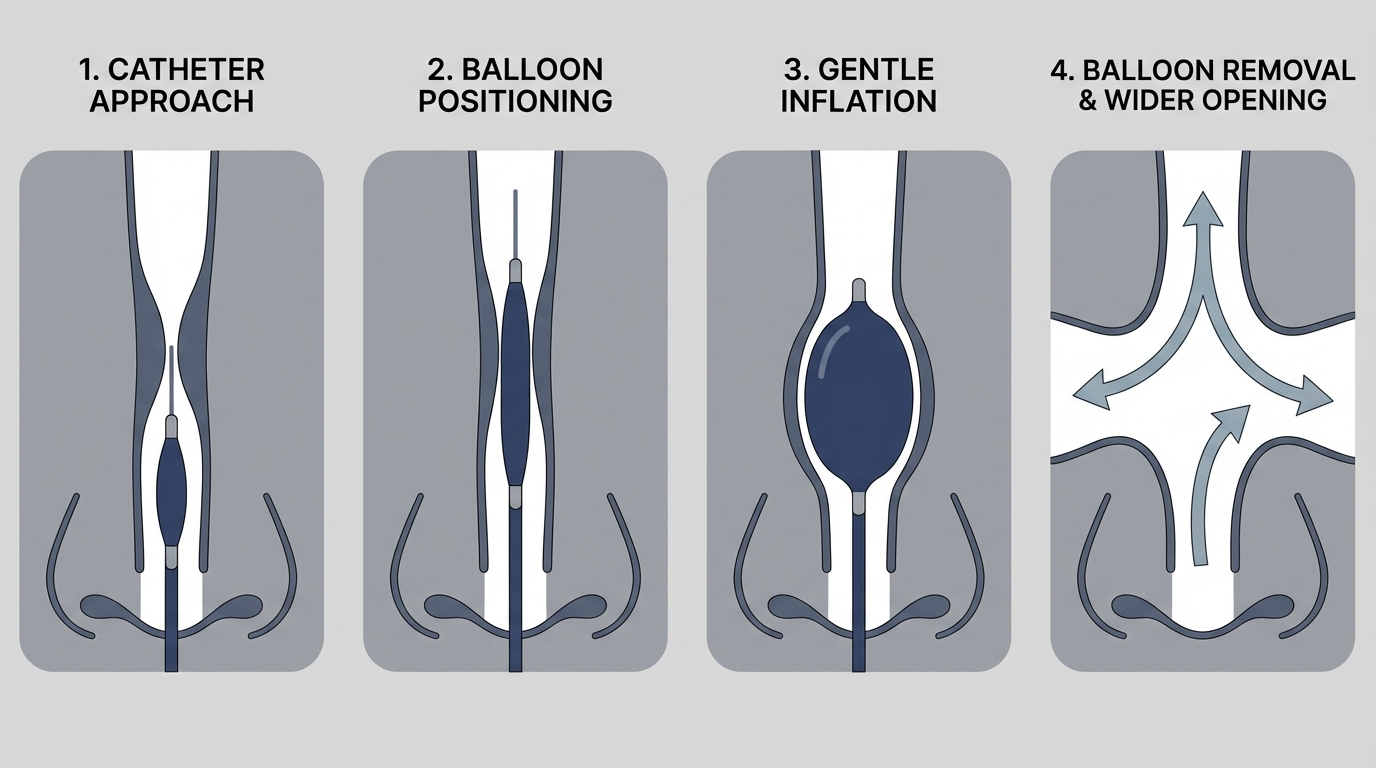
While details vary by case, the basic concept is consistent:
1. A small catheter is guided to the natural sinus opening.
2. A balloon is positioned in the narrowed area.
3. The balloon is gently inflated to widen the pathway.
4. The balloon is deflated and removed—typically without cutting or removing tissue.
Some clinicians describe the goal as remodeling the sinus opening rather than removing tissue. That’s why many patients can return to routine activities relatively quickly (with restrictions based on your surgeon’s instructions).
Why it’s typically safer than traditional sinus surgery
Because balloon dilation aims to widen existing pathways with less tissue disruption, it’s often associated with a quicker, simpler recovery than more extensive sinus surgery (such as functional endoscopic sinus surgery, or FESS). Cleveland Clinic provides a helpful overview of why balloon sinuplasty is generally considered minimally invasive: https://my.clevelandclinic.org/health/treatments/21977-balloon-sinuplasty
In short, balloon dilation opens natural sinus pathways with minimal tissue disruption, which is why recovery is usually smoother and risks are lower than with more extensive surgery.
Balloon Sinuplasty Side Effects vs. Complications (What’s the Difference?)
Common, expected side effects (usually temporary)
Many people notice short-term symptoms that are considered part of normal healing, including:
- mild bleeding/spotting
- nasal congestion or pressure
- soreness, fatigue
- drainage (clear or blood-tinged)
A typical example: a patient may feel “more stuffed up” for a few days because the lining inside the nose and sinuses is swollen—similar to how skin can swell after a minor bump. Cleveland Clinic notes that temporary bleeding and congestion can occur during recovery, along with other short-term effects: https://my.clevelandclinic.org/health/treatments/21977-balloon-sinuplasty
When side effects cross into “complication” territory
A symptom may be more concerning when it:
- worsens instead of gradually improving
- comes with fever, significant increasing pain, or foul-smelling drainage
- includes new eye symptoms (swelling, double vision, vision changes)
- includes neurologic symptoms (severe headache, stiff neck, confusion)
- involves heavy bleeding (for example, soaking through dressings or not slowing as expected)
Many ENT teams coach patients with a simple rule of thumb: if something feels like it’s escalating rather than settling, call. This is the point where clinicians typically consider evaluation for possible balloon sinuplasty complications rather than routine recovery.
Bottom line: short-term congestion and light bleeding are common; symptoms that escalate, include fever, heavy bleeding, eye/vision changes, or severe headache warrant prompt medical attention.
Most Common Balloon Sinuplasty Complications (What the Data Shows)
Device-related problems (most frequently reported)
A review of adverse events in the MAUDE database found that device-related issues were commonly reported—such as guide catheter problems, balloon malfunction, or difficulty inflating/deflating. When a device doesn’t behave as intended, it can raise the risk of injury or incomplete dilation.
Citation: PubMed MAUDE database analysis https://pubmed.ncbi.nlm.nih.gov/31638866/
Note: MAUDE highlights types of problems that can occur but doesn’t establish how often they happen overall.
Cerebrospinal fluid (CSF) leak (rare but serious)
A CSF leak is an abnormal passage of cerebrospinal fluid through a defect between the skull base and the sinus area. It’s rare, but important because it can increase the risk of serious infection and usually requires urgent specialist evaluation. Potential contributing factors include thin bone, natural anatomic variation, inflammation, or instrument/balloon positioning.
Citation: https://pubmed.ncbi.nlm.nih.gov/31638866/
What it can feel like: clear, watery drainage—especially if it increases when leaning forward—is concerning because it differs from normal post-procedure mucus and may indicate a cerebrospinal fluid leak.
Significant eye swelling / orbital complications
Sinuses sit close to the eye socket (orbit). In rare situations, inflammation, bleeding, or injury can affect orbital tissues—leading to notable swelling or bruising, pressure, pain, double vision, or vision changes. These symptoms are generally treated as urgent warning signs.
Citation: https://pubmed.ncbi.nlm.nih.gov/31638866/
Though very rare, awareness of these complications helps ensure prompt treatment if they occur.
Other Possible Complications (Less Common, Still Important)
Bleeding that’s more than expected
Light bleeding can be normal early on. Bleeding is more concerning when it is heavy, persistent, soaks through dressings or nasal packing rapidly, or lasts longer than expected. Factors that can increase bleeding risk can include blood-thinning medications, certain supplements, uncontrolled high blood pressure, or clotting disorders.
A concrete example: pink-tinged mucus after a saline rinse can be expected, while bright red bleeding that keeps filling tissues or won’t slow down is more concerning. Call your care team or seek urgent care rather than trying to manage heavy bleeding at home.
Infection after balloon sinuplasty
Infection is an acknowledged risk after sinus procedures. Symptoms may include fever, worsening facial pain/pressure, or thick foul drainage. Post-procedure care and medication adherence (when prescribed) are typically emphasized to reduce this risk.
Citation: Cleveland Clinic (risks include infection) https://my.clevelandclinic.org/health/treatments/21977-balloon-sinuplasty
Injury to nearby structures (rare)
Because the sinuses are close to the orbit and skull base, rare injuries may involve the tissues around the eye, the optic nerve region, or skull base. This is one reason imaging, careful technique, and appropriate training matter.
Citation: Cleveland Clinic (anatomy-related risks) https://my.clevelandclinic.org/health/treatments/21977-balloon-sinuplasty
Anesthesia or sedation reactions
Some balloon procedures are done with local anesthesia, while others use deeper sedation depending on the setting and patient needs. Nausea, dizziness, and allergic reactions are examples of anesthesia-related risks.
Citation: https://my.clevelandclinic.org/health/treatments/21977-balloon-sinuplasty
Overall, most people experience only mild, short-lived side effects; more serious complications are uncommon and typically identifiable by clear red-flag symptoms.

Symptoms of Balloon Sinuplasty Complications (Warning Signs to Watch For)
Signs that typically warrant calling your ENT team urgently
- heavy bleeding that doesn’t slow or soaks through dressings/pads
- fever (often discussed as >101°F) with worsening pain
- thick, foul drainage or symptoms that are escalating rather than improving
If you’re unsure, it’s still reasonable to call—especially if you have medical conditions that affect healing or you’re taking medications that influence bleeding. Always follow your surgeon’s specific instructions for aftercare and when to seek help.
Symptoms often treated as emergency warning signs
- clear watery drainage from the nose, especially if it increases when leaning forward (possible CSF leak)
- severe headache, stiff neck, confusion
- eye swelling with pain, double vision, vision loss, or difficulty moving the eye normally
CSF leaks and orbital swelling have been reported in adverse event databases (rare overall, but clinically important): https://pubmed.ncbi.nlm.nih.gov/31638866/
In short, call your ENT for worsening symptoms—and seek emergency care for clear watery drainage, severe headache/neck stiffness, or any eye/vision changes.
What Causes Balloon Sinuplasty Complications?
Anatomy and sinus disease severity
Risk can be influenced by individual anatomy (including thin areas near the skull base), prior sinus surgery, nasal polyps, or severe chronic inflammation. Two people can have the same diagnosis but very different CT findings that change risk.
Device and technique factors
Balloon placement, dilation pressure, and visualization challenges can affect outcomes. The MAUDE database analysis highlights that device malfunctions are a notable category of reported adverse events.
Citation: https://pubmed.ncbi.nlm.nih.gov/31638866/
Patient-related risk factors
Common factors that may affect healing include medication/supplement use that impacts bleeding, smoking, uncontrolled diabetes (infection risk), and missed follow-up care.
Complication risk reflects a mix of anatomy, device/technique, and individual health factors—another reason personalized planning matters.
Recurrence, Scar Tissue, and Needing Another Procedure
Can symptoms come back after balloon sinuplasty?
Yes. Even after a technically successful procedure, some people experience symptom recurrence over time due to ongoing inflammation, allergies, infections, or anatomy. If allergies remain uncontrolled, swelling can return and re-create the “blocked drainage” feeling—even if the opening was successfully widened.
Scar tissue (synechiae) or persistent blockage
In some cases, scar tissue or persistent narrowing can interfere with airflow and drainage. Follow-up visits allow your care team to check healing and address issues early.
Revision rates vs. traditional FESS
Balloon sinuplasty is generally associated with a lower overall risk profile than more invasive sinus surgery, though the “best” approach depends on anatomy and disease pattern. For a deeper comparison, see: https://sleepandsinuscenters.com/blog/balloon-sinuplasty-vs-traditional-sinus-surgery-wh-20260121035146
Citations for broader context: Cleveland Clinic overview https://my.clevelandclinic.org/health/treatments/21977-balloon-sinuplasty and MAUDE analysis https://pubmed.ncbi.nlm.nih.gov/31638866/
In brief, some patients may need additional treatment over time, especially if underlying inflammation persists—follow-up and ongoing medical care help maintain results.
How Complications Are Treated (If They Happen)
Treatment depends on the issue and severity, but common approaches include:
- Bleeding: monitoring, medication review, nasal packing, or cautery in select cases
- Infection: antibiotics when indicated, sometimes culture testing, and office-based care if needed
- CSF leak: imaging confirmation and surgical repair by appropriate specialists
- Eye/orbital issues: urgent evaluation, imaging, and possible ophthalmology involvement
Addressing concerning symptoms early often prevents bigger problems; when in doubt, check in with your care team promptly.
How to Lower Your Risk of Balloon Sinuplasty Complications
Pre-procedure checklist (patient-friendly)
- Share a complete medication and supplement list (especially blood thinners/NSAIDs).
- Discuss anesthesia/sedation options and medical history.
- Ask what imaging is being used to plan treatment. A sinus CT scan often helps map anatomy and disease: https://sleepandsinuscenters.com/blog/sinus-ct-scan-what-it-shows-and-how-it-helps-diagnose-sinus-issues
Post-procedure lifestyle tips for safer healing
Many surgeons emphasize:
- saline care as directed
- avoiding activities that increase nasal pressure (for a short period, based on instructions)
- hydration and humidification to reduce dryness and crusting
- following your surgeon’s specific aftercare protocol and activity restrictions
Cleveland Clinic includes general recovery expectations and aftercare guidance: https://my.clevelandclinic.org/health/treatments/21977-balloon-sinuplasty
Keep follow-up appointments
Follow-ups help detect early scarring, infection, or ongoing blockage—before symptoms become more disruptive. For a procedure overview, visit: https://sleepandsinuscenters.com/balloon-sinuplasty
Simple steps—good pre-op planning, careful aftercare, and on-time follow-ups—go a long way toward minimizing risk.

What to Expect After Balloon Sinuplasty (Normal Recovery Timeline)
First 24–72 hours
It’s common to notice congestion, mild bleeding/spotting, pressure, and fatigue. Some patients describe it as feeling like a “sinus cold” for a short stretch. That sensation is often swelling and irritation from the procedure rather than a new infection.
First 1–2 weeks
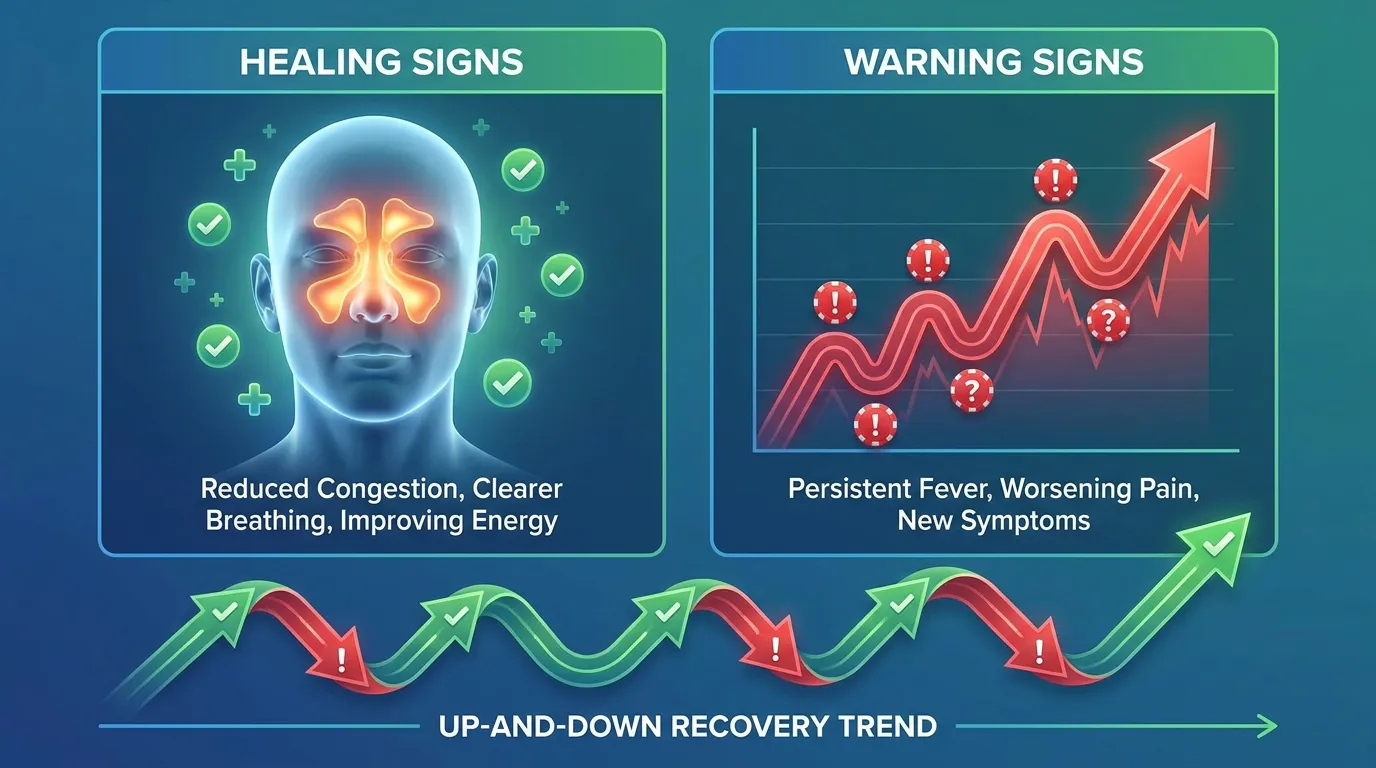
Gradual improvement is typical, with ongoing nasal care and fluctuating congestion as swelling settles. If you have a “good day” followed by a more congested day, that can still fall within normal healing—especially if symptoms aren’t steadily intensifying. Always follow your surgeon’s guidance on rinses, medications, and activity.
When most people notice meaningful relief
Relief timing varies depending on which sinuses were treated, baseline inflammation, allergies, and healing patterns. Cleveland Clinic summarizes typical recovery expectations here: https://my.clevelandclinic.org/health/treatments/21977-balloon-sinuplasty
For a more detailed, day-by-day view, see our balloon sinuplasty recovery timeline: https://sleepandsinuscenters.com/blog/balloon-sinuplasty-recovery-timeline-day-by-day-he-20260120224024
In short, mild congestion and spotting are common early on, with gradual improvement over 1–2 weeks and increasing relief as swelling subsides.
FAQs About Balloon Sinuplasty Complications
What is the most common complication of balloon sinuplasty?
In adverse-event reporting analyses, device-related malfunctions are among the most frequently reported categories. Citation: https://pubmed.ncbi.nlm.nih.gov/31638866/
How rare is a CSF leak?
A CSF leak is considered rare, but it’s treated as serious because it can require urgent evaluation and repair. Citation: https://pubmed.ncbi.nlm.nih.gov/31638866/
Can balloon sinuplasty cause eye swelling?
Significant eye/orbital swelling has been reported as a rare adverse event, reflecting how close the sinuses are to the orbit. Citation: https://pubmed.ncbi.nlm.nih.gov/31638866/
Will I need antibiotics after balloon sinuplasty?
Not always. Antibiotic use varies based on surgeon preference and individual factors. Citation (general risks/aftercare context): https://my.clevelandclinic.org/health/treatments/21977-balloon-sinuplasty
What if balloon sinuplasty doesn’t work for me?
Next steps often include optimizing medical therapy, reviewing allergy contributors, re-checking imaging, or discussing whether another approach (including FESS) better matches the disease pattern. For an overview of balloon sinuplasty vs. traditional sinus surgery, visit: https://sleepandsinuscenters.com/blog/balloon-sinuplasty-vs-traditional-sinus-surgery-wh-20260121035146
When to Talk to an ENT (and What to Ask at Your Consultation)
Good questions to ask your provider
- Am I a good candidate for balloon sinuplasty vs. FESS?
- Which sinuses are you treating, and why?
- What complications do you see most often?
- How do you reduce the risk of CSF leak or orbital injury?
- What symptoms after the procedure are expected vs. urgent?
Considering your options?
If chronic sinus symptoms persist, keep recurring, or you’re weighing procedural choices, an evaluation can clarify whether balloon dilation fits your anatomy and goals—and how your team works to minimize balloon sinuplasty complications. Learn more here: https://sleepandsinuscenters.com/balloon-sinuplasty
A focused consultation helps match the right treatment to your anatomy, goals, and lifestyle.
Disclaimer:
This article is for educational purposes only and is not medical advice. Please consult a qualified healthcare provider for diagnosis and treatment.
Ready to talk with a specialist? Book an appointment through https://www.sleepandsinuscenters.com/ to review your symptoms, imaging, and treatment options.
Don’t let allergies slow you down. Schedule a comprehensive ENT and allergy evaluation at Sleep and Sinus Centers of Georgia. We’re here to find your triggers and guide you toward lasting relief.