How to Fall Asleep Fast: 10 Evidence-Informed Tips for Better Sleep Tonight
Falling asleep can feel strangely hard when you want it most. You’re exhausted, but your mind is busy. Your body feels “tired but wired.” And the more you try to make sleep happen, the more awake you feel.
A helpful term here is sleep latency—the amount of time it takes to fall asleep after you turn the lights out. Think of it like merging onto a highway: if your brain is still “in traffic” (stress, screens, caffeine, noise), it can take longer to merge into sleep. When sleep latency stretches past what feels normal for you, bedtime can start to feel stressful—and that stress can keep the cycle going. (Sleep Foundation, 2025)
This guide covers two things: practical tools you can use tonight to help you relax and longer-term approaches that can reduce sleep latency over time. In general, relaxation skills and environment tweaks can help in the short term, while CBT‑I for insomnia is among the most effective options for lasting improvement when insomnia becomes ongoing. (Sleep Foundation, 2025; CBT‑I evidence review, 2022)
Common Symptoms of Trouble Falling Asleep
What it can feel like at bedtime
- Lying awake for 30–60+ minutes after getting into bed
- Feeling “tired but wired,” with restlessness or a faster heartbeat
- Racing thoughts, worry, or frustration about not sleeping
- Frequent clock-checking (which often ramps up pressure)
A quick reality check: many people describe this as “my body is in bed, but my brain is still at work.” That mismatch is common—and changeable.
What you might notice the next day
- Fatigue, irritability, or low motivation
- Poor focus, “brain fog,” or headaches
- Increased cravings for caffeine or sugar (which can feed the cycle later)
It can be reassuring to know these patterns are common, and small changes may help.
What Causes Difficulty Falling Asleep? (Patient-Friendly Overview)
Stress + high arousal (body and mind): Stress doesn’t only live in your thoughts—it affects your nervous system. When your brain detects pressure (work, family, health worries), it can be harder to “downshift” into sleep mode. A clinician-friendly way to put it: sleep is not something you force—it’s something you allow once arousal drops. (HelpGuide, 2026)
Stimulants and timing: Caffeine later in the day is a common hidden factor. Even if you feel like it “doesn’t affect you,” caffeine can still delay sleep—often for many hours after you drink it. (Sleep Foundation, 2025; Healthline, 2024) Concrete example: that “harmless” 3 p.m. coffee might not make you feel jittery at 10 p.m., but it can still nudge your brain toward alertness right when you want the opposite.
Screens, light, and a “second wind”: Bright screen light exposure and stimulating content can both increase alertness right when you’re trying to wind down. This is especially true when screen time crowds out a calmer pre-bed routine. (Sleep Foundation, 2025) For more on this, see blue light and sleep: https://sleepandsinuscenters.com/blog/blue-light-and-its-impact-on-ent-related-sleep-disorders-1bca5
Environment problems: If your bedroom is too warm, too noisy, or too bright, your brain may stay on alert. Even small adjustments (temperature, light leaks, sound) may help reduce sleep latency. (Sleep Foundation, 2025)
Underlying health issues (when to consider evaluation): Sometimes difficulty falling asleep connects to issues like nasal congestion, mouth breathing, snoring, possible sleep apnea, reflux, pain, or medication side effects. If you regularly struggle with nighttime breathing, see: https://sleepandsinuscenters.com/blog/cant-breathe-through-nose-at-night
Educational safety note: persistent insomnia deserves professional guidance—especially if it’s paired with loud snoring, gasping/choking, or witnessed breathing pauses.
Understanding the common drivers of sleeplessness can make your next steps clearer and more targeted.
How to Fall Asleep Fast Tonight: 10 Evidence-Informed Tips
These are evidence-informed tips to help you fall asleep by lowering physical and mental arousal. You don’t need to do all 10—choose 2–3 and keep it simple. Consistency usually beats intensity here.

Tip 1) Try 4‑7‑8 breathing (2–4 minutes)
How to do it
1) Inhale through your nose for 4 seconds
2) Hold for 7 seconds
3) Exhale slowly for 8 seconds
4) Repeat for 4 cycles
Why it may help: Slower breathing supports relaxation by downshifting your stress response. (Sleep Foundation, 2025; HelpGuide, 2026) If counting feels stressful, keep the spirit: a slower exhale than inhale.
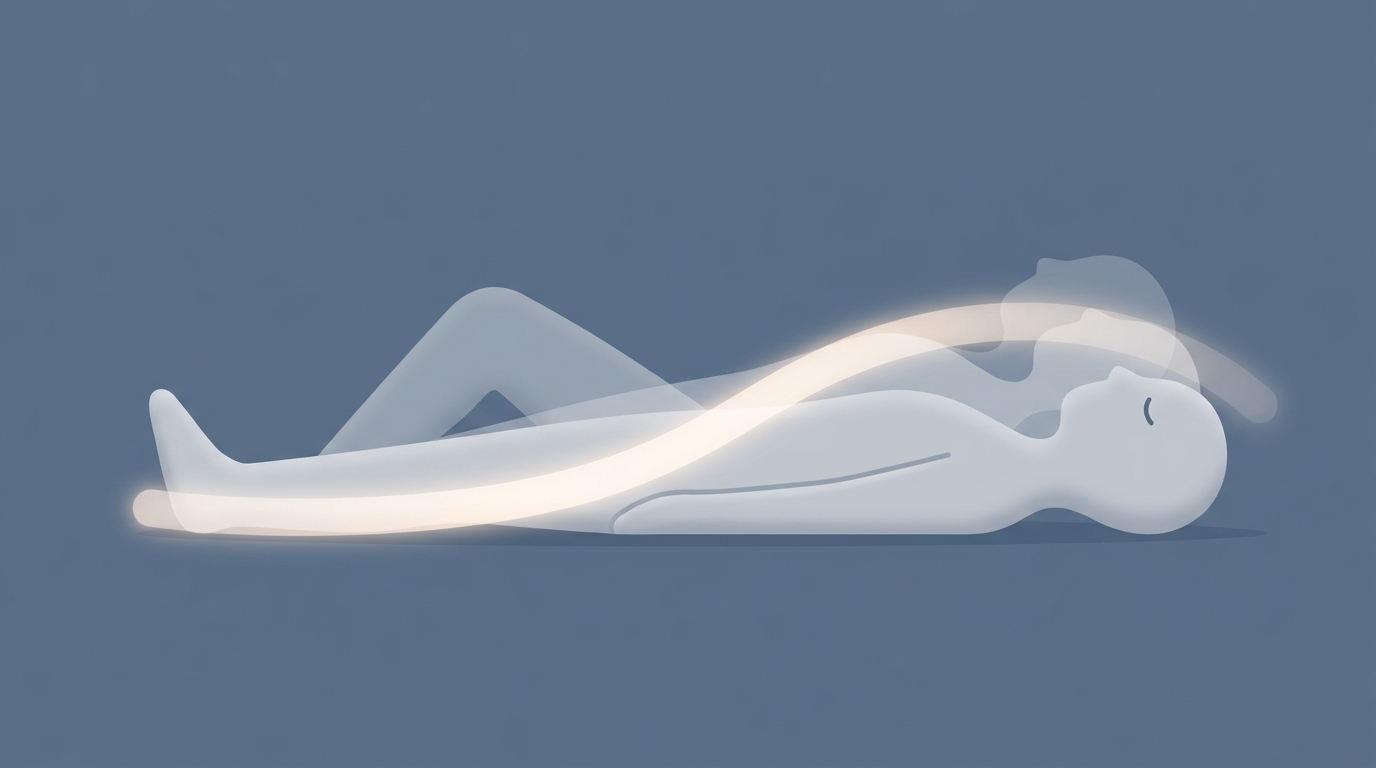
Tip 2) Do Progressive Muscle Relaxation (PMR) from toes to forehead
How to do it
- Starting at your feet, tense a muscle group for 5–7 seconds
- Then release for 15–20 seconds
- Move upward (calves → thighs → abdomen → hands → shoulders → face)
Why it may help: PMR can reduce physical tension and send your brain a “safe to relax” signal. (Sleep Foundation, 2025; HelpGuide, 2026) On the release, notice the difference between tension and softness—like dropping a heavy backpack.
Tip 3) Use guided imagery (a short “mental movie”)
Prompt ideas
- A quiet beach at sunset
- A cabin with snow falling outside
- A slow walk through a familiar neighborhood
Why it may help: Neutral imagery can crowd out rumination and ease sleep-related worry. (Sleep Foundation, 2025; HelpGuide, 2026) If your mind keeps problem-solving, make the “movie” more specific: sounds, temperature, colors.
Tip 4) Do a brief mindfulness or body scan (5–10 minutes)
How to do it
- Notice physical sensations (breath, warmth, heaviness)
- When your mind wanders, gently return to sensation—without trying to fix anything
Why it may help: Mindfulness can reduce cognitive arousal and performance pressure around sleep. (Sleep Foundation, 2025) You’re practicing non-struggle, which often makes sleep more likely.
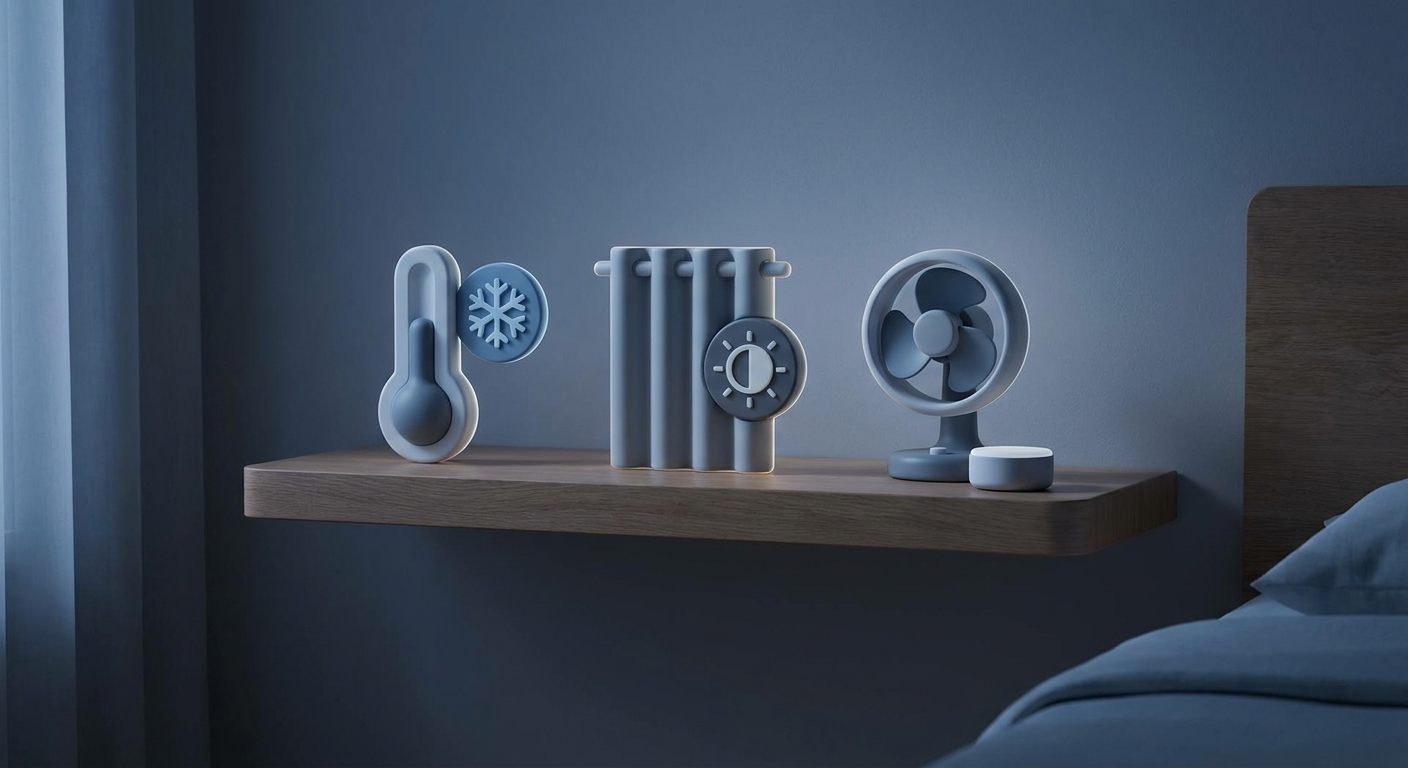
Tip 5) Make your room cooler, darker, and quieter
How to do it
- Aim for a comfortably cool room
- Reduce light leaks (blackout curtains, eye mask)
- Reduce noise (fan/white noise, earplugs if appropriate)
Why it may help: Simple environment changes may help reduce sleep latency for many people. (Sleep Foundation, 2025; HelpGuide, 2026) Small wins: cover a bright LED, close the gap under the door, move a noisy charger away from your bed.

Tip 6) Pause screens 30–60 minutes before bed (or modify if you must use them)
Best option
- Keep the phone out of the bedroom
- Switch to a paper book, calming music, or an audio story
If screens are unavoidable
- Dim the screen, use night mode, and avoid stimulating content
Why it may help: Screen light exposure and stimulating content can both delay sleep. For more detail, see: https://sleepandsinuscenters.com/blog/blue-light-and-its-impact-on-ent-related-sleep-disorders-1bca5 (Sleep Foundation, 2025; Healthline, 2024)
Tip 7) Cut off caffeine earlier than you think
How to do it
- Some people find an 8–10 hour caffeine buffer helpful, though sensitivity varies
- Watch hidden sources (tea, sodas, energy drinks, chocolate)
Why it may help: Caffeine can delay sleep even when you “feel fine.” (Sleep Foundation, 2025; Healthline, 2024) Try an experiment: keep your morning coffee, then move the last caffeinated drink earlier for one week.
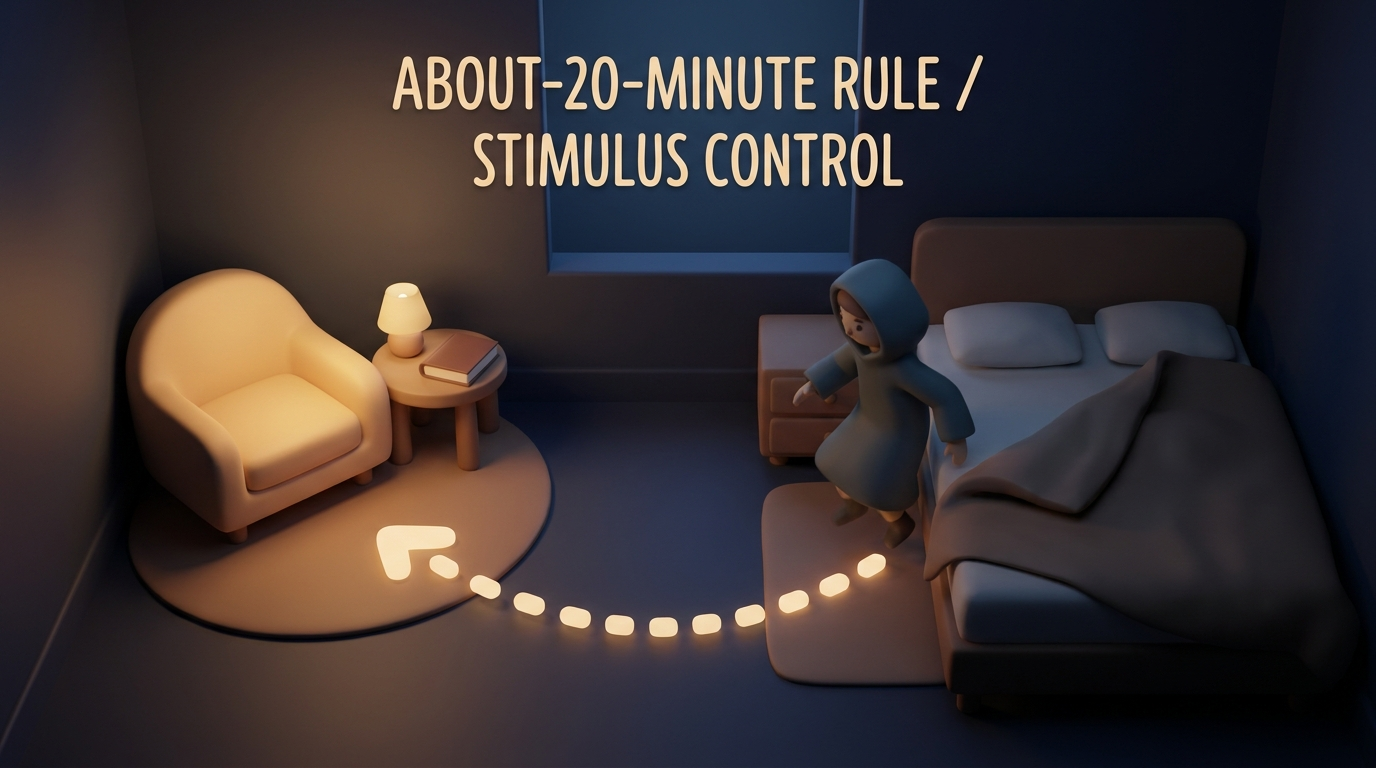
Tip 8) Use the “20-minute rule” (stimulus control)
This is a core CBT‑I strategy called stimulus control.
How to do it
- If you’ve been awake for about 20 minutes, get out of bed
- Do something quiet in dim light (low‑stimulation reading, gentle stretching)
- Return to bed only when you feel sleepy
Why it may help: It protects the association that bed = sleep, not bed = frustration. (Sleep Foundation, 2025; CBT‑I evidence review, 2022) Try to avoid clock-checking, which often adds pressure without adding solutions.
Tip 9) Try “paradoxical intention” if you’re anxious about sleep
What it is: Instead of forcing sleep, you aim to stay awake calmly (no phone, no bright light—just resting)
Why it may help: It can reduce performance anxiety around sleep and ease the mental fight that keeps you alert. (HelpGuide, 2026; CBT‑I evidence review, 2022) A gentle script: “I’m going to rest my body. Sleep can come when it’s ready.”
Tip 10) Build a consistent wind‑down routine (10–20 minutes)
Examples
- Warm shower
- Light stretching
- Journaling a short “tomorrow list” so your brain can drop it
- Relaxing music
Why it may help: A predictable routine lowers arousal and can make sleep more automatic over time. This is part of solid sleep hygiene: https://sleepandsinuscenters.com/blog/sleep-hygiene-and-its-impact-on-ent-disorders-key-insights (Sleep Foundation, 2025; HelpGuide, 2026)
Picking two or three of these tools and repeating them consistently is often more effective than trying everything at once.
A Simple “Do This Now” Plan (10 Minutes to Bed)
Minute-by-minute checklist
- 0–1 min: Lower lights, make the room comfortably cool, silence notifications
- 1–3 min: Do 4‑7‑8 breathing (4 cycles)
- 3–8 min: Do PMR (short version: feet → legs → shoulders → jaw) or a quick body scan
- 8–10 min: Start guided imagery as you settle into bed
If your goal is to fall asleep faster tonight, this sequence is a strong starting point because it targets both body tension and mental “noise.” If you miss a step, don’t restart—just continue. The goal is downshifting, not perfection.
A short, repeatable routine can help your body and mind agree it’s time for sleep.
Treatments That Work When This Is an Ongoing Problem (Beyond Tonight)
CBT‑I (Cognitive Behavioral Therapy for Insomnia): If difficulty falling asleep becomes frequent, CBT‑I is among the most effective and durable treatments for chronic insomnia symptoms.
CBT‑I commonly includes:
- Stimulus control (the about‑20‑minute rule)
- Sleep restriction (a structured schedule to rebuild sleep drive)
- Cognitive techniques (reducing unhelpful beliefs and worry loops)
- Relaxation training
Why it matters: Research consistently shows CBT‑I is well supported for improving chronic insomnia symptoms. (CBT‑I evidence review, 2022; Sleep Foundation, 2025)
When to talk to a clinician (educational guidance, not medical advice): consider professional support when symptoms last 3 months or more, or happen 3+ nights/week; when daytime function is significantly affected; or when there’s loud snoring, gasping/choking, or witnessed breathing pauses (possible sleep apnea).
Medication and supplements (brief, cautious overview): Some people use short‑term medication strategies under medical guidance. Melatonin may help with sleep timing or circadian rhythm issues, but timing and dosing matter—and more is not automatically better. If you’re considering it regularly or have ongoing insomnia, clinician guidance may be safer than trial‑and‑error.
If sleeplessness is persistent, structured approaches like CBT‑I and medical evaluation can offer clearer, longer‑term solutions.
Lifestyle Tips That Improve Sleep Over Time
Keep a consistent wake time (even after a bad night): A steady wake time supports circadian rhythm stability, which may reduce sleep latency over time. (Sleep Foundation, 2025)
Be careful with naps: If naps are necessary, many people do best with shorter naps earlier in the day so nighttime sleep pressure stays strong.
Exercise—great, but timing matters: Regular activity supports sleep quality, though intense workouts close to bedtime can be activating for some. (Sleep Foundation, 2025)
Watch alcohol and heavy meals late: Alcohol may increase night awakenings, and late heavy meals can worsen reflux—both of which can disrupt sleep. (Healthline, 2024; Sleep Foundation, 2025)
Small, steady habits often do more for sleep than occasional big changes.
FAQs
How long should it take to fall asleep? Many sources describe a typical range of roughly 10–20 minutes. Consistently taking much longer may suggest increased arousal, a schedule mismatch, or an underlying issue worth addressing. (Sleep Foundation, 2025)
What if I can’t fall asleep after 20 minutes? Use the about‑20‑minute rule: get out of bed, do a quiet dim‑light activity, and return only when sleepy. This is a core CBT‑I strategy to reduce conditioned wakefulness. (Sleep Foundation, 2025; CBT‑I evidence review, 2022)
Does the military method work? The “military method” often combines muscle relaxation, breathing, and imagery. Those ingredients are supported by evidence, but results vary—especially if stress, caffeine, or screens are overpowering your wind‑down routine. (Sleep Foundation, 2025)
Should I take melatonin to fall asleep fast? Melatonin can help some people with sleep timing (circadian rhythm issues), but it is not a universal sleep aid for insomnia. If you’re considering it regularly or have ongoing insomnia, discussing options with a qualified clinician may be helpful. (Healthline, 2024)
Why do I get sleepy, then wake up when I lie down? Common reasons include a stress spike, late screen use, conditioned arousal (bed = frustration), reflux symptoms, or nasal congestion/mouth breathing.
When Sleep Problems Might Be an ENT Issue
Signs breathing may be disrupting sleep
- Chronic nasal congestion
- Mouth breathing or waking with a dry mouth
- Snoring
- Restless sleep (sometimes tied to airflow disruption)
If you’re unsure when breathing symptoms warrant evaluation, see: https://sleepandsinuscenters.com/blog/when-to-see-an-ent-for-sleep-problems
If nasal congestion, snoring, or mouth breathing may be part of the problem, you can book an appointment through https://www.sleepandsinuscenters.com/ to discuss next steps with a qualified clinician.
Addressing airway issues can be an important step toward more restful, reliable sleep.
Conclusion — Your Next Best Step Tonight
To keep things simple, pick 2–3 tools and repeat them nightly for a week. A strong starter combo is:
- 4‑7‑8 breathing
- Progressive muscle relaxation
- The about‑20‑minute rule (stimulus control)
If you’re frequently trying to fall asleep fast and it keeps becoming a pattern, consider CBT‑I for insomnia and, when relevant, an evaluation for breathing‑related sleep disruption.
Start small, stay consistent, and consider expert help if insomnia persists.
Citations / Sources
- Sleep Foundation. (2025). How to Fall Asleep Fast. https://www.sleepfoundation.org/sleep-hygiene/how-to-fall-asleep-fast
- Healthline. (2024). Ways to Fall Asleep. https://www.healthline.com/nutrition/ways-to-fall-asleep
- HelpGuide. (2026). How to Fall Asleep Fast: Tips to Get to Sleep Quickly. https://www.helpguide.org/wellness/sleep/how-to-fall-asleep-fast-tips-to-get-to-sleep-quickly
- CBT‑I evidence review. (2022). Cognitive Behavioral Therapy for Insomnia (CBT‑I) evidence review. https://pmc.ncbi.nlm.nih.gov/articles/PMC10002474/
“This article is for educational purposes only and is not medical advice. Please consult a qualified healthcare provider for diagnosis and treatment.”
Don’t let allergies slow you down. Schedule a comprehensive ENT and allergy evaluation at Sleep and Sinus Centers of Georgia. We’re here to find your triggers and guide you toward lasting relief.