How Long Does a Septoplasty Take? Procedure Time and Recovery Timeline
If you’re planning surgery for a deviated septum, it’s normal to focus on the clock: how long does a septoplasty take, how much time you’ll spend at the surgery center, and when life feels “back to normal” again. The good news is that septoplasty is usually a fairly efficient procedure—but total time (including anesthesia and recovery monitoring) is longer than the surgical portion alone.
Below is a realistic, patient-friendly breakdown of septoplasty procedure time, what can make it longer, and an average septoplasty recovery timeline so you can plan ahead with fewer surprises.
Quick Answer: How Long Does a Septoplasty Take?
Typical septoplasty procedure time (most patients)
For many routine cases, deviated septum surgery time is commonly 30–90 minutes. This estimate reflects the in-procedure portion of the operation and is widely cited in patient education resources (Cleveland Clinic).
A helpful way to think about it: this is the operative time—the hands-on time the surgeon is correcting the septum—not the full door-to-door time you’ll spend at the facility.
When septoplasty takes longer
Some combined or complex cases may take 2–3 hours or longer, especially when anatomy is more involved or when other procedures are performed at the same time (Suburban ENT; StatPearls/NCBI). Extra time may be needed if you have:
- A severe deviation or multiple bends/spurs
- Prior nasal surgery (revision septoplasty)
- A more involved surgical technique
- A planned combined procedure (see below)
Important distinction—surgery time vs. total time at the facility
When people ask how long a septoplasty takes, they may mean different things.
- Procedure time usually refers to the surgical portion (operative time).
- Total facility time typically includes:
- Check-in and pre-op preparation
- Septoplasty anesthesia time (going to sleep and waking up)
- Operating room set-up and positioning
- Post-anesthesia care unit (PACU) monitoring
- Discharge instructions and transportation planning
Even if the surgery itself is 30–90 minutes, the overall experience often takes several hours from arrival to discharge (Cleveland Clinic; Mayo Clinic; StatPearls).
Conclusion: Think of procedure time as the flight, and total facility time as the whole trip from check-in to getting home.

What Is Septoplasty (and What Does It Fix)?
The nasal septum and deviated septum basics
The nasal septum is the wall inside the nose that separates the left and right nasal passages. When it’s significantly off-center (a deviated septum), airflow can be reduced on one or both sides.
If you want a deeper overview of symptoms and options, see our guide to deviated septum treatment options: https://sleepandsinuscenters.com/deviated-septum-relief
Symptoms septoplasty may improve
- Ongoing nasal congestion/obstruction (one-sided or both sides)
- Trouble breathing through the nose, especially at night
- Mouth breathing due to nasal blockage
- Snoring that’s worsened by nasal resistance (septoplasty may help airflow but usually does not cure obstructive sleep apnea by itself)
- In some cases, dryness, crusting, or recurrent nosebleeds when a deviated septum contributes to irritation
(General patient resources: Cleveland Clinic; Mayo Clinic; Healthline)
Common causes of a deviated septum
- Congenital anatomy (present from birth)
- Trauma (sports injuries, falls, accidents)
- Growth-related changes over time
(StatPearls; Mayo Clinic)
Conclusion: Septoplasty targets structural blockage to improve airflow, but individual results vary based on anatomy and any coexisting issues.

What Affects How Long a Septoplasty Takes?
Severity and location of the deviation
Not all deviations are equal. A simpler curve may be quicker to correct than a septum with multiple bends, spurs, or complex cartilage-and-bone involvement (StatPearls).
Surgical technique and whether additional procedures are needed
Most septoplasties use internal nasal incisions. In more complex situations—or when other nasal procedures are added—the technique and scope can increase operative time (StatPearls; Mayo Clinic).
Combined procedures done at the same time
A major reason times vary is that septoplasty is often combined with other procedures. Common combinations include:
- Septoplasty with turbinate reduction (very common)
- Septoplasty with nasal valve repair
- Septoplasty with cosmetic rhinoplasty (septorhinoplasty)
- Revision septoplasty (repeat surgery)
When procedures are combined, operative time may increase—and recovery can feel different as well (StatPearls; Healthline).
If you’re curious about the why and how of turbinates, read our turbinate reduction overview: https://sleepandsinuscenters.com/blog/everything-you-need-to-know-about-turbinate-reduction
Non-surgical factors that change total time
Even with the same surgical plan, total time at the facility can vary due to:
- Anesthesia induction and wake-up time (Mayo Clinic; Cleveland Clinic)
- OR scheduling and turnover workflow
- Complexity discovered during surgery and surgeon technique (StatPearls)
Conclusion: Anatomy, technique, and whether additional procedures are added are the biggest drivers of how long your septoplasty takes.
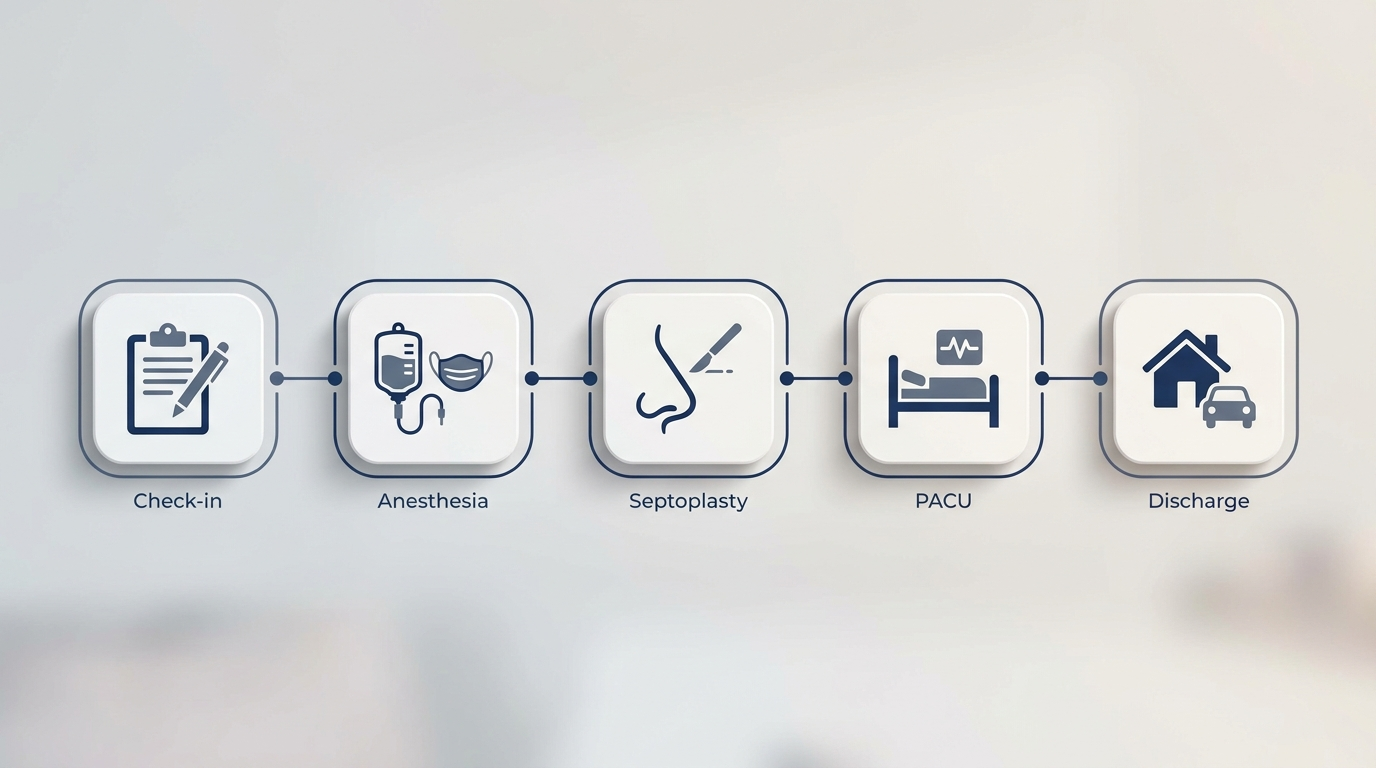
Step-by-Step: What Happens on Surgery Day (Timeline Format)
Before the operation (check-in and pre-op)
You’ll typically complete:
- Paperwork and consent
- Vitals and medical history review
- Medication/allergy review
- IV placement and pre-op instructions
Anesthesia (what most patients receive)
General anesthesia is common for septoplasty. In select cases, local anesthesia with sedation may be used, depending on the patient and the surgeon’s plan (Mayo Clinic; StatPearls). Going to sleep and waking up safely adds time beyond the surgical portion; with general anesthesia, most people do not remember the procedure.
The septoplasty itself (what the surgeon is doing)
In general terms, the surgeon aims to:
- Lift the lining over the septum
- Reposition, reshape, or remove the deviated cartilage/bone
- Preserve nasal support structures
- Place splints or packing if needed (varies by case and surgeon)
(StatPearls; Mayo Clinic)
Recovery room (PACU)
After surgery, you’ll be monitored for:
- Bleeding
- Nausea
- Pain control and comfort
- Readiness to go home with a responsible adult
(Mayo Clinic; Cleveland Clinic)
Conclusion: Expect a structured flow—check-in, anesthesia, surgery, and monitored recovery—before heading home the same day in most cases.

Septoplasty Recovery Timeline (What to Expect)
Recovery varies, especially when septoplasty with turbinate reduction or other procedures are added. The overview below is general education—not a substitute for your surgeon’s instructions.
For a detailed week-by-week guide, see our septoplasty recovery timeline: https://sleepandsinuscenters.com/blog/septoplasty-recovery-week-by-week-complete-timeline-20260123051106
First 24–48 hours
Common experiences include:
- Nasal congestion/blocked feeling
- Mild oozing or light bleeding
- Fatigue from anesthesia
- Pressure more than sharp pain
Precautions often include head elevation and avoiding nose blowing, but follow your specific instructions (Cleveland Clinic; Mayo Clinic; Healthline).
Days 3–7
It’s common for:
- Congestion and swelling to feel most noticeable
- Crusting to begin
- A follow-up visit to be scheduled (some surgeons remove splints/packing if used)
(Mayo Clinic; StatPearls)
Weeks 1–2
Many people with non-strenuous jobs return in about a week, but timing varies by individual and by surgeon guidance. Breathing may start to improve, though it can fluctuate with swelling and crusting (Cleveland Clinic; Healthline).
Weeks 3–6
Often, patients notice:
- Gradual improvement in airflow
- Less tenderness
- Increasing activity as cleared by the surgeon
(Mayo Clinic; StatPearls)
2–3 months and beyond
Internal healing and swelling can continue to improve for weeks to months. Final breathing results may take longer, particularly after revision or combined procedures (StatPearls; Mayo Clinic).
Conclusion: Expect steady progress week by week, with refinement over several weeks to a few months.

Tips to Heal Faster and More Comfortably (Lifestyle + Aftercare)
Do’s
Many post-op plans emphasize:
- Sleeping with your head elevated
- Using saline sprays/rinses only as directed
- Keeping follow-up appointments (cleaning may be recommended)
- Staying hydrated and prioritizing rest
(Cleveland Clinic; Mayo Clinic; Healthline)
Don’ts
Common restrictions often include:
- Don’t blow your nose until you’re cleared
- Avoid heavy lifting/straining early on
- Avoid smoking/vaping, which can irritate healing tissue
(Mayo Clinic; StatPearls)
If you have allergies
Allergy-related inflammation can heighten swelling and sensitivity. Managing allergies (avoidance strategies and appropriate medications or testing, when recommended) may improve comfort during recovery.
Conclusion: Follow your surgeon’s instructions closely—small daily habits can make recovery smoother.
Risks and Warning Signs (When to Call Your Surgeon)
Normal vs. concerning bleeding
Light oozing early on can be expected, but contact your surgical team urgently for heavy bleeding, large clots, or symptoms like dizziness/fainting (Mayo Clinic; Cleveland Clinic).
Signs of infection or complications
Seek medical attention for fever, worsening pain, foul drainage/odor, increasing facial swelling, severe headache, or vision changes (Mayo Clinic; StatPearls).
Breathing still blocked weeks later—what could be happening?
Persistent blockage can be related to swelling or crusting early on, but it may also reflect factors like turbinate enlargement, nasal valve collapse, or scar tissue/adhesions—issues your surgeon should evaluate (StatPearls).
Conclusion: Know the red flags and contact your care team promptly if you’re concerned.
Treatment Options If You’re Not Ready for Surgery
Medical management (symptom control)
If symptoms are mild or you’re postponing surgery, symptom-focused options may include saline, certain nasal sprays, and allergy management when appropriate.
Addressing contributing factors
Nasal obstruction isn’t always caused by the septum alone. Turbinate enlargement, nasal valve issues, or chronic inflammation can contribute (StatPearls; Mayo Clinic).
When septoplasty is usually considered
Septoplasty is commonly considered when structural blockage is confirmed on exam and symptoms persist despite appropriate medical therapy (Cleveland Clinic; Mayo Clinic).
Conclusion: If you’re unsure about surgery, optimizing medical therapy and evaluating all contributors to blockage is a practical next step.
FAQs About Septoplasty Time and Recovery
How long will I be at the surgery center/hospital total?
Even if septoplasty procedure time is 30–90 minutes, total time is often several hours when you include check-in, anesthesia, and recovery monitoring (Cleveland Clinic; Mayo Clinic).
Is septoplasty outpatient?
Often yes, but it depends on overall health, the surgical plan, and whether additional procedures are performed (Mayo Clinic; StatPearls).
Does septoplasty hurt?
Many people report pressure, congestion, and fatigue more than severe sharp pain. Pain control plans vary (Healthline; Cleveland Clinic).
When can I go back to work or school?
Many people with non-strenuous jobs return in about a week, but timing varies by individual and by surgeon guidance (Mayo Clinic; Healthline).
When can I exercise again?
Light walking is often allowed early, but heavier lifting and contact sports are typically restricted until cleared (Mayo Clinic; StatPearls).
Can septoplasty be combined with turbinate reduction?
Yes—septoplasty with turbinate reduction is common and may extend operative time and change the recovery experience (StatPearls).
Will septoplasty stop snoring or improve sleep apnea?
Improving nasal airflow can reduce nasal resistance, but snoring and obstructive sleep apnea often have multiple causes. Septoplasty usually does not cure sleep apnea by itself; a broader evaluation may be needed (StatPearls; Mayo Clinic).
Conclusion: Most people have outpatient surgery, spend several hours door-to-door, and see gradual breathing improvements as swelling subsides.
Conclusion: The Realistic Septoplasty Timeline
So, how long does a septoplasty take in real life?
- Routine septoplasty: commonly 30–90 minutes (Cleveland Clinic)
- Complex/combined cases: may be significantly longer—sometimes 2–3 hours or more (Suburban ENT; StatPearls)
- Total facility time: usually several hours when you include anesthesia and recovery monitoring (Mayo Clinic; Cleveland Clinic)
- Recovery: typically improves week by week, with ongoing refinement over weeks to months (Mayo Clinic; StatPearls)
The most helpful next step is to get a personalized estimate based on your anatomy and whether additional procedures (like turbinate reduction) are planned. Discuss timing and treatment options with a qualified healthcare provider.
Conclusion: Plan for an efficient operation, several hours at the facility, and a recovery that steadily improves over weeks to months.
Sources
- Cleveland Clinic. Septoplasty (typical procedure time 30–90 minutes). https://my.clevelandclinic.org/services/schedule-a-septoplasty
- Mayo Clinic. Septoplasty overview (anesthesia, recovery expectations). https://www.mayoclinic.org/tests-procedures/septoplasty/about/pac-20384670
- StatPearls/NCBI Bookshelf. Septoplasty (clinical overview, approaches, recovery/complications). https://www.ncbi.nlm.nih.gov/books/NBK567718/
- Suburban ENT. Deviated septum / septoplasty time for complex cases (2–3 hours reported). https://subent.com/expertise/facialplastics/deviatedseptum/
- Healthline. Septoplasty patient guide (recovery expectations). https://www.healthline.com/health/septoplasty
This article is for educational purposes only and is not medical advice. Please consult a qualified healthcare provider for diagnosis and treatment.
Don’t let allergies slow you down. Schedule a comprehensive ENT and allergy evaluation at Sleep and Sinus Centers of Georgia. We’re here to find your triggers and guide you toward lasting relief.