Chronic Sinusitis After Multiple Antibiotics: Next Steps for Treatment and Relief
If you’re dealing with chronic sinusitis after multiple antibiotics, it can feel discouraging—especially when symptoms improve briefly and then come right back (or never fully leave). It’s common to wonder, “Is there something stronger?” or “Am I just stuck with this?”
The good news is that this pattern often has an explanation—and a plan. One key reason is simple: antibiotics do not treat many common causes of sinus infection symptoms, such as viral infections, ongoing inflammation, allergies, or drainage issues. Chronic sinusitis usually requires a broader approach than antibiotics alone.
Mayo Clinic notes that chronic sinusitis often needs careful diagnosis and a combination of treatments—not just repeated antibiotic courses. Source: https://www.mayoclinic.org/diseases-conditions/chronic-sinusitis/diagnosis-treatment/drc-20351667
This guide walks through:
• How to tell whether symptoms meet the definition of chronic sinusitis
• Why antibiotics not working for sinus infection is so common
• What an ENT for sinus infection evaluation can add
• Evidence-based options beyond antibiotics, including procedures when blockage is the issue
When is it really “chronic sinusitis”?
A simple definition
• Acute sinusitis: symptoms usually last under 4 weeks
• Chronic sinusitis: symptoms last 12 weeks or longer, typically involving inflammation and ongoing drainage problems
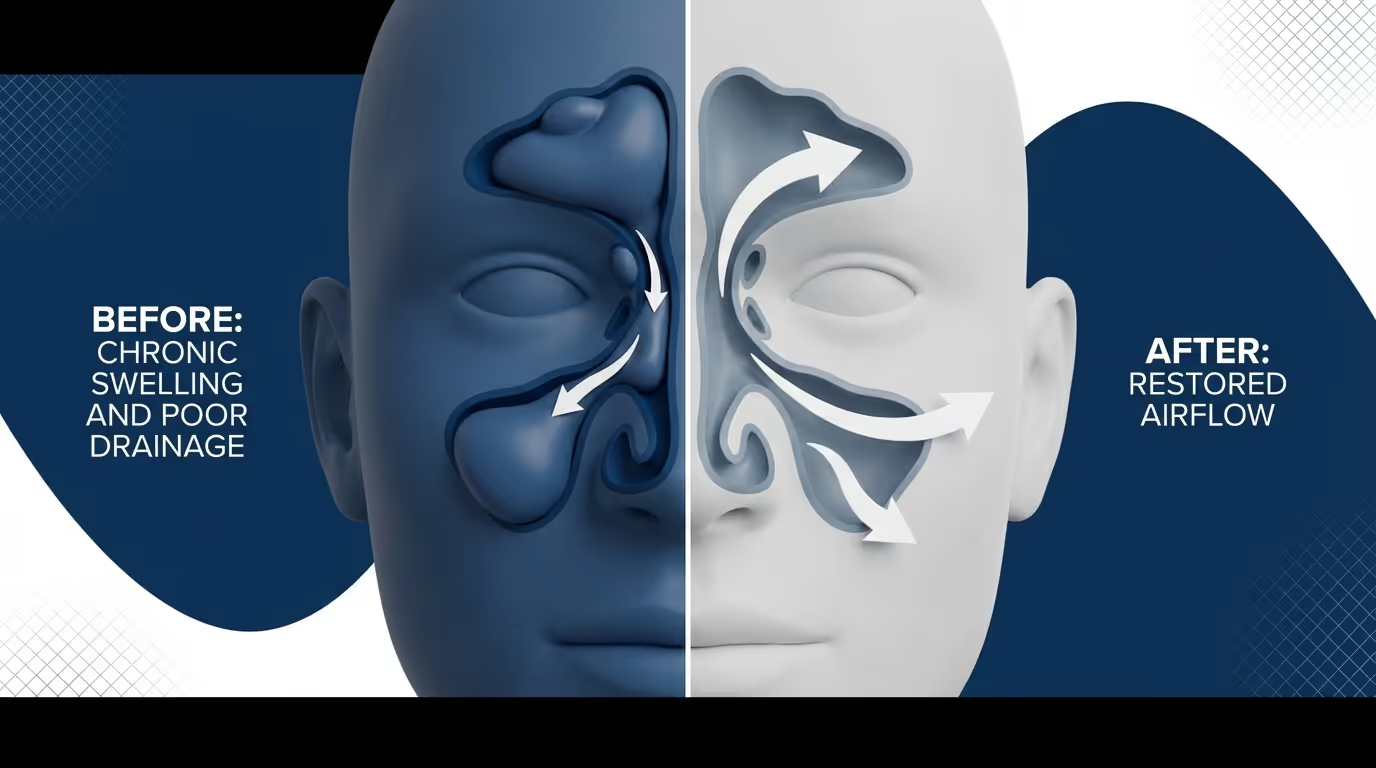
A helpful way to think about this: acute sinusitis is often like a temporary “traffic jam” after a cold, while chronic sinusitis is more like a long-term “construction zone” where swelling, irritation, and poor drainage keep things backed up.
If you want a helpful overview of symptoms, causes, and common care pathways, see Sleep and Sinus Centers of Georgia’s chronic sinusitis overview: https://sleepandsinuscenters.com/chronic-sinusitis
Common symptoms of chronic sinus problems
• Nasal congestion or blockage
• Thick drainage from the nose and/or postnasal drip
• Facial pressure, fullness, or discomfort
• Reduced sense of smell and taste
• Cough, fatigue, or bad breath
A real-world example: someone may describe waking up congested every day, clearing thick mucus frequently, and feeling “underwater” pressure in the cheeks or between the eyes—yet never having a high fever. That symptom pattern can point more toward inflammation and impaired drainage than a straightforward bacterial infection.
Because these symptoms overlap with allergies and nonallergic rhinitis, it’s easy to label everything “a sinus infection”—even when infection isn’t the main problem.
“Red flag” symptoms—when to seek urgent care
• High fever or a rapidly worsening severe headache
• Swelling around the eyes, eye pain, or vision changes
• Stiff neck, confusion, or severe illness
• Severe, sudden one-sided facial swelling or pain
Mayo Clinic emphasizes medical assessment—and sometimes imaging—for persistent or complicated cases. Source: https://www.mayoclinic.org/diseases-conditions/chronic-sinusitis/diagnosis-treatment/drc-20351667
In short, chronic sinusitis is defined by symptoms lasting 12+ weeks, often driven by inflammation and impaired drainage.

Why antibiotics may not be working (the most common reasons)
If you’re stuck in a cycle of chronic sinusitis after multiple antibiotics, one (or several) of these factors may be involved. Persistent symptoms do not automatically mean you need another antibiotic; they often mean the underlying cause hasn’t been fully identified yet.
The cause may not be bacterial
Many “sinus infections” begin as viral upper respiratory infections, and antibiotics do not treat viruses. Other cases are primarily inflammatory, meaning swelling and mucus blockage are driving symptoms more than bacteria.
An easy analogy: antibiotics can be the right tool if bacteria are the problem—but if your real issue is swollen, irritated tissue and trapped mucus, antibiotics are like “changing the oil” when the problem is a flat tire.
Mayo Clinic describes chronic sinusitis as a condition where inflammation and drainage problems are key, and treatment often goes beyond antibiotics. Source: https://www.mayoclinic.org/diseases-conditions/chronic-sinusitis/diagnosis-treatment/drc-20351667
Antibiotic resistance or the wrong antibiotic choice
Even when bacteria are involved, they may not respond to the first medication chosen—especially after repeated exposure. In these situations, clinicians may consider culture-directed treatment (instead of guessing), particularly when there is persistent drainage.
Some ENT offices describe this step as moving from “trial-and-error” to “evidence-guided.” It’s not about blaming anyone—it’s about matching the treatment to what’s actually present.
Additional clinical overviews also highlight that antibiotic non-response can occur when the bacteria aren’t sensitive to the chosen medication. Source: https://www.boiseent.com/blog/sinusitis-infection-not-responding-to-antibiotics/
Biofilms (bacteria “hiding” behind a protective layer)
Some chronic or recurring sinus infections may involve biofilms, where bacteria form a protective layer that makes them harder to eradicate with standard antibiotic courses. This is one reason specialists may focus on improving drainage and reducing inflammation instead of simply repeating prescriptions.
A simple way to picture a biofilm: it’s like bacteria building a “shield” that makes them harder to reach—so the plan often shifts toward changing the sinus environment (better airflow, less swelling, better mucus clearance).
Ongoing inflammation from allergies (or nonallergic rhinitis)
Allergies can keep nasal tissue swollen for months, blocking normal drainage and creating a “stagnant” environment where symptoms persist. Even if bacteria aren’t the main issue, you can still feel congested, pressured, and miserable—sometimes with a predictable pattern (worse during pollen seasons, after cleaning dust, or around pets).
When allergies are suspected, allergy testing can help identify triggers and guide a more targeted plan: https://sleepandsinuscenters.com/allergy-testing
Structural blockage preventing sinus drainage
Anatomy matters. If drainage pathways are narrowed or blocked, mucus can’t clear well—and medications may not reach where they’re needed. Common structural contributors include:
• Nasal polyps
• Deviated septum
• Turbinate enlargement
• Cysts or narrowed sinus openings
Think of your sinuses like rooms connected by small doorways. If those “doorways” are swollen shut or physically narrowed, even the best medication may not get in—and mucus can’t get out.
Mayo Clinic notes that issues like polyps and structural obstruction can contribute to chronic sinusitis and influence treatment decisions. Source: https://www.mayoclinic.org/diseases-conditions/chronic-sinusitis/diagnosis-treatment/drc-20351667
If antibiotics haven’t helped, the root cause is often inflammation, allergy, or blockage—not active bacterial infection.

Next step: See an ENT (what they can do that primary care can’t)
When you’ve had chronic sinusitis after multiple antibiotics, an ENT evaluation can shift the focus from “trying another antibiotic” to confirming what’s truly causing symptoms.
One clinician-style way to frame it: “Our job is to figure out whether this is infection, inflammation, blockage—or a combination—so we can stop the cycle.”
What to expect at an ENT visit
An ENT will typically review:
• How long symptoms have been present (weeks vs. months)
• Symptom pattern (constant vs. flares), likely triggers, seasonality
• What you’ve tried (including which antibiotics, for how long)
• Prior history of polyps, allergies, asthma, or sinus procedures
A nasal exam helps assess swelling, drainage, crusting, and signs of polyps. Telehealth can be useful for initial triage, but an in-person nasal exam often adds key detail that guides treatment.
Advanced diagnostic tools
Depending on your history and exam, an ENT may recommend:
• Nasal endoscopy: an in-office camera exam to visualize deeper nasal structures
• CT scan of the sinuses: to map inflammation and blockage patterns
Helpful explainer on what a sinus CT scan shows: https://sleepandsinuscenters.com/blog/sinus-ct-scan-what-it-shows-and-how-it-helps-diagnose-sinus-issues
• Culture testing in select cases, especially with persistent, significant drainage
Mayo Clinic lists CT imaging and endoscopy among standard tools in chronic sinusitis diagnosis. Source: https://www.mayoclinic.org/diseases-conditions/chronic-sinusitis/diagnosis-treatment/drc-20351667
The goal of ENT testing
The point isn’t “more testing.” It’s clarity:
• Is this infection, inflammation, allergy, anatomy—or a mix?
• Which chronic sinusitis treatment options match your pattern?
• How can you avoid unnecessary additional antibiotics?
Additional ENT guidance similarly recommends specialist evaluation when symptoms persist despite antibiotics. Source: https://www.americansinus.com/blog/sinusitis-what-to-do-if-antibiotics-dont-work-2
An ENT visit helps pinpoint the cause and tailor a plan so you can stop cycling through antibiotics.

Treatment options beyond antibiotics (common next steps)
If you’re searching for help because antibiotics aren’t working for sinus infection symptoms, these are the options an ENT commonly considers—often in combination. In practice, chronic sinusitis treatment is frequently a “stack” of small improvements that add up: clearer drainage, less swelling, fewer triggers, and better medication delivery.
Daily saline irrigation (foundation therapy)
Saline rinses can help:
• Thin and clear mucus
• Flush irritants/allergens
• Support natural drainage
If you’ve never tried it consistently, think of saline like rinsing out a clogged sink: it doesn’t “fix the plumbing,” but it can keep buildup from sitting there day after day.
Safety note: use distilled/sterile water (or water that’s been boiled and cooled), and clean the device as directed.
Nasal corticosteroid sprays (reduce inflammation)
For many people, daily steroid nasal sprays are a cornerstone of care—especially with swelling, chronic congestion, or nasal polyps. These typically work best with consistent use, not just “when symptoms are bad.”
A practical tip many patients miss: technique matters. Spraying slightly outward (toward the ear on the same side) rather than straight up can reduce irritation and help medication reach the right tissue.
Mayo Clinic includes steroid nasal sprays in chronic sinusitis management. Source: https://www.mayoclinic.org/diseases-conditions/chronic-sinusitis/diagnosis-treatment/drc-20351667
Allergy care (when allergies drive swelling)
When allergies are part of the picture, treatment may include:
• Allergen avoidance strategies
• Select over-the-counter or prescription allergy medications (based on symptoms)
• Immunotherapy (allergy shots or drops) for certain patients
If you suspect allergies are keeping symptoms going, consider allergy testing as a practical next step: https://sleepandsinuscenters.com/allergy-testing
Knowing your triggers can turn a vague plan (“take something when it’s bad”) into a targeted one (“treat before peak season” or “reduce specific exposures at home”).
Short courses of oral steroids (for severe inflammation/polyp flares)
In some cases, a clinician may consider a short course of oral steroids to reduce severe swelling or polyp flares. These medications can be effective, but they can also have side effects (sleep changes, mood shifts, blood sugar effects), so they’re not a fit for everyone.
When antibiotics still do matter
Antibiotics can be appropriate when a bacterial infection is confirmed or strongly suspected—especially if there’s significant, persistent purulent drainage. After repeated failures, targeted therapy (sometimes guided by culture) may be more useful than repeating the same approach.
For most people with chronic sinusitis, daily irrigation, nasal steroids, and targeted allergy care form the backbone of treatment.

Procedures that can help when drainage is blocked
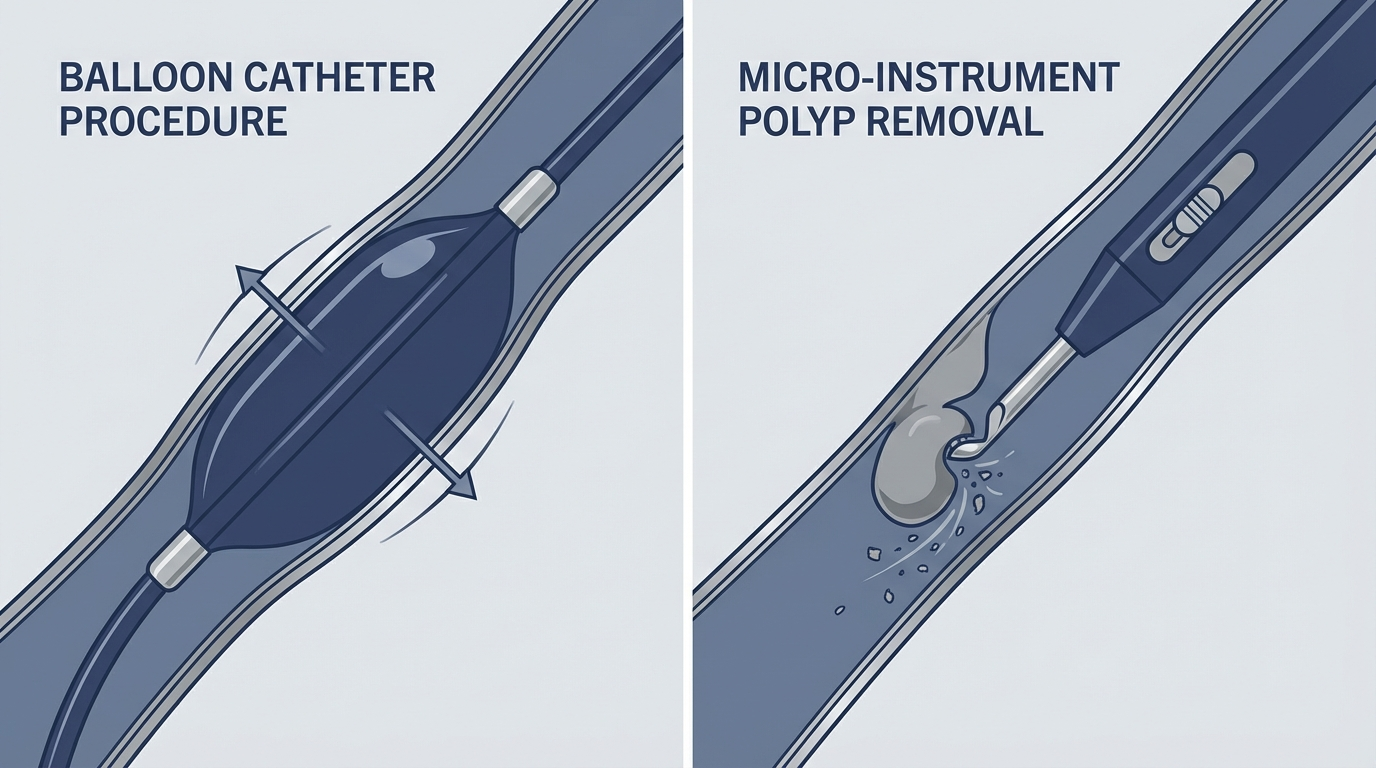
If anatomy or persistent blockage is driving symptoms, procedures may be part of the plan—particularly when medical therapy hasn’t provided enough relief. For many patients, the goal of a procedure isn’t “a last resort”—it’s restoring ventilation and access so everyday treatments work better.
Balloon sinuplasty (minimally invasive)
Balloon sinuplasty uses a small balloon to gently widen certain sinus drainage pathways, helping the sinuses ventilate and drain better. Learn more: https://sleepandsinuscenters.com/balloon-sinuplasty
Endoscopic sinus surgery (ESS)
Endoscopic sinus surgery is a more traditional surgical approach that can:
• Remove obstructions (including polyps in appropriate cases)
• Open drainage pathways more extensively
• Improve airflow and medication access
Mayo Clinic lists endoscopic sinus surgery as an option when chronic sinusitis persists despite medical treatment. Source: https://www.mayoclinic.org/diseases-conditions/chronic-sinusitis/diagnosis-treatment/drc-20351667
Addressing related structural problems
Sometimes sinus procedures are combined with correcting related issues such as septal deviation or turbinate enlargement—because improving the nasal airway can support long-term control.
When drainage pathways are reopened, everyday medical therapy reaches where it needs to go—and flares tend to ease.
Lifestyle and at-home relief tips (safe, patient-friendly)
These strategies don’t “cure” chronic sinusitis, but they may reduce flare intensity and support drainage—especially when paired with a consistent medical plan.
Daily habits that support sinus drainage
• Stay hydrated
• Use a humidifier if air is dry (clean it regularly)
• Warm showers or steam for short-term symptom relief
• Sleep with the head slightly elevated during flares
Reduce triggers that keep inflammation going
• Avoid smoke and vaping exposure
• Limit strong fragrances, sprays, or harsh cleaners if they worsen symptoms
• Improve indoor air quality (filters, dust control)
Medication safety reminders
• Avoid overusing topical decongestant sprays (rebound congestion can occur)
• Be cautious combining multiple OTC cold/flu products—ingredients can overlap
Small daily habits support drainage and reduce flares, especially alongside a consistent medical plan.
Quick callout: antibiotics aren’t always the answer
Antibiotics don’t treat viral sinus infections or chronic inflammation. For long-lasting symptoms, the most effective plan often focuses on reducing swelling and improving drainage. Source: https://www.mayoclinic.org/diseases-conditions/chronic-sinusitis/diagnosis-treatment/drc-20351667
Checklist: Bring this to your ENT appointment
• Symptom timeline (when it started; what changed over time)
• What makes it worse (season, dust, pets, colds, smoke, flying)
• Medications tried (including antibiotic names/dates if possible)
• Prior sinus imaging or procedure records
• Notes on smell changes, sleep disruption, and headache/facial pressure patterns
Short glossary
• Sinusitis: inflammation of the sinus lining (may or may not involve infection)
• Rhinitis: inflammation inside the nose (often allergic or irritant-related)
• Nasal polyps: soft, noncancerous growths that can block airflow and drainage
• Deviated septum: the wall between nostrils is off-center, sometimes narrowing airflow
FAQs
Why do I still feel sick after 2–3 antibiotics?
With chronic sinusitis after multiple antibiotics, common explanations include a non-bacterial cause, ongoing inflammation, resistant bacteria, biofilm involvement, or blocked drainage that prevents normal clearance. An ENT evaluation can help separate these possibilities. Source: https://www.mayoclinic.org/diseases-conditions/chronic-sinusitis/diagnosis-treatment/drc-20351667
How do I know if it’s viral, bacterial, or allergies?
Symptoms can overlap. Duration, triggers, nasal exam findings, and—when needed—endoscopy or imaging can clarify what’s driving symptoms. Source: https://www.mayoclinic.org/diseases-conditions/chronic-sinusitis/diagnosis-treatment/drc-20351667
Should I ask for a CT scan?
A sinus CT scan is often considered when symptoms persist, recur frequently, or when procedures are being discussed. It helps map inflammation and blockage patterns. Source: https://www.mayoclinic.org/diseases-conditions/chronic-sinusitis/diagnosis-treatment/drc-20351667
Can a deviated septum or polyps make antibiotics “not work”?
Yes. If mucus can’t drain well, symptoms can persist even if bacteria are not the main driver, and medication may not reach the areas that matter. Mayo Clinic discusses polyps and obstructive factors as contributors to chronic sinusitis. Source: https://www.mayoclinic.org/diseases-conditions/chronic-sinusitis/diagnosis-treatment/drc-20351667
What’s the difference between balloon sinuplasty and endoscopic sinus surgery?
In general, balloon sinuplasty dilates natural drainage pathways, while endoscopic sinus surgery reshapes anatomy more directly and can remove obstructing tissue (such as polyps in appropriate cases). The best option depends on anatomy, symptom pattern, and CT findings.
Conclusion — A clear plan for next steps
If you’re dealing with chronic sinusitis after multiple antibiotics, repeating the same approach over and over can be frustrating—and often isn’t the most effective path forward. The next best step is usually an ENT evaluation to identify the real driver (infection vs. inflammation vs. anatomy) and match you with the right chronic sinusitis treatment plan.
Before your visit, write down your symptom timeline, triggers, and what you’ve already tried. That preparation can make the appointment more efficient—and help you move toward lasting relief.
If you’re ready to take the next step, you can book an appointment with Sleep and Sinus Centers of Georgia here: https://www.sleepandsinuscenters.com/
The most successful plans focus on reducing swelling and restoring drainage—so you can finally break the cycle.
Medical disclaimer
This article is intended for general educational purposes only and is not a substitute for professional medical advice, diagnosis, or treatment. If you experience severe symptoms or red flags—including eye swelling, vision changes, or a rapidly worsening headache—seek urgent medical care immediately. Always consult a qualified healthcare provider for diagnosis and treatment.
Don’t let allergies slow you down. Schedule a comprehensive ENT and allergy evaluation at Sleep and Sinus Centers of Georgia. We’re here to find your triggers and guide you toward lasting relief.