
Balloon Sinuplasty Failure: What Happens If It Doesn’t Work?
Balloon sinuplasty helps open blocked sinus drainage pathways for many people. But if you’re still dealing with congestion, pressure, or infections afterward, it can feel discouraging—and confusing. Success is not always a simple yes/no; improvement depends heavily on your unique anatomy, inflammation pattern, and underlying conditions. The good news: ongoing symptoms don’t automatically mean “nothing can be done.” Often, they mean the underlying driver (like allergies, inflammation, or anatomy) wasn’t fully addressed or has returned. A standard overview of balloon sinuplasty and expected follow-up care is available in health library resources. [2]
It also helps to define what “failure” means. Balloon sinuplasty failure can describe a few different experiences: no improvement, partial improvement, or symptoms that return months or years later. This article explains what that can look like, common reasons it happens, potential complications to watch for, and what follow-up paths (medical and procedural) are commonly considered.
One simple way to think about it: balloon dilation can “widen the doorway,” but it can’t always stop the “room” (the sinus lining) from getting inflamed again—especially when allergies, chronic inflammation, or polyps are part of the picture.
Internal resource: Learn more about balloon sinuplasty at Sleep and Sinus Centers of Georgia: https://sleepandsinuscenters.com/balloon-sinuplasty
Key Takeaways (Quick Read)
- “Failure” may mean no improvement, only partial improvement, or recurrence after a period of relief.
- Persistent sinus symptoms can come from allergies, ongoing inflammation, complex anatomy, or more severe chronic sinusitis.
- Some people eventually need revision balloon sinuplasty or endoscopic sinus surgery (ESS)—especially when disease is more widespread.
- Certain symptoms (vision changes, heavy bleeding, high fever, severe headache, clear watery drainage) warrant prompt medical evaluation.
- A good next step is usually confirming the cause with history, nasal endoscopy, and sometimes CT imaging, then matching treatment to what’s driving symptoms.
Medical note: This article is for general education and does not diagnose conditions or replace in-person medical care. If you have severe or worsening symptoms, seek urgent evaluation.

What counts as “balloon sinuplasty failure”?
When patients say balloon sinuplasty didn’t work, they’re often describing one of these scenarios. Importantly, the procedure can be technically successful (the opening was dilated) while symptoms still persist because something else is driving irritation or swelling.
Common ways patients describe it
- “I never felt better after the procedure.” Symptoms like congestion and facial pressure may continue with little change.
- “I felt better for a while, then it came back.” Some people notice improvement initially, then symptoms gradually return.
- “My CT/endoscopy still shows blockage or inflammation.” Even if symptoms fluctuate, imaging or endoscopic exam may show ongoing disease.
To make it more concrete, one patient might say: “My infections stopped, but I still feel stuffed up every day.” Another might say: “I had three great months—then the pressure and drainage came right back.” Those are different patterns, and they often point to different next steps.
When symptoms should be improving vs. when to recheck
Many people have temporary symptoms after balloon dilation (stuffiness, mild drainage, mild discomfort). Educational recovery expectations are described in commonly used health library resources. [2] If symptoms aren’t trending better within the expected recovery window, or if they clearly worsen again after a period of improvement, it’s reasonable to recheck with an ENT. Follow-up visits help clarify whether you’re dealing with healing-related inflammation, allergy-driven swelling, a new infection, or persistent sinus disease that didn’t respond as hoped.
Internal resource: Learn more about balloon sinuplasty at our practice: https://sleepandsinuscenters.com/balloon-sinuplasty
It’s often the pattern of symptoms and objective findings—not a simple pass/fail—that guides next steps.
Signs and symptoms that may persist if balloon sinuplasty doesn’t work
Ongoing sinus symptoms
If balloon sinuplasty didn’t work as hoped, people commonly report:
- Facial pressure or pain
- Nasal congestion or obstruction
- Thick drainage or post-nasal drip
- Reduced sense of smell
- Recurrent sinus infections or frequent “sinus flares”
These symptoms can overlap with other conditions (like allergies, non-allergic rhinitis, migraine, reflux, or TMJ-related pain). Therefore, self-diagnosis based on symptoms alone is unreliable. For example, a “sinus headache” sensation can sometimes track more closely with headache disorders than with sinus blockage—so the best next step is a careful exam rather than assuming the sinuses are the culprit.
Symptoms that suggest complications (seek care promptly)
Serious complications are uncommon, but it’s important to recognize red flags that may need same-day assessment:
- Heavy or worsening nosebleeds (epistaxis)
- Fever, increasing pain, or foul-smelling drainage (possible infection)
- Vision changes, severe eye pain, or swelling around the eye (rare but urgent)
- Clear, watery drainage—especially if it increases when bending forward (a rare concern discussed in complication reviews) [3]
(These are educational examples; evaluation decisions depend on the full clinical picture.)
If symptoms persist or feel unusual, evaluation is more reliable than self-diagnosis.

Why balloon sinuplasty may fail (root causes)
A true balloon sinuplasty failure is often less about the balloon itself and more about what’s happening in the surrounding tissues over time. Think of sinus drainage like a gutter: widening the downspout helps, but if debris (inflammation, thick mucus, polyps) keeps building up, you may still get backup.
Allergies or ongoing inflammation (a major reason symptoms come back)
Allergic inflammation can keep the sinus lining swollen even when the drainage opening has been widened. In that situation, the procedure may have technically opened the pathway, but tissue swelling can still create blockage-like symptoms. Many general overviews emphasize the role of ongoing care after sinus procedures. [2] A common scenario: someone feels improved right after healing, then pollen season hits and symptoms flare again—congestion, post-nasal drip, and pressure. That pattern often suggests inflammation control needs to be strengthened alongside any procedural work.
Internal resource: When allergies are suspected, allergy testing can help clarify triggers: https://sleepandsinuscenters.com/allergy-testing
Complex sinus anatomy or structural blockage
Balloon dilation targets specific narrow drainage pathways. If symptoms are strongly influenced by structural factors—such as a deviated septum, turbinate enlargement, or naturally narrow anatomy—balloon dilation alone may not address everything contributing to obstruction. In these cases, airflow through the nasal passages may remain restricted even if sinus openings are improved.
Chronic sinusitis severity (with or without nasal polyps)
Balloon dilation is often best suited to selected patterns of sinus disease. If inflammation is widespread or nasal polyps are present, simply dilating a pathway may not sufficiently reduce the overall inflammatory burden. When disease is more extensive, broader approaches may be considered based on endoscopy and CT findings.
Internal resource: Learn more about chronic sinusitis and why it can be persistent: https://sleepandsinuscenters.com/chronic-sinusitis
Underlying medical conditions that affect healing
Some conditions can make inflammation harder to control or healing less predictable—such as poorly controlled asthma, immune-related issues, or other inflammatory conditions. This doesn’t mean improvement isn’t possible; it simply means follow-up care may need to be more individualized.
Scar tissue or restenosis (re-narrowing of the sinus opening)
In some cases, healing changes (including scarring) may contribute to re-narrowing of the drainage pathway. Complication and side-effect summaries describe scarring/restenosis as a possible contributor to recurrent blockage in a subset of patients. [3] If restenosis is the issue, symptoms may improve at first and then gradually return. An ENT can often look for this pattern on nasal endoscopy and confirm it with CT imaging if needed.
Addressing the driver—anatomy, inflammation, or both—is as important as widening the opening.
How often does balloon sinuplasty need revision surgery?
What studies show about revision risk
Research comparing balloon dilation and other approaches suggests that some patients require revision procedures, and some studies report a higher revision surgery risk within five years for balloon-based procedures compared with more traditional surgical approaches. Reported revision ranges vary by study design and patient selection; published figures include approximately 7.9% to 9.7% in different timeframes and cohorts. [1][5] These reported revision rates are general population estimates and do not predict individual outcomes. Revision risk depends heavily on factors like disease severity, inflammation type, and anatomy.
Who may be at higher risk for needing another procedure
- Higher overall disease burden or more extensive chronic sinusitis
- Nasal polyps
- Significant allergies or uncontrolled inflammation
- Structural factors that a balloon alone can’t fully address
Population averages cannot predict your individual outcome; a tailored evaluation matters most.
Balloon sinuplasty vs. endoscopic sinus surgery (ESS) if symptoms persist
Key differences in approach
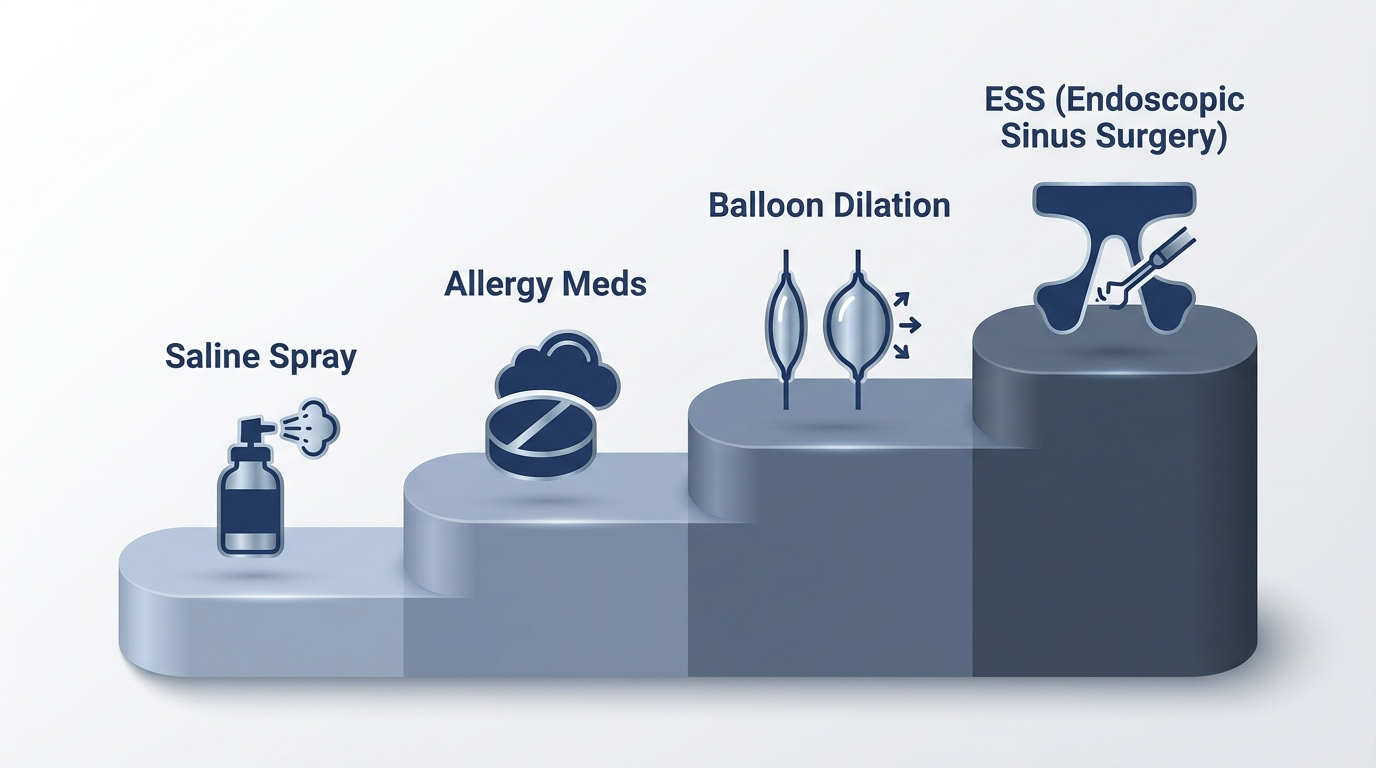
- Balloon sinuplasty uses a small balloon to dilate a sinus opening, generally with less tissue removal.
- Endoscopic sinus surgery (ESS) uses an endoscope to visualize the sinus pathways and can remove inflamed tissue or polyps and create broader openings when appropriate.
Internal resource: Read more about endoscopic sinus surgery (ESS): https://sleepandsinuscenters.com/blog/endoscopic-sinus-surgery-what-patients-should-know
Complications: what’s common vs. rare
Across published discussions, balloon-based approaches are often associated with fewer overall postoperative complications compared with more extensive surgery in appropriately selected patients, but complications can still occur. Reviews describe potential issues like bleeding and infection, and rare but serious risks such as CSF leak or orbital injury (rare complications, occurring in fewer than 1% of cases). [2][3][4]
How ENT specialists decide between repeat balloon dilation vs. ESS
- Your symptom pattern and triggers (seasonal vs. year-round, infection-like flares vs. constant obstruction)
- Nasal endoscopy findings (swelling, drainage, polyps, scarring)
- CT imaging to map which sinuses are affected
- Allergy evaluation and response to medical therapy
This is when the phrase “balloon sinuplasty didn’t work” becomes more specific: it signals a re-check of diagnosis, confirmation of anatomy, and a next step that aligns with what’s actually driving symptoms now.
The best procedure is the one that matches your disease pattern and goals with the least risk.

What to do next if your balloon sinuplasty didn’t work (step-by-step plan)
Step 1 — Confirm what’s causing symptoms now
Not every “sinus” symptom comes from sinus blockage. Congestion and pressure can overlap with allergic/non-allergic rhinitis, headache disorders, reflux irritation, or jaw/TMJ issues. Objective evaluation (endoscopy and/or CT) helps sort that out. A practical way to frame this: What are you feeling; what does the nose/sinus lining look like; and what do the sinuses look like on imaging—do those match?
Step 2 — Optimize medical management (often essential even after procedures)
Common non-surgical tools that may be part of an ongoing plan include:
- Saline irrigation for mechanical mucus clearance
- Topical nasal steroid sprays—or in some cases steroid rinses—used with correct technique (as directed)
- A targeted allergy plan (avoidance strategies, medication options, and immunotherapy when appropriate)
Step 3 — Consider targeted follow-up treatments
Depending on findings, options may include:
- Revision balloon sinuplasty in selected cases (for a specific area that re-narrowed or didn’t adequately open)
- ESS if broader opening or tissue/polyp removal is needed
- Addressing contributing anatomy (septum/turbinates) when clearly linked to obstruction
Clarity first, then the least invasive option that reliably addresses the cause.
Lifestyle tips to reduce recurrence after balloon sinuplasty (and protect results)
Allergy control at home
- Dust-mite covers for pillows/mattress; wash bedding hot when possible
- HEPA filtration in sleeping areas for some households
- During high pollen periods: keep windows closed and consider showering after outdoor time
Daily sinus hygiene
- Use saline products as instructed and with safe water practices (product labeling matters)
- Avoid irritants that inflame nasal tissue, like smoke and strong fragrances
When to time meds for best control
Technique and consistency can make a real difference. Many people benefit from asking their clinician to demonstrate spray angle/positioning and to clarify whether rinses should come before sprays in their routine.
Small, consistent habits often protect results better than occasional intensive efforts.

When to call your ENT urgently (red flags)
Same-day or emergency evaluation is commonly recommended for symptoms such as:
- Vision changes, severe eye swelling, or eye pain
- Severe headache with neck stiffness or confusion
- Large, persistent bleeding
- Clear fluid drainage that seems unusual or increases with bending forward (a rare concern discussed in complication summaries) [3]
When in doubt with eye symptoms, severe headache, or heavy bleeding, err on the side of same-day care.
Setting expectations before your first balloon sinuplasty
Before any procedure, discuss:
- Likely benefits based on your specific anatomy and disease pattern
- Alternatives (continued medical therapy, ESS) and why one may fit you better
- Short- and long-term risks, including the small possibility of needing revision
- The role of ongoing allergy/inflammation control after any sinus procedure
Internal resource: Learn more about balloon sinuplasty at our practice: https://sleepandsinuscenters.com/balloon-sinuplasty
Clear expectations up front can make recovery smoother and outcomes more satisfying.
FAQs
Is balloon sinuplasty failure common?
Most patients improve, but a minority have persistent or recurrent symptoms and some require revision procedures. Reported revision ranges in the literature vary by study and population. [1] These reported revision rates are general population estimates and do not predict individual outcomes.
Can balloon sinuplasty be repeated?
Sometimes, yes. Whether repeat dilation makes sense depends on the location of ongoing blockage and whether inflammation, polyps, or anatomy suggest another approach would be more effective.
If balloon sinuplasty didn’t work, does that mean I need endoscopic sinus surgery?
Not always. Some people mainly need better control of allergies/inflammation; others may benefit from additional procedures. This decision should always be made in consultation with an ENT specialist after reviewing symptoms, endoscopy, and imaging.
How do I know if it’s allergies vs. sinus infection vs. surgery failure?
A simplified comparison (not a diagnosis):
- Allergies: itch/sneeze, clear drainage, seasonal pattern
- Infection-like flare: thicker/discolored drainage, worsening facial pressure, sometimes fever
- Possible recurrence/ongoing sinus disease: repeated flares, ongoing obstruction, reduced smell, objective findings on endoscopy/CT
Because overlap is common, objective evaluation can be more reliable than symptoms alone.
What complications should I watch for after balloon sinuplasty?
Commonly discussed concerns include bleeding and infection signs. Rare but serious complications (like CSF leak or eye-related symptoms) are described in educational references and warrant prompt evaluation if suspected. [2][3]
Conclusion: Persistent symptoms don’t mean you’re out of options
If you’re worried about balloon sinuplasty failure, it may help to reframe the situation: persistent symptoms often mean there’s an ongoing driver—like allergies, chronic inflammation, polyps, or anatomy—that needs a clearer diagnosis and a more tailored plan. Sometimes that plan is medical therapy, sometimes it’s a revision balloon sinuplasty, and sometimes endoscopic sinus surgery (ESS) is the more effective next step.
To explore next steps, Sleep and Sinus Centers of Georgia can review symptoms, endoscopy findings, and imaging and help map out an evidence-based plan that matches the cause—rather than guessing. Ready for a second opinion or a re-check? Book an appointment: https://www.sleepandsinuscenters.com/
References
1. https://pubmed.ncbi.nlm.nih.gov/29947260/
2. https://my.clevelandclinic.org/health/treatments/21977-balloon-sinuplasty
3. https://entdoctorslosangeles.com/balloon-sinuplasty-risks-and-side-effects-and-how-to-manage-them/
4. https://onlinelibrary.wiley.com/doi/full/10.1002/wjo2.222
5. https://journals.sagepub.com/doi/abs/10.1177/00034894251387789
Disclaimer
This article is for educational purposes only and is not medical advice. Please consult a qualified healthcare provider for diagnosis and treatment.
Don’t let allergies slow you down. Schedule a comprehensive ENT and allergy evaluation at Sleep and Sinus Centers of Georgia. We’re here to find your triggers and guide you toward lasting relief.