Should You Wake a Sleepwalker? Safety Tips and What Experts Recommend
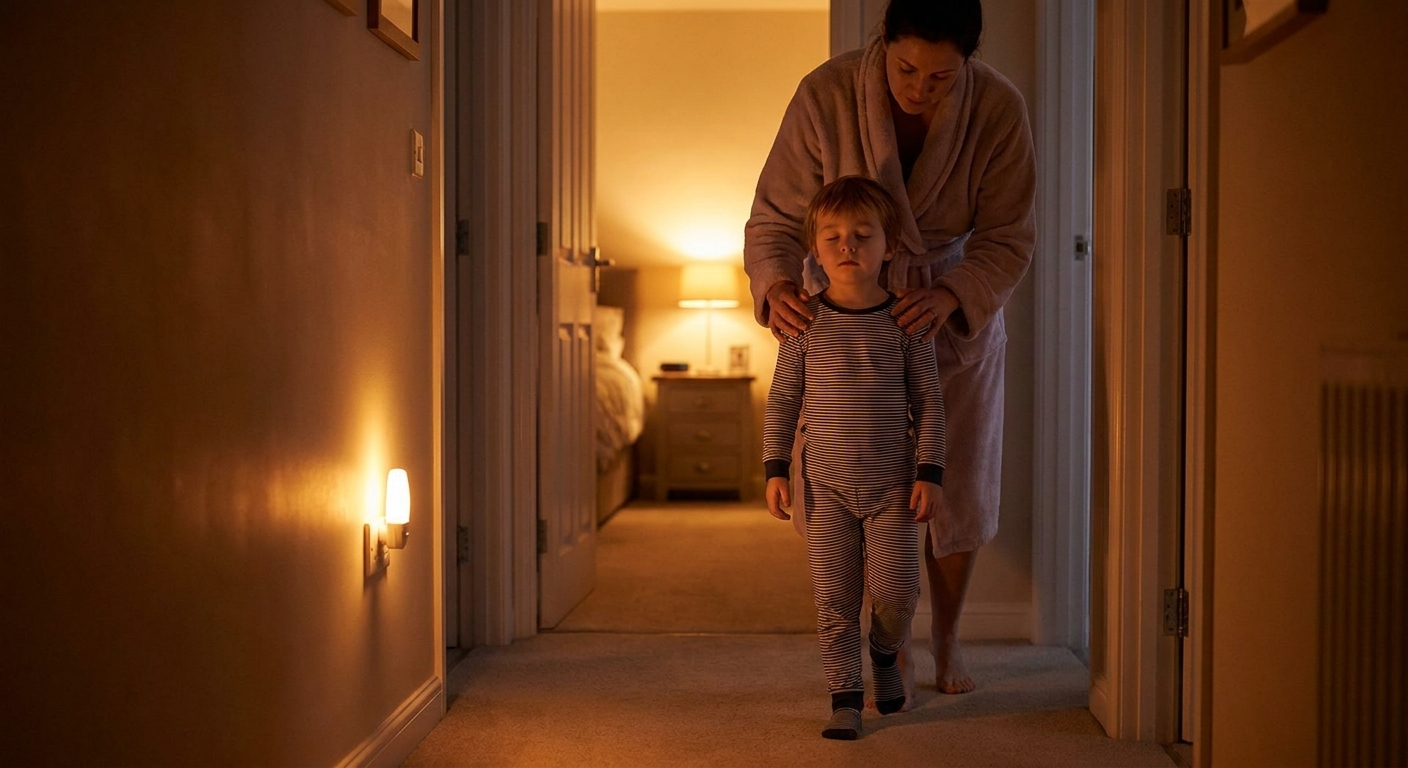
It’s the middle of the night. You hear footsteps—then you see a loved one walking through the hallway with a blank expression, not quite responding the way they normally would. It can be unsettling, especially if it’s your child.
If you’re wondering should you wake a sleepwalker, the good news is that many sleepwalking episodes are brief and not remembered in the morning. According to the NHS, sleepwalking is often benign, but it can pose safety risks—so what you do in the moment matters most. This guide covers what to do if someone is sleepwalking, practical sleepwalking safety tips to reduce injury risk, and when it’s time to consider professional evaluation.
One helpful way to think about sleepwalking is “awake-looking, not fully awake.” The body may be moving, but awareness, judgment, and coordination aren’t working the way they do during normal wakefulness—so your job is to keep things calm and safe until the episode passes.
Quick Answer—Should You Wake a Sleepwalker?
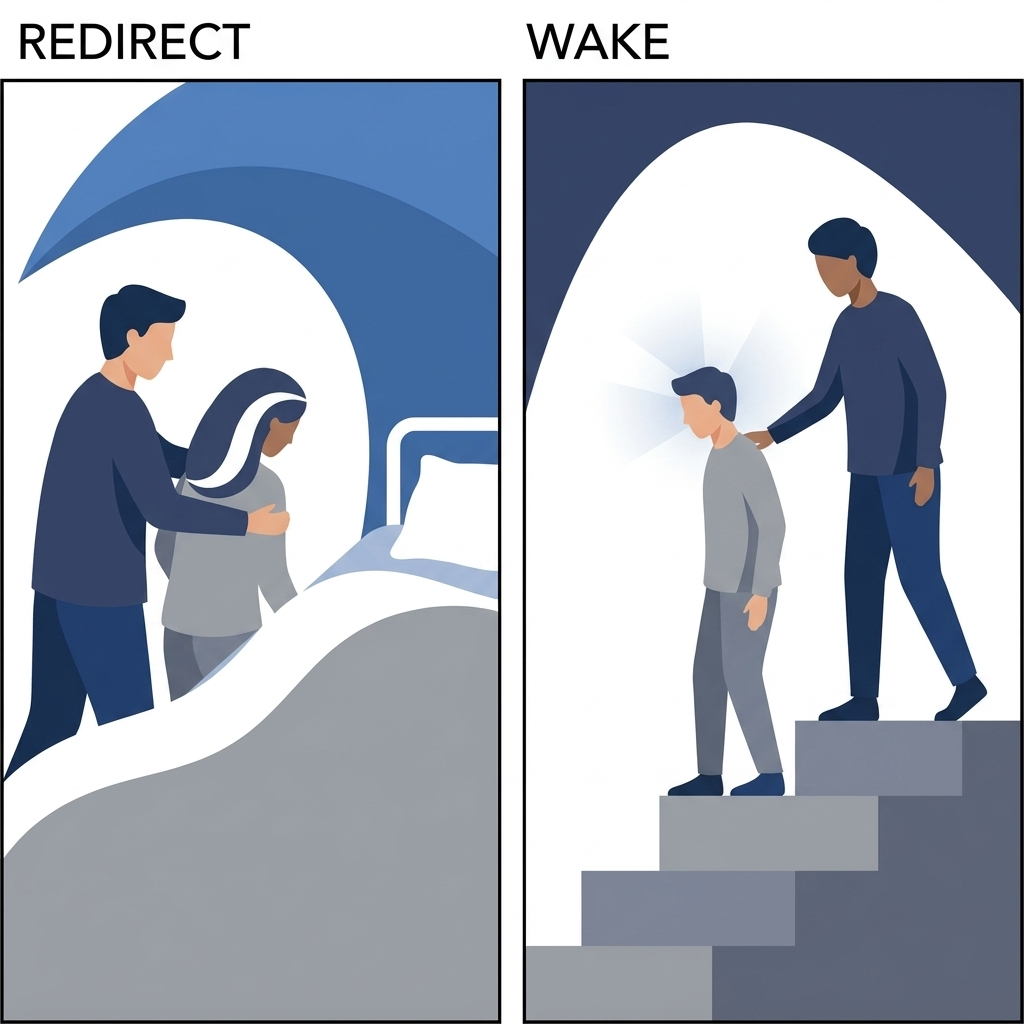
In many situations, it is safest to prioritize safety and calmly guide the person back to bed rather than waking them abruptly. The NHS notes that sudden waking can lead to confusion, distress, or agitation, which may increase the chance of an accidental injury during the episode.
So, should you wake a sleepwalker? Often, try to redirect them safely first. Many episodes end quickly once the person is gently steered back to bed.
When waking may be necessary
There are situations where waking may be the safest option, such as when the person is:
- Approaching stairs, a balcony, or an open window
- Heading toward an exit or outside
- Entering a higher-risk area (kitchen, garage, workshop)
- Doing something complex or potentially dangerous
- Not able to be safely redirected
A simple example: if someone is reaching for keys at the front door or drifting toward the top of a staircase, the injury risk rises—and a gentle wake-up may be safer than trying to physically guide them past the hazard.
If you must wake them, how to do it gently
If you decide waking is necessary, aim to do it in the least startling way possible:
- Use a calm, quiet voice and keep lights low
- Say their name softly and use simple directions (“Let’s go back to bed.”)
- Avoid shaking them, shouting, or startling them awake (NHS, 2025)
If they wake confused, keep your language short and reassuring. A steady tone helps reduce the chance they’ll panic or try to bolt away from you.
What Is Sleepwalking? (Somnambulism)
Sleepwalking (somnambulism) is a type of sleep disorder called a parasomnia—a behavior that happens during sleep. A person may sit up, walk around, or do routine actions while not fully awake.
You might see “everyday” behaviors that look purposeful—like opening a door, rearranging blankets, or walking to the bathroom. But their brain is not operating with normal awareness, which is why arguing, questioning, or demanding answers usually goes nowhere in the moment.
When does sleepwalking usually happen?
Sleepwalking often occurs earlier in the night and typically lasts a few minutes. Many people don’t remember the episode the next day. (NHS, 2025)
That timing matters: if someone repeatedly seems confused and wandering closer to morning, or if episodes look very different than typical sleepwalking, it’s worth mentioning that detail to a clinician.
Who sleepwalks most often?
Sleepwalking in children is more common than in adults, and many children outgrow it without treatment. (NHS, 2025; Mayo Clinic, 2024) For parents, this can be reassuring: the goal is usually not to “solve it overnight,” but to reduce risk, support healthy sleep, and monitor whether it improves over time.
Conclusion: Sleepwalking is common—especially in kids—and often brief, but planning for safety helps prevent injuries.
Sleepwalking Symptoms—How to Tell It’s Not Just “Waking Up”
Sleepwalking can sometimes look like someone is awake, but certain clues may suggest they are not fully conscious. Keep in mind that similar features can occur with other conditions, so a clinician’s input can be valuable when episodes are frequent or unusual.
Common signs include:
- Sitting up or walking with a blank stare
- Slow, clumsy, or uncoordinated movements
- Limited or unusual responses to questions
- Appearing “not there” even with eyes open
- Little to no memory of the event afterward (NHS, 2025)
A practical example: someone may walk past you without recognizing you, answer with a few mumbled words, or seem to “look through” you. That’s a hint this may be sleepwalking rather than a normal nighttime wake-up.
Safety red flags during an episode
Some behaviors raise the urgency because they increase the risk of injury:
- Moving toward stairs, doors, windows, or sharp objects
- Trying to leave the home
- Attempting complex tasks (rare, but important to take seriously)
- Becoming startled, panicked, or reactive if blocked
Conclusion: If risk rises—like near stairs or an exit—switch from guiding to a gentle wake-up.
What to Do During a Sleepwalking Episode (Step-by-Step)
The goal is straightforward: reduce the risk of injury and minimize distress.
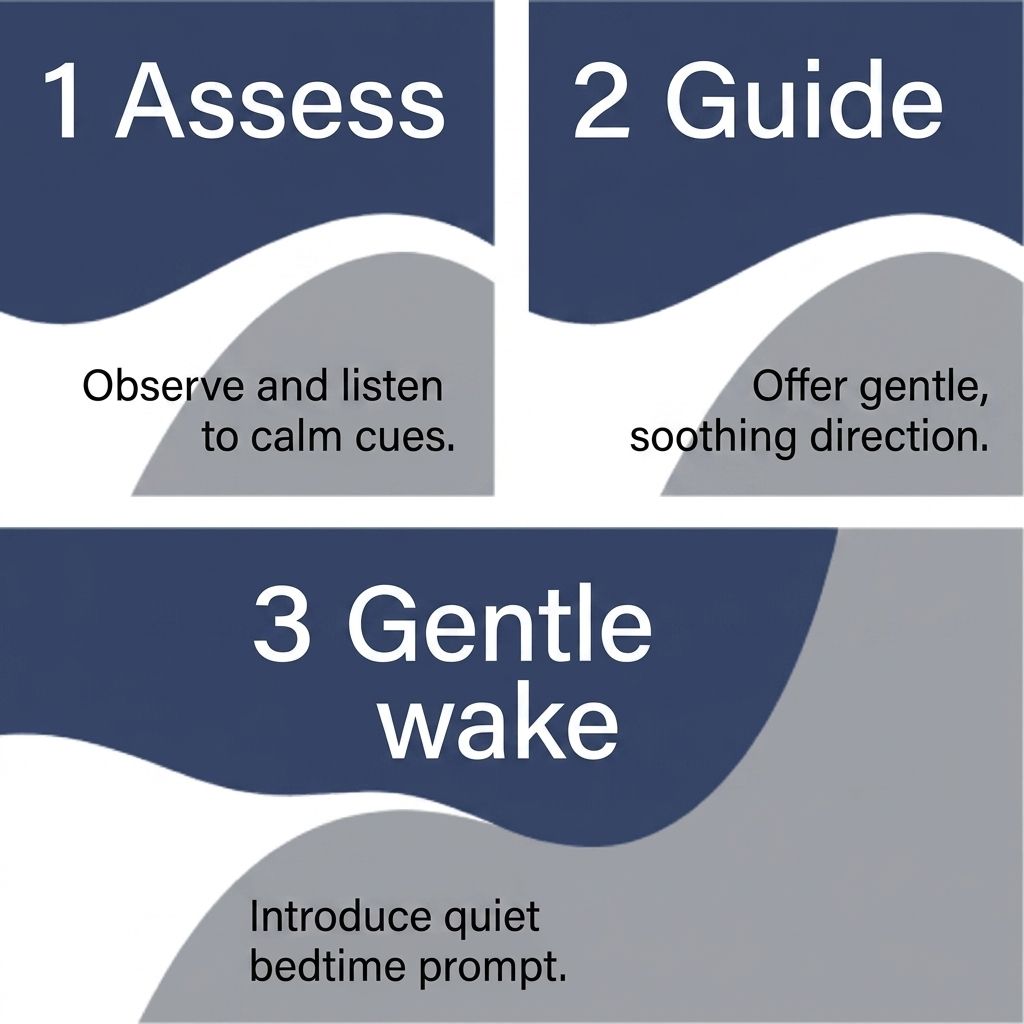
Step 1 — Stay calm and assess immediate danger
Take a quick look around for hazards:
- Stairs, slippery floors, clutter
- Glass objects, sharp items
- Exterior doors or open windows
A calm response can help you think clearly and avoid escalating the situation. If you react loudly, the sleepwalker may startle—similar to how anyone might flinch or jerk when surprised.
Step 2 — Gently guide them back to bed
When it’s safe to do so, guiding is often the best first move (NHS, 2025):
- Stand slightly to the side rather than blocking them head-on
- Use gentle guidance (like a light touch to the shoulder or upper arm if they tolerate it)
- Use short, simple phrases: “This way,” “Back to bed.”
Think “soft redirect,” not “confrontation.” For instance, if a child is wandering toward the hallway, you might quietly turn them around and walk alongside them back to their room.
Step 3 — Avoid common mistakes
These responses can increase confusion or agitation:
- Don’t shout, shake, or startle them awake
- Don’t argue or demand an explanation
- Don’t physically restrain them unless there’s immediate danger
If they resist, step back and reassess the environment. Sometimes it’s safer to create space, remove hazards, and guide again once they’re moving more predictably.
Step 4 — If waking is necessary, do it gently
If there’s real risk, gentle waking may be appropriate:
- Increase light slowly (rather than flipping on bright overhead lights)
- Speak softly and repeat simple reassurance
- Expect disorientation; once awake, encourage a calm return to bed (NHS, 2025)
A useful “script” is: name + reassurance + direction. Example: “Sam. You’re okay. Let’s go back to bed.”
Step 5 — After the episode
Once they’re safely in bed:
- Keep the environment quiet and low-stimulation
- Consider jotting down what happened (time, duration, what they did, any possible triggers)
- If they don’t remember in the morning, that can be normal (NHS, 2025)
Conclusion: Stay calm, guide when safe, and wake gently only if risks are present.
How to Make the Home Safer for a Sleepwalker (Injury Prevention Checklist)
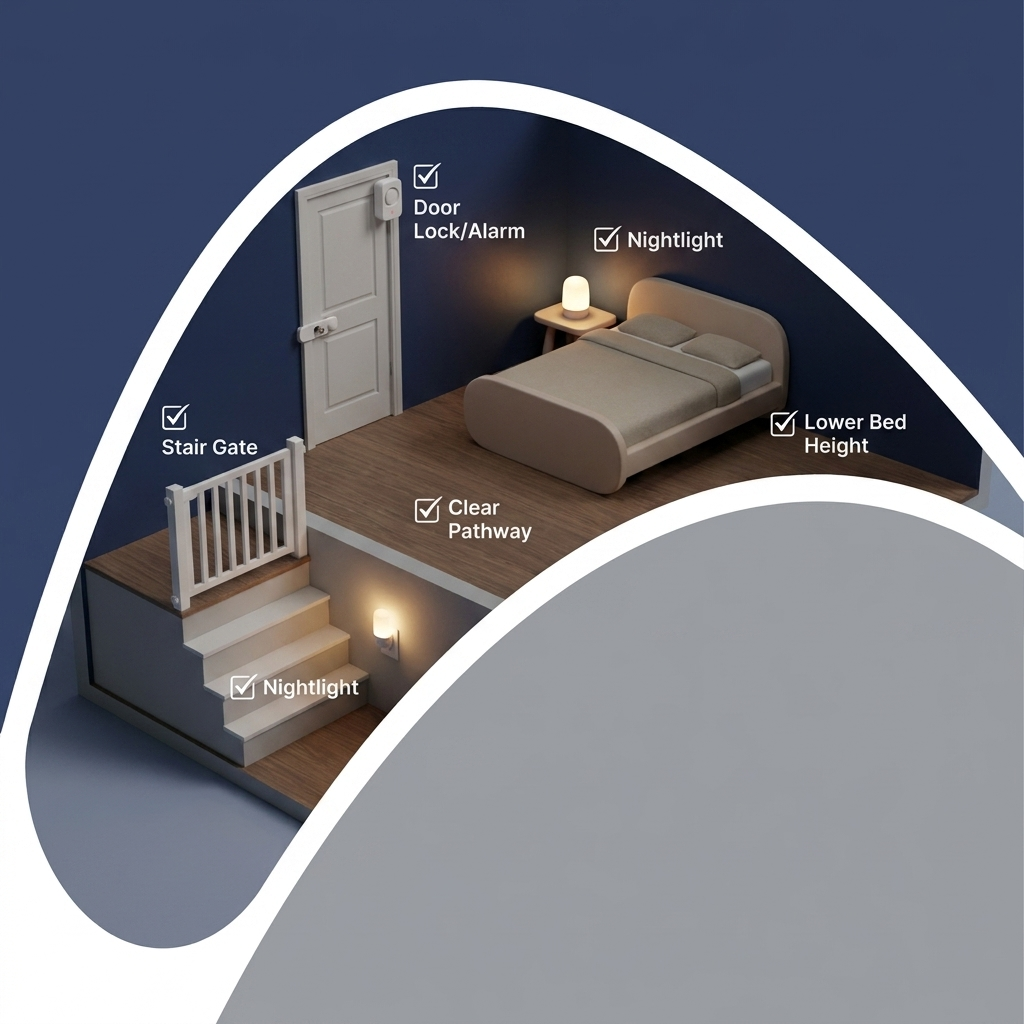
Many sleepwalking safety tips focus on preventing falls, exits, and cuts—especially for sleepwalking in children. The NHS emphasizes safety-proofing the environment to reduce injuries. (NHS, 2025)
If you do only one thing, prioritize the “big risks” first: stairs, doors to outside, and sharp objects.
Secure exits and hazards
- Lock or secure doors and windows (consider childproof mechanisms as appropriate)
- Add stair gates or block stair access when needed
- Consider door alarms or motion sensors if episodes are frequent or if leaving the bedroom/home is a concern
Remove trip and cut risks
- Clear clutter, cords, loose rugs, and low furniture from walking paths
- Store sharp objects and breakables safely (NHS, 2025)
Bedroom setup tweaks
- Consider a lower bed in higher-risk situations
- Avoid bunk beds for children who sleepwalk
- Keep a clear path to the bathroom to reduce stumbling
Conclusion: A safer setup won’t treat sleepwalking, but it meaningfully lowers the odds of injury.
Causes and Triggers of Sleepwalking
Sleepwalking often has more than one contributing factor, and triggers can vary by person and age.
Common triggers
- Sleep deprivation or an irregular sleep schedule (Mayo Clinic, 2024)
- Stress or anxiety
- Fever/illness, especially in children (Cleveland Clinic, 2023)
- Alcohol, more commonly relevant in adults (Mayo Clinic, 2024)
Medical and sleep-related contributors
- Family history/genetic tendency (Cleveland Clinic, 2023)
- Certain medications (Mayo Clinic, 2024)
- Other sleep issues that fragment sleep, such as sleep-disordered breathing (Mayo Clinic, 2024)
If you’re looking up ways to reduce sleepwalking, it often starts with identifying triggers, improving sleep consistency, and addressing underlying sleep disruption.
Conclusion: Track patterns—like stress, illness, or short sleep—to spot and address triggers.
Treatment Options—What Experts Recommend
Many people—especially children—don’t need formal treatment, and sleepwalking may resolve over time. (NHS, 2025; Mayo Clinic, 2024) A clinician might focus first on safety and routine, then consider whether anything is repeatedly interrupting sleep and triggering events.
First-line approach: address triggers + safety + sleep routine
Educational, prevention-focused strategies may include:
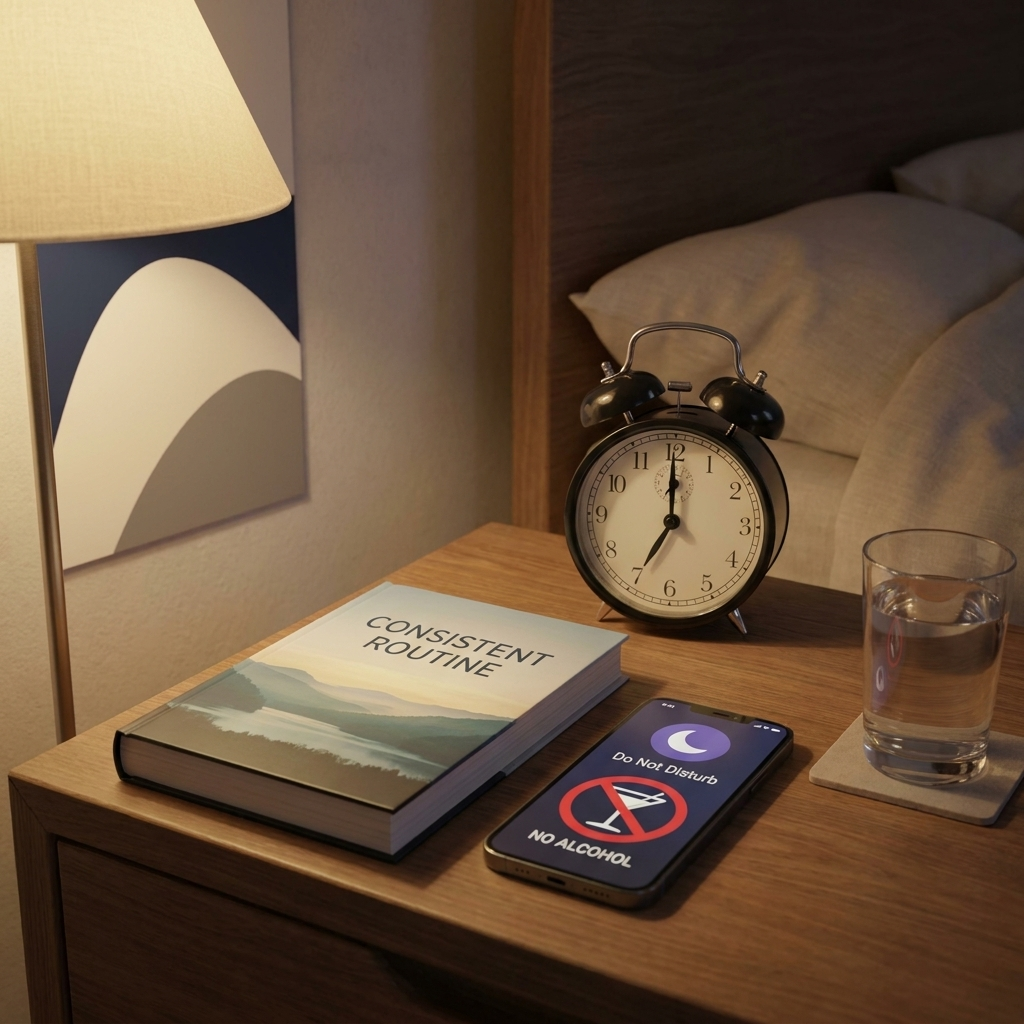
- Keeping a consistent sleep schedule
- Making sure sleep duration is adequate
- Building a calming wind-down routine
- Avoiding alcohol and sedatives unless prescribed (Mayo Clinic, 2024)
- Reducing environmental risks in the home
For more guidance on routines that support better rest, see our resource on sleep hygiene strategies that support better rest: https://sleepandsinuscenters.com/blog/sleep-hygiene-and-its-impact-on-ent-disorders-key-insights
When to see a doctor or sleep clinic
Consider an evaluation when episodes are:
- Frequent or escalating
- Risky (injuries, stairs, leaving the house)
- Associated with major daytime sleepiness or impaired functioning
- Occurring with other sleep symptoms (snoring/gasping, unusual movements, concern for seizures)
(NHS, 2025; Mayo Clinic, 2024)
If you’re trying to organize symptoms ahead of a visit, this sleepiness self-assessment can be a helpful starting point: https://sleepandsinuscenters.com/test-your-sleepiness
What a sleep clinic may do
A sleep clinic for sleepwalking concerns may include:
- Review of symptoms, medical history, and sleep routines
- A sleep diary and pattern tracking
- Diagnostic testing in selected cases (for example, when another sleep disorder is suspected)
If you’re curious about testing options, this overview explains what to expect from a home sleep test vs. an in-lab sleep study: https://sleepandsinuscenters.com/blog/home-sleep-test-vs-lab-study-which-sleep-test-is-best-for-you
Conclusion: Start with safety and routine; seek evaluation if episodes are frequent, risky, or disruptive.
Lifestyle Tips to Lower the Chances of Sleepwalking
These approaches can be helpful for many people and are often part of a broader plan to reduce episodes.
Sleep hygiene basics (simple and practical)
- Keep the same bedtime and wake time most days
- Build a screen-free wind-down period
- Keep the room cool, quiet, and dark
- Avoid heavy meals late at night
Stress and evening routine
- Try relaxation practices like gentle stretching, breathing exercises, or reading
- Avoid highly stimulating activities right before bed
For parents: practical planning
With sleepwalking in children, consistency and safety planning matter:
- Make sure caregivers/babysitters know the basic safety steps
- Keep routines stable when possible
- Focus on safety-proofing the home first, especially around stairs and exits
Conclusion: Consistent sleep, lower stress, and a clear safety plan can reduce the likelihood and impact of episodes.
FAQs About Waking a Sleepwalker
Is it dangerous to wake a sleepwalker?
Waking isn’t inherently dangerous, but abrupt waking can cause confusion and distress, which may increase risk during the moment. (NHS, 2025)
What’s the safest thing to do instead of waking them?
In many cases, gently guiding them back to bed and reducing hazards nearby is preferred. (NHS, 2025)
Do sleepwalkers remember what happened?
Often they don’t, and episodes are typically brief. (NHS, 2025)
When is sleepwalking a sign of something more serious?
Consider further evaluation if it’s frequent, leads to injury, starts suddenly in adulthood, or happens alongside other concerning sleep symptoms. (NHS, 2025; Mayo Clinic, 2024)
Can sleepwalking be treated?
Yes. Approaches often focus on routine, trigger reduction, and safety measures. In select cases, additional therapies or medications may be considered after clinical evaluation. (Mayo Clinic, 2024)
When to Get Professional Help (and What to Expect)
If you’re repeatedly facing the question should you wake a sleepwalker because the episodes are frequent, dangerous, or disruptive, you don’t have to manage it alone. Starting with a medical evaluation can help clarify triggers, assess for related sleep issues, and create a safety-focused plan.
To take the next step, book an appointment with Sleep and Sinus Centers of Georgia here: https://www.sleepandsinuscenters.com/ or schedule an appointment with our sleep team: https://sleepandsinuscenters.com/appointments. You can also consult a qualified sleep specialist near you.
For additional context on specialty evaluation, you may also find this guide helpful: https://sleepandsinuscenters.com/blog/when-to-see-an-ent-for-sleep-problems
Conclusion: Professional guidance can help you reduce risks, identify triggers, and rest easier.

Sources
- NHS. Sleepwalking (updated 2025). https://www.nhs.uk/conditions/sleepwalking/
- Mayo Clinic. Sleepwalking—Care at Mayo Clinic (2024). https://www.mayoclinic.org/diseases-conditions/sleepwalking/care-at-mayo-clinic/mac-20353514
- Cleveland Clinic. Sleepwalking (2023). https://my.clevelandclinic.org/health/diseases/14292-sleepwalking
Medical disclaimer: This article is for general educational purposes and is not a substitute for professional medical advice, diagnosis, or treatment. If someone is at immediate risk of harm, seek urgent help.
This article is for educational purposes only and is not medical advice. Please consult a qualified healthcare provider for diagnosis and treatment.
Don’t let allergies slow you down. Schedule a comprehensive ENT and allergy evaluation at Sleep and Sinus Centers of Georgia. We’re here to find your triggers and guide you toward lasting relief.