Mold Toxicity vs Sinus Inflammation: Key Differences, Symptoms, and Treatment Options
Persistent congestion, facial pressure, post-nasal drip, and fatigue can make it hard to tell what’s really going on—especially if you’ve noticed water damage, musty odors, or visible mold where you live or work. The phrase “mold toxicity vs sinus inflammation” often comes up because mold can affect the nose and sinuses directly, and some people also report broader, body-wide symptoms they associate with mold exposure.
Here’s the key point: you can have sinus inflammation from mold exposure without having “systemic mold toxicity,” and you can also have chronic sinus symptoms for many reasons that have nothing to do with mold. Mold is a common irritant and allergen, and fungi are frequently discussed in chronic sinusitis research—so sorting out the driver(s) matters for next steps. [1][2]
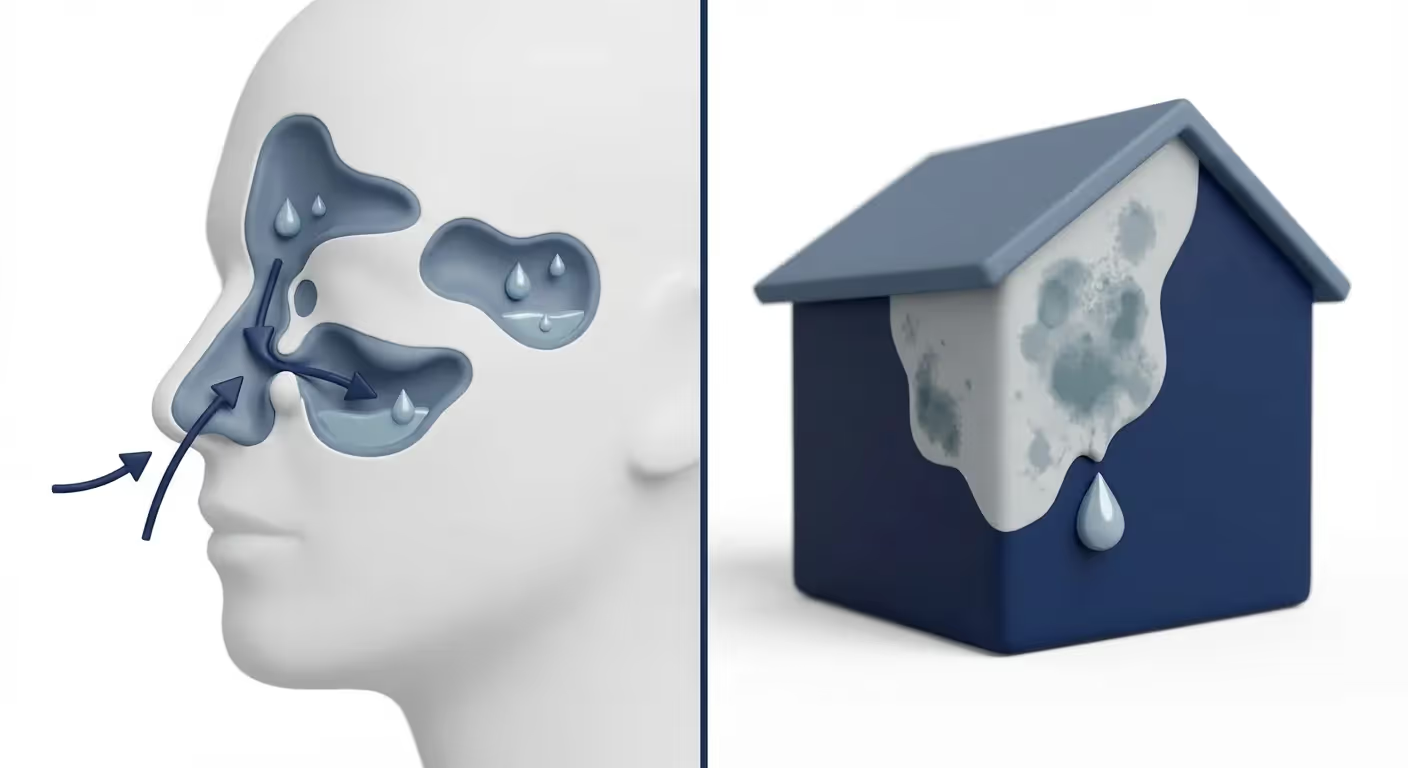
A practical way to think about it: sinus inflammation is a local “plumbing problem” (swollen lining plus poor drainage), while “mold toxicity” is often used to describe wider symptoms that people believe are related to mold byproducts. Sometimes the two overlap, and sometimes they don’t.
You can have mold-triggered sinus inflammation without systemic “mold toxicity”—and the reverse can also be true.
Why this topic matters (and why symptoms can be confusing)
Sinus symptoms are “non-specific,” meaning the same few symptoms—congestion, pressure, drainage—can be caused by allergies, irritants, viral infections, structural blockage, or chronic sinus inflammation. Mold exposure can overlap with several of these pathways: it can irritate tissue, trigger allergic inflammation, and (in some chronic cases) may be associated with fungal presence and biofilms in the sinuses. [1][2]
That’s why “mold toxicity vs sinus inflammation” isn’t always an either/or situation. For many people, the most practical question is: Is mold exposure likely contributing to ongoing sinus inflammation, and what evaluation helps clarify that?
A common real-world example: someone feels “fine” most weekends away, but gets congested and foggy every time they return to a damp basement apartment or a water-damaged office. That pattern doesn’t prove mold is the only cause—but it’s a useful clue for a clinician.
When symptoms fluctuate with buildings or humidity, exposure history becomes a critical part of the puzzle.
Quick definitions (plain-English)
What is sinus inflammation?
Sinus inflammation is swelling of the lining inside the nose and sinus cavities. When that lining swells, normal drainage can narrow or block—leading to congestion, pressure, and mucus buildup.
Think of the sinus lining like a soft sponge. When it’s calm, air flows and mucus drains. When it’s inflamed, it “puffs up,” leaving less room for airflow and drainage—so you feel blocked and pressured.
- Acute symptoms often follow a cold and improve within days to a couple of weeks.
- Chronic sinusitis symptoms are typically defined as lasting 12 weeks or longer. [2]
What people mean by “mold toxicity”
In everyday conversation, “mold toxicity” usually refers to symptoms people attribute to mycotoxins—chemicals produced by some molds. It’s important to know that “mold toxicity” isn’t always used as a single, universally defined medical diagnosis. People may have a mix of allergic disease, irritant effects, asthma-like symptoms, and chronic sinus disease.
Why does it come up in sinus discussions? Some research has detected mycotoxins in nasal secretions and urine of certain chronic sinusitis patients, raising the possibility of a link in select cases—often discussed alongside theories about fungal biofilm in the nose/sinuses. However, the clinical significance of these findings remains uncertain, and more research is needed. [1]
Sinus inflammation is local plumbing; “mold toxicity” is a broader, less-defined concept that may overlap but isn’t the same thing.

How mold exposure can lead to sinus inflammation (the pathway)
1) Direct irritation of the nasal/sinus lining
When inhaled, mold spores and fragments can irritate the mucous membranes. Irritated tissue may swell, and swelling can interfere with normal sinus drainage—setting the stage for ongoing symptoms. [3][2]
Concrete example: after cleaning out a musty closet or being in a visibly damp room, you might notice immediate congestion or a burning/stinging sensation in the nose. That “raw” feeling often points to irritation on top of inflammation.
2) Allergy-driven inflammation (in sensitized patients)
For people with mold allergy, exposure can trigger an immune response that looks like typical allergic rhinitis: congestion, sneezing, runny nose, and post-nasal drip. Over time, that inflammation may contribute to mold exposure sinusitis symptoms and flare-ups. [2][3]
A clinician might phrase it like this: “If you’re sensitized, your immune system treats mold like pollen—so the nose stays on high alert.” That constant immune activation can keep swelling from fully settling down.
3) Colonization and biofilm formation (why symptoms can persist)
Some chronic sinusitis research suggests fungi can be present in the nasal/sinus environment and may form sinus biofilm—a protective layer that can make inflammation harder to resolve and may contribute to persistent symptoms. This idea is also discussed alongside potential ongoing exposure to fungal byproducts (including mycotoxins) in certain patients. [1]
An analogy: biofilm can act like a “slimy shield,” making it harder for normal defenses (and sometimes treatments) to fully clear what’s driving irritation. Not every chronic sinus patient has this issue, but it’s one reason symptoms can become stubborn in select cases. [1]
Irritation, allergy, and (in select cases) fungal colonization can all keep sinus tissue inflamed.

Mold toxicity vs sinus inflammation — the key differences (at a glance)
Instead of thinking of these as competing labels, compare them by focus:
Primary issue
- Sinus inflammation: Swelling/inflammation in the nasal and sinus lining.
- “Mold toxicity”: Broader, multi-system symptoms attributed to mold byproducts (for example, mycotoxins) alongside or beyond sinus symptoms.
Common triggers
- Sinus inflammation: Viral illness, allergies, irritants, structural blockage; mold can be one trigger.
- “Mold toxicity”: Often suspected after ongoing dampness/water damage exposure; symptoms may feel multi-system.
Typical symptom cluster
- Sinus inflammation: Congestion, facial pressure, thick drainage, reduced smell, cough from post-nasal drip.
- “Mold toxicity”: Non-specific symptoms (fatigue, headaches, “brain fog”) plus possible sinus complaints.
What an exam may show
- Sinus inflammation: Swollen tissue, drainage, polyps, structural narrowing on endoscopy/CT.
- “Mold toxicity”: No single ENT finding defines it; evaluation may still reveal chronic sinus inflammation or fungal sinusitis.
Testing focus
- Sinus inflammation: ENT evaluation, possible sinus CT, allergy testing, selective cultures.
- “Mold toxicity”: Careful history plus targeted testing; interpretation can be complex and individualized. [1]
Treatment emphasis
- Sinus inflammation: Reduce inflammation, restore drainage, address allergies/irritants; manage environment if mold is a trigger. [2][3]
- “Mold toxicity”: Environmental control plus medical evaluation tailored to symptoms and findings.
Research supports that mold can contribute to chronic sinusitis in multiple ways, and fungi are often found in chronic sinusitis populations. In some research settings, fungi have been detected in a large majority of chronic sinusitis patients—though what that means for any one individual still depends on symptoms, exam findings, and context. [1][2][3]
Think local swelling and drainage problems vs. broader, multi-system complaints potentially linked to mold byproducts.

Symptoms: what overlaps, and what helps differentiate
Common sinus inflammation symptoms (regardless of cause)
These are classic sinus inflammation symptoms seen in chronic sinusitis and related conditions:
- Nasal congestion or blockage
- Facial pressure/pain
- Thick nasal drainage or post-nasal drip
- Reduced sense of smell/taste
- Cough (often from post-nasal drip), disturbed sleep, fatigue
For a more detailed checklist, see Sleep and Sinus Centers of Georgia’s guide to symptoms of sinus problems: https://sleepandsinuscenters.com/symptoms-of-sinus-problems/ [2]
Symptoms more suggestive of mold-triggered sinus disease
Mold isn’t the only cause of sinus symptoms, but these patterns can raise suspicion for a mold-related trigger:
- Symptoms worsen in a specific building (home, work, school)
- Flare-ups after humidity, flooding, or water leaks
- More allergy/asthma-type symptoms at the same time (sneezing, itchy/watery eyes, wheeze)
A brief patient-style description many ENTs hear: “I can breathe better within a day or two away from the house, then it all comes back when I’m home.” That timing is worth mentioning during your visit. [3][2]
Symptoms patients often attribute to “mold toxicity” (systemic complaints)
People who search for “mold toxicity vs sinus inflammation” often describe broader symptoms such as:
- Headaches
- Brain fog or trouble concentrating
- Unusual fatigue or feeling “run down”
- Widespread symptoms that occur alongside sinus issues
These symptoms are real, but they’re also non-specific—they can overlap with sleep problems (including sleep disruption from congestion), stress, migraines, thyroid issues, anemia, medication effects, and many other conditions. That’s why an evaluation focused on both exposure history and medical findings is important. [1]
Track timing and place: building-linked patterns are powerful clues.
Causes of chronic sinus inflammation beyond mold (important differential diagnosis)
Even when mold is present, an ENT may also consider other common drivers of chronic sinus symptoms, including: [2]
- Viral upper respiratory infections
- Allergies (pollen, dust mites, pets)
- Non-allergic rhinitis/irritants (smoke, fragrances, pollutants)
- Structural blockage (deviated septum, enlarged turbinates)
- Nasal polyps
- Dental sources (upper tooth/root infections)
- Immune-related issues (in select cases)
This is one reason “chronic sinusitis mold” discussions can be tricky: mold exposure may be part of the story, but it may not be the only factor. In practice, clinicians often treat what they can see and measure (inflammation, polyps, blockage, allergy triggers) while also helping you reduce exposures that plausibly worsen symptoms. [2][3]
Even when mold is present, multiple contributors often drive chronic sinus issues.
When to see a specialist (and red flags to treat urgently)
Make an ENT appointment if:
- Symptoms last more than 12 weeks, suggesting chronic sinusitis [2]
- Symptoms repeatedly last more than 10 days or keep returning
- Reduced sense of smell doesn’t recover
- You suspect a building-related exposure and symptoms aren’t improving
Sleep and Sinus Centers of Georgia also offers a helpful guide on when to see an ENT: https://sleepandsinuscenters.com/blog/when-should-i-see-an-ent
Seek urgent care if:
- High fever with severe facial swelling
- Vision changes or significant eye swelling
- Severe headache, neck stiffness, confusion, or neurologic symptoms
These can signal complications that require urgent evaluation. [2]
Don’t wait on red flags—seek urgent care for severe or eye/neurologic symptoms.

Diagnosis: how clinicians sort out “mold toxicity” vs sinus inflammation
Step 1: History and exposure review (your environment matters)
A clinician may ask about:
- Past or current water damage, damp smells, visible mold
- Humidity levels, ventilation, HVAC issues
- Symptom timing (better on vacation? worse at work?)
Because mold exposure can contribute to sinus symptoms, the environment is a meaningful part of the history. [3]
Tip: if you can, bring a short timeline (when symptoms started, where you were living/working, any leaks/floods, and what treatments helped or didn’t). That often speeds up the “detective work.”
Step 2: ENT exam (what to expect)
ENT evaluation may include a nasal exam or nasal endoscopy to look for:
- Swelling and inflammation
- Drainage or crusting
- Polyps
- Structural narrowing or blockage
Step 3: Testing that may be recommended
Depending on symptoms and exam findings, clinicians may suggest:
- Sinus CT (especially when symptoms are chronic or for surgical planning). Learn more: https://sleepandsinuscenters.com/blog/sinus-ct-scan-what-it-shows-and-how-it-helps-diagnose-sinus-issues [2]
- Allergy testing if mold allergy or other allergic triggers are suspected
- Cultures in selected cases (often when symptoms are persistent despite treatment)
Some people also pursue mycotoxin testing in mold-illness settings. Because results can be complex to interpret and may not explain the full picture on their own, it’s generally best discussed with a qualified clinician in the context of symptoms and objective findings. The clinical significance of many mycotoxin findings remains uncertain, and further research is needed. [1]
A careful history, targeted exam, and selective testing usually point to the most helpful next steps.

Treatment options (layered plan: environment plus inflammation plus underlying cause)
When people compare “mold toxicity vs sinus inflammation,” they often expect a single “best” treatment. In reality, care is usually layered: reduce exposure (when relevant), calm inflammation, and address contributing factors like allergy, blockage, polyps, or (in some cases) fungal sinusitis. [2][3]
1) Environmental control (often the missing piece)
If mold exposure is suspected, environmental steps may support symptom control:
- Address water leaks and dampness quickly
- Keep indoor humidity roughly 30–50%
- Maintain HVAC systems; consider HEPA filtration
- Use mold-safe cleaning practices; consider professional remediation when warranted
For a deeper dive, see How Mold Exposure Can Trigger Sinusitis: https://sleepandsinuscenters.com/blog/how-mold-exposure-can-trigger-sinusitis [3]
A small but concrete step: if your bathroom mirror stays fogged long after showers, ventilation may be inadequate—creating moisture patterns that can allow irritants (including mold) to linger in the air.
2) First-line medical treatments for sinus inflammation
Common approaches for chronic sinus inflammation often focus on improving clearance and reducing swelling, such as:
- Saline irrigation (consistent technique and frequency matter)
- Intranasal corticosteroid sprays
- Allergy medications when allergies are part of the picture
- Short courses of oral steroids in select cases (provider-directed)
These approaches are widely used in chronic sinusitis management. [2]
3) Treating infections (only when appropriate)
Antibiotics may be used when a bacterial infection is suspected or confirmed. However, persistent or recurring symptoms aren’t always bacterial—so repeated antibiotics may not help if the main driver is inflammation, blockage, allergy, or biofilm-related disease. [2][1]
4) What about antifungals and fungal sinusitis care?
“Fungal sinusitis” is not one single condition. Whether antifungal treatment is used depends on the type of fungal sinus disease and the ENT’s assessment. Antifungal medications are generally reserved for specific fungal sinus infections and are not routinely used for typical chronic sinusitis. Some chronic sinusitis research discusses fungal involvement and biofilms, and management may involve targeted medical therapy and sometimes procedures. [1]
To learn more about one specific category, see our article on allergic fungal sinusitis: https://sleepandsinuscenters.com/blog/chronic-allergic-fungal-sinusitis-long-term-ent-health-impact-and-treatment-options
5) Office procedures or surgery (when medical therapy isn’t enough)
When symptoms remain persistent, options may include:
- Balloon sinuplasty (for selected patients)
- Endoscopic sinus surgery (often considered with chronic blockage, polyps, or persistent disease)
The goal is typically to improve ventilation and drainage and help topical treatments reach inflamed areas more effectively. [2]
Most patients do best with layered care: reduce exposure, calm inflammation, and fix underlying blockers.
Lifestyle tips to reduce flare-ups (patient-friendly checklist)
Home habits
- Use bathroom/kitchen exhaust fans; improve ventilation
- Use a dehumidifier when needed; avoid damp storage areas
- Wash bedding regularly; reduce dust reservoirs (clutter, heavy fabrics)
- Avoid smoke/vaping and minimize strong fragrances
Body and symptom management
- Prioritize hydration and sleep
- Track triggers: keep a simple symptom diary linked to buildings/rooms/weather
- If you’re already using saline rinses, consistency tends to matter more than intensity
If you’re not sure what’s “working,” consider tracking just three items for two weeks: (1) congestion severity, (2) sleep quality, and (3) where you spent most of your day. Patterns often become clearer quickly.
Small, consistent habits often add up to fewer flares.
FAQs
Can mold cause sinus infections?
Mold can contribute to sinus inflammation and allergy symptoms, and fungi have been found in many chronic sinusitis cases. Whether it’s causing an “infection” versus triggering chronic inflammation depends on the individual situation and exam findings. [1][3]
What’s the difference between mold allergy and “mold toxicity”?
A mold allergy is an immune reaction to mold spores. “Mold toxicity” usually refers to symptoms attributed to mycotoxins and may involve broader, non-specific complaints. The overlap is common, which is why evaluation is individualized. [1][2]
If I move away from mold, will my sinus symptoms go away?
Many people improve when exposure is reduced. But chronic sinus inflammation can persist if there’s ongoing inflammation, polyps, or structural blockage—so ENT evaluation can still be helpful even after an environmental change. [2][3]
Why do my sinus symptoms keep coming back even after antibiotics?
Antibiotics don’t address allergy-driven inflammation, structural narrowing, polyps, or sinus biofilm. Chronic sinusitis often needs an inflammation-focused plan guided by exam findings. [2][1]
What tests should I ask my ENT about?
Common starting points include nasal endoscopy, allergy testing, and a sinus CT scan when symptoms are chronic or persistent. Learn more about what a sinus CT scan shows: https://sleepandsinuscenters.com/blog/sinus-ct-scan-what-it-shows-and-how-it-helps-diagnose-sinus-issues [2]
Answers vary by your findings—personalized evaluation matters.
Next steps: getting clarity and a plan
If you’re stuck in a cycle of persistent symptoms and wondering about “mold toxicity vs sinus inflammation,” an ENT evaluation can help clarify what’s driving the problem and which options are most likely to help. Sleep and Sinus Centers of Georgia can assess chronic sinus symptoms, review possible exposure patterns, and discuss testing and treatment pathways tailored to your situation.
Ready to get answers? Book an appointment at https://www.sleepandsinuscenters.com/ to review your symptoms, your environment, and a treatment plan that fits your goals.
Clarity leads to relief—start with a focused evaluation.
Sources
[1] PubMed Central (PMC) – Chronic Illness Associated with Mold and Mycotoxins: Is Naso-Sinus Fungal Biofilm the Culprit? https://pmc.ncbi.nlm.nih.gov/articles/PMC3920250/
[2] Mayo Clinic – Chronic sinusitis https://www.mayoclinic.org/diseases-conditions/chronic-sinusitis/symptoms-causes/syc-20351661
[3] Sleep and Sinus Centers of Georgia – How Mold Exposure Can Trigger Sinusitis https://sleepandsinuscenters.com/blog/how-mold-exposure-can-trigger-sinusitis
Medical disclaimer: This article is for educational purposes only and is not medical advice. Please consult a qualified healthcare provider for diagnosis and treatment.
Don’t let allergies slow you down. Schedule a comprehensive ENT and allergy evaluation at Sleep and Sinus Centers of Georgia. We’re here to find your triggers and guide you toward lasting relief.