How to Sleep with Post-Nasal Drip: Tips for Better Nighttime Relief
Introduction — Why post-nasal drip can ruin sleep
Post-nasal drip is a common (and frustrating) issue where extra mucus from the nose or sinuses drains down the back of the throat. During the day, you may barely notice it—because you’re upright, swallowing more often, and staying busy. But at night, it can feel like it takes over: coughing as soon as you lie down, constant throat clearing, a “lump in the throat” sensation, or repeated wake-ups because you suddenly can’t breathe well through your nose.
If you’re searching for how to sleep with post-nasal drip, the goal isn’t perfection—it’s reducing the drip, calming irritation, and removing common nighttime triggers so you can get more uninterrupted rest. Below are practical, patient-friendly strategies you can try tonight, plus habits that support longer-term improvement.
If you want a broader overview beyond sleep—causes, symptoms, and treatment categories—see our guide to post-nasal drip causes, symptoms, and treatments: https://sleepandsinuscenters.com/blog/post-nasal-drip-causes-symptoms-and-effective-treatments
Small, consistent changes can make nights easier, even if daytime symptoms feel mild.
What is post-nasal drip (and how it feels at night)?
Common nighttime symptoms to recognize
Post-nasal drip can look and feel different from person to person. At bedtime, common signs include:
- Frequent throat clearing and a scratchy throat
- Coughing fits when lying down (often the most disruptive symptom)
- Hoarseness in the morning or a “tired voice”
- Bad taste or bad breath, or even mild nausea from swallowing mucus
- Feeling like you “can’t breathe through your nose”
- Sleep disruption: trouble falling asleep, waking up repeatedly, or waking up congested
Many people describe post-nasal drip at night as a cycle: you lie down → drainage increases → throat irritation increases → coughing increases → sleep breaks. If you’ve ever felt like your throat becomes a “landing zone” for mucus the minute your head hits the pillow, that’s the pattern we’re aiming to interrupt.
When symptoms might signal something more than post-nasal drip
Because nighttime cough and congestion can overlap with other issues, it’s worth paying attention to red flags. Seek medical evaluation promptly if you have:
- Fever or significant facial pain/pressure
- Severe symptoms on one side only
- Wheezing or shortness of breath
- Unexplained weight loss
- Persistent or significant blood in mucus
If symptoms change suddenly or feel out of the ordinary, getting checked can help clarify the cause sooner.
Why post-nasal drip gets worse at night
Lying flat slows mucus drainage
Gravity helps mucus move forward and out of the nasal passages when you’re upright. When you lie flat, drainage can pool and move backward toward the throat instead, which may increase coughing and throat clearing. This is one reason many people notice symptoms worsen the moment they get into bed. (Source: Cleveland Clinic health information; Healthline)
A helpful way to think about it: your sinuses and nasal passages are like a gently sloped path. When you flatten the slope, things don’t “run” the way they do during the day.
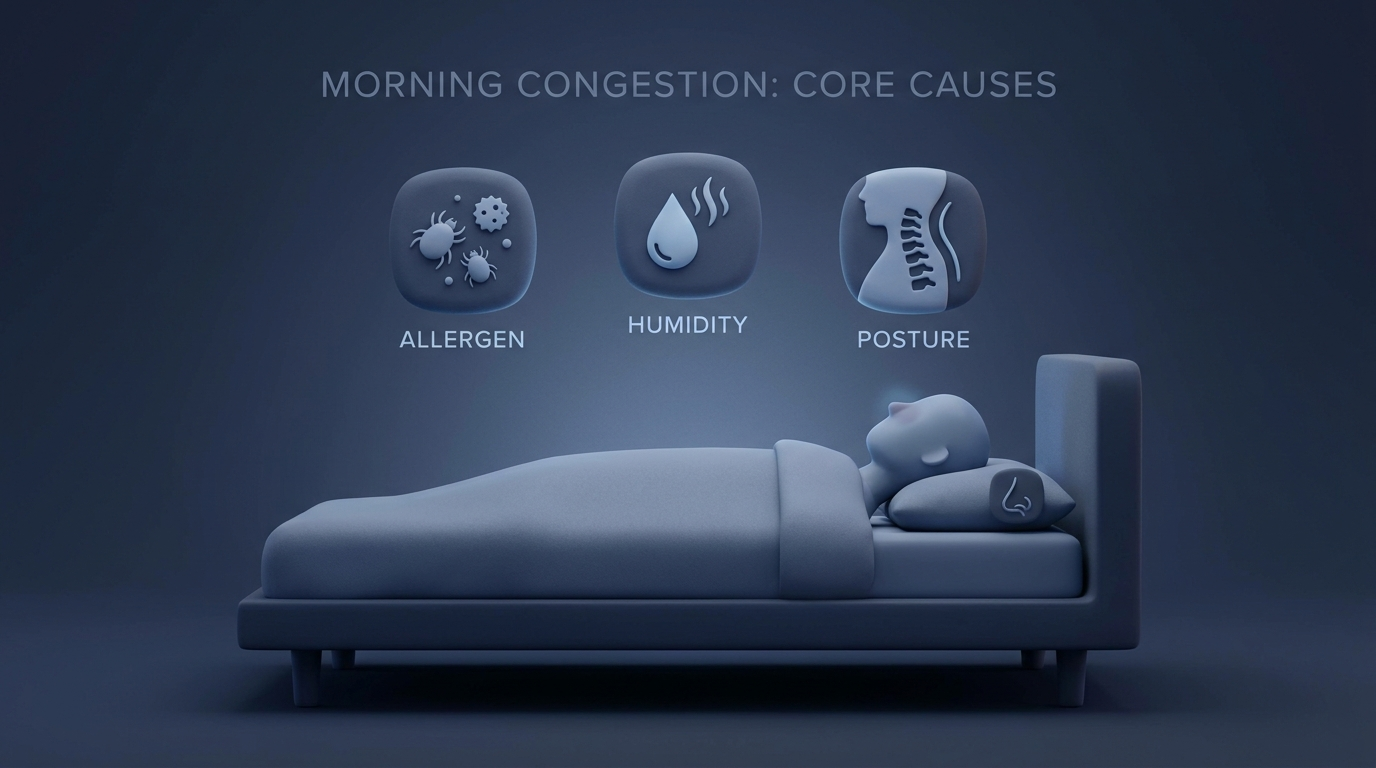
Allergens and irritants can build up in the bedroom
Even if your daytime symptoms feel manageable, nighttime exposure can add up—especially if your bedroom contains common triggers like dust mites, pet dander, mold, fragrance, or smoke. (Source: Cleveland Clinic; Mayo Clinic)
For example, you might do fine all day, then lie on a pillow that holds onto allergens night after night. The result can be more swelling and mucus right when you’re trying to sleep.
Reflux can irritate the throat and upper airway during sleep
Reflux doesn’t always feel like classic heartburn. “Silent reflux” (often discussed as LPR) may show up as throat irritation, chronic cough, or a persistent mucus sensation—often worse when lying down. (Source: Cleveland Clinic; NHS)
If you notice symptoms after late meals, alcohol, or rich/spicy foods, reflux may be part of the picture—even if you never feel burning in your chest.
Position, air quality, and reflux timing often explain why nights feel worse than days.
The most common causes of post-nasal drip at night
- Allergic rhinitis (seasonal or year-round). Allergies can increase mucus production and nasal swelling—commonly triggered by pollen, dust mites, and pet dander. (Source: AAAAI)
- Non-allergic rhinitis. Some people have rhinitis symptoms without allergies. Triggers may include weather changes, strong odors, smoke, and certain sprays or medications. (Source: NHS)
- Colds/viral infections and lingering inflammation. After the “worst” of a cold, lingering nasal inflammation can continue to drive congestion and drip—especially at night. (Source: Mayo Clinic)
- Chronic sinusitis or structural issues. Ongoing inflammation, blockage, or thicker mucus can keep drainage problems going long after you expected to feel better. (Source: Cleveland Clinic)
- GERD/LPR (reflux-related throat irritation). Reflux often worsens with late meals, alcohol, or lying flat—and can amplify nighttime throat symptoms that feel like post-nasal drip. (Source: NHS; Cleveland Clinic)
Identifying your main driver—rhinitis, sinus inflammation, or reflux—helps you choose the most useful steps.

Quick bedtime routine for nighttime relief (do these in order)
If your main goal is nighttime congestion relief, this step-by-step routine is a practical place to start. It also gives you a consistent baseline—so you’re not changing five things at once and wondering what actually helped.

Step 1 — Clear mucus with a saline rinse (especially high-volume)
A saline nasal rinse can help flush out mucus, irritants, and allergens. Many people find it reduces the “dripping” sensation and makes the nose feel more open before bed. High-volume irrigation (using a squeeze bottle or similar method) may improve symptoms for some people with nasal/sinus complaints. (Source: Healthline; NCBI PMC7752074)
Tips for comfort and safety:
- Use distilled, sterile, or previously boiled and cooled water (this is essential).
- Clean the device after each use and let it air-dry.
For a deeper safety refresher, read: https://sleepandsinuscenters.com/blog/neti-pot-water-safety-why-boiled-or-distilled-water-is-essential-a906d
Step 2 — Use an intranasal corticosteroid if your clinician recommends it
If rhinitis (allergic or non-allergic) is driving symptoms, an intranasal corticosteroid spray is commonly considered a cornerstone option because it targets inflammation—not just mucus. These sprays tend to work best with consistent use over time rather than “only when you feel bad.” (Source: AAAAI; NCBI PMC11130740)
Technique basics (brief):
- Aim slightly outward (toward the ear), not straight up the middle (septum).
- Gentle, consistent use is typically emphasized more than “strong sniffing.”
Step 3 — Hydrate and soothe the throat
Hydration can help thin secretions, making mucus less sticky and easier to clear. Consider warm tea, broth, or water. If nighttime bathroom trips are an issue, experiment with earlier hydration and a smaller sip closer to bedtime.
Optional soothing choices (if appropriate for your age and situation):
- Honey
- Lozenges
Step 4 — Time your “trigger” exposures
Small timing changes can reduce nighttime flare-ups:
- During high pollen seasons, consider showering and/or rinsing hair before bed.
- If reflux seems possible, many people experiment with avoiding heavy meals, alcohol, and mint close to bedtime. (Source: NHS)
A simple rinse-and-spray routine, plus smart timing, often makes the night more manageable.

Best sleeping positions for post-nasal drip
Elevate your head and shoulders (not just your neck)
One commonly recommended strategy for sleeping with post-nasal drip is to change your angle. When you use gentle head and shoulder elevation, gravity can work in your favor—often reducing pooling and throat irritation. (Source: Healthline; Cleveland Clinic)
Practical options:
- Wedge pillow
- Bed risers under the head of the bed (if comfortable and safe for your setup)
- Adjustable bed
What to avoid: stacking too many pillows that bend the neck forward. The goal is a gentle incline from shoulders upward—more like a ramp than a “chin-to-chest” curl.
For more ideas, see sleeping positions that help sinus drainage: https://sleepandsinuscenters.com/blog/sleeping-positions-that-help-sinus-drainage

Side-sleeping vs. back-sleeping
Some people notice less throat pooling when side-sleeping compared with sleeping flat on the back. If reflux may be contributing, left-side sleeping is often discussed as a positioning strategy. (Source: NHS)
If you want to explore the reflux angle, read best sleep positions for acid reflux relief: https://sleepandsinuscenters.com/blog/best-sleep-positions-for-acid-reflux-relief-tips-to-stop-heartburn
Gentle head and shoulder elevation plus side-sleeping can reduce throat pooling for many people.

Bedroom and lifestyle changes that reduce nighttime triggers
Optimize humidity (but don’t over-humidify)
Dry air can irritate nasal passages; overly humid air can encourage mold. Many resources suggest keeping humidity in a comfortable mid-range (often around ~30–50%). If you use a humidifier, regular cleaning matters to help prevent mold buildup. (Source: Cleveland Clinic; Healthline)
A practical approach: use a humidity gauge, then adjust slowly. If you notice musty smells or visible condensation, that’s a sign you may be overdoing it.
Reduce allergens in the sleep environment
- Keep pets out of the bedroom (or at least off the bed)
- Wash bedding regularly (hot water if appropriate for the fabric)
- Consider allergen-proof pillow and mattress covers (Source: Cleveland Clinic; Healthline)
Improve air quality
- Keep windows closed during high pollen times
- Replace HVAC filters consistently
- Consider HEPA filtration if allergies are significant
Avoid irritants that thicken or trigger mucus
Smoke, strong scents, and harsh cleaning chemicals can irritate nasal tissue and worsen symptoms. (Source: Mayo Clinic; NHS)
Cleaner air and moderate humidity create a better baseline for calmer nights.
Treatment options (what may help—and what to be cautious with)
Proven, commonly recommended treatments
Two options show up repeatedly in evidence-based discussions for rhinitis/sinus symptom support:
- Saline irrigation, particularly higher-volume methods, which may help reduce congestion and drip symptoms (Source: NCBI PMC7752074; Healthline)
- Intranasal corticosteroids for inflammation related to allergic or non-allergic rhinitis (Source: AAAAI; NCBI PMC11130740)
Used together (when appropriate), these often form a practical foundation for people trying to sleep more comfortably with post-nasal drip.
Other medication categories you may hear about (discuss with a clinician)
Depending on the cause, clinicians may also discuss:
- Antihistamines (often more helpful for allergies; some can be drying or sedating)
- Decongestants (typically short-term; not a fit for everyone)
- Ipratropium nasal spray (often discussed for runny nose)
- Reflux management strategies when GERD/LPR seems likely (Source: NHS)
Common mistakes to avoid
- Overusing topical decongestant sprays (this may lead to rebound congestion)
- Expecting nasal steroid sprays to work instantly (they often build over time)
- Using unsafe water for nasal rinses
A steady, safety-minded routine usually outperforms quick fixes.
When to see a doctor (and what they may check)
Signs you should book an appointment soon
Consider scheduling an evaluation if:
- Symptoms last more than 10–14 days or recur frequently
- Mucus becomes thick/discolored with facial pain or pressure
- A night cough persists despite consistent basic steps
- Snoring worsens or sleep apnea is suspected; nasal blockage can also worsen sleep quality
Possible evaluations
Depending on symptoms, evaluation may include:
- Allergy assessment/testing when triggers aren’t clear (Source: AAAAI; Cleveland Clinic)
- Sorting out rhinitis vs. sinusitis patterns
- Reflux screening when throat symptoms dominate (Source: NHS)
If symptoms are disrupting sleep, a qualified healthcare provider can help determine the likely cause and next steps.
If your nights don’t improve, getting targeted help can speed relief.
FAQs — Quick answers to common nighttime post-nasal drip questions
Why do I cough more when I lie down?
When you’re flat, mucus is more likely to pool and drip backward toward the throat, which can trigger coughing. (Source: Cleveland Clinic)
Is a humidifier good or bad for post-nasal drip?
It may be helpful if the air is dry. It may be unhelpful if humidity gets too high or the unit isn’t cleaned regularly (mold risk). (Source: Cleveland Clinic; Healthline)
How often can I do saline rinses?
Many people use rinses once daily during flare-ups; some use them twice daily. If you’re prone to nosebleeds or ear issues, it’s a good topic to review with a clinician. (Source: Healthline; NCBI PMC7752074)
Do nasal steroid sprays work right away?
Usually not. Many people notice more benefit after several days to weeks of consistent use. (Source: AAAAI)
Could acid reflux be causing my post-nasal drip sensation?
Yes—reflux can mimic or worsen throat mucus sensations, particularly at night. (Source: NHS; Cleveland Clinic)
Conclusion — A realistic plan for better sleep
If you’re working out how to sleep with post-nasal drip, most people do best with a combination approach rather than a single “magic fix”:
- Gentle head and shoulder elevation
- A bedtime saline nasal rinse (with safe water)
- Consistent anti-inflammatory nasal support when appropriate (such as an intranasal corticosteroid spray)
- Bedroom trigger control (humidity, allergens, air quality)
Try tracking what you change for one week—sleep position, rinse timing, bedroom adjustments—and note what improves your symptoms the most. If the problem persists, keeps recurring, or significantly disrupts rest, it’s worth getting a more targeted evaluation to identify the underlying driver and refine your plan.
Sources
- Cleveland Clinic health information: http://health.clevelandclinic.org/why-does-my-nose-get-stuffy-at-night
- Mayo Clinic: http://mayoclinic.org/symptoms/nasal-congestion/basics/definition/sym-20050644
- NHS (Non-allergic rhinitis): http://nhs.uk/conditions/non-allergic-rhinitis
- AAAAI (Rhinitis/hay fever): http://aaaai.org/conditions-treatments/allergies/hay-fever-rhinitis
- Healthline (Sleeping with congestion): http://healthline.com/health/how-to-sleep-with-a-stuffy-nose
- NCBI PMC (saline irrigation): http://pmc.ncbi.nlm.nih.gov/articles/PMC7752074
- NCBI PMC (intranasal corticosteroids): http://pmc.ncbi.nlm.nih.gov/articles/PMC11130740
This article is for educational purposes only and is not medical advice. Please consult a qualified healthcare provider for diagnosis and treatment.
Don’t let allergies slow you down. Schedule a comprehensive ENT and allergy evaluation at Sleep and Sinus Centers of Georgia. We’re here to find your triggers and guide you toward lasting relief.