Eustachian Tube Dysfunction Won’t Go Away: Causes, Treatments, and When to See a Doctor
Your ear has felt plugged for weeks. You keep swallowing, yawning, and “trying to pop it,” but the pressure and muffled hearing won’t budge. When Eustachian tube dysfunction won’t go away, it’s frustrating—and it can be hard to tell whether you’re dealing with lingering inflammation, middle-ear fluid, or something else entirely.
A helpful way to think about it: your middle ear is like a small room, and the Eustachian tube is the room’s “vent.” If that vent isn’t opening well, pressure and moisture can build up—so even when your cold is “over,” your ear can still feel stuck.
The good news: ETD is common and often treatable. The key is having a step-by-step plan—and knowing when testing (and sometimes procedures) are worth discussing.
In this guide, you’ll learn what ETD is, the most common causes of persistent ear fullness, what you can safely try at home, what typically doesn’t help chronic symptoms, and when an evaluation at Sleep and Sinus Centers of Georgia may make sense.
For a broader primer, see our overview of Eustachian tube dysfunction (ETD) symptoms, causes, and treatment options: https://sleepandsinuscenters.com/blog/eustachian-tube-dysfunction-symptoms-causes-effective-treatment-options
Quick Takeaways (TL;DR)
- Many cases improve with time, gentle pressure-equalizing techniques, and treating nasal allergies/inflammation.
- If symptoms persist, an ENT evaluation may include tests such as pneumatic otoscopy, tympanometry, and hearing testing (audiogram), depending on the clinical situation.
- For chronic middle ear fluid (OME), routine antibiotics, antihistamines, decongestants, and steroids are not recommended in guidelines. [1] These medications are generally not recommended for routine use in chronic OME because evidence shows limited benefit and potential side effects, but they may be considered selectively based on individual clinical circumstances.
- If symptoms and/or hearing loss last around 3 months or longer, it’s reasonable to discuss ENT options like ear tubes for adults/children (tympanostomy tubes) or balloon Eustachian tuboplasty for select patients with chronic ETD. [1][2]
What Is the Eustachian Tube—and Why ETD Can Linger
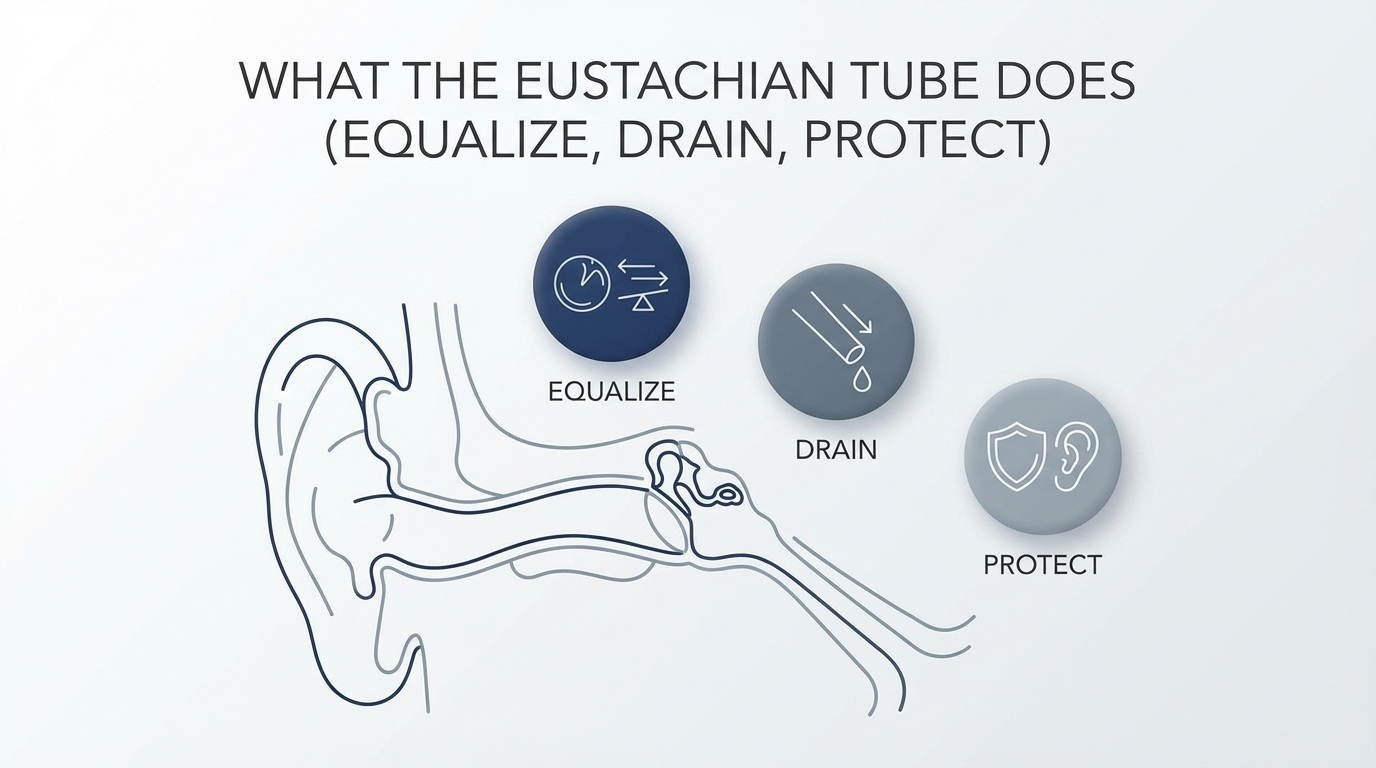
What the Eustachian tube does
The Eustachian tube is a small channel connecting the middle ear to the back of the nose/throat (nasopharynx). It helps:
- Equalize pressure on both sides of the eardrum
- Drain fluid from the middle ear
- Protect the middle ear from germs and irritation coming from the nose/throat
In everyday terms, it’s the system that helps your ears “catch up” when pressure changes—like during a flight, a mountain drive, or even after a bad sinus week.
ETD vs. middle ear fluid (OME): related but not identical
ETD can lead to negative pressure in the middle ear. Over time, that pressure may contribute to fluid buildup behind the eardrum, known as otitis media with effusion (OME) (often called “middle ear fluid”). OME often causes more noticeable hearing changes than pressure alone.
A common patient description is: “It’s not sharp pain—it’s like my ear is wrapped in cotton.” That can happen with pressure, fluid, or both, which is why testing can be so useful when symptoms drag on.

Acute vs. chronic ETD
- Short-term ETD is common after a cold, allergy flare, or flight.
- Chronic ETD (or symptoms that keep recurring) can happen when inflammation persists, nasal conditions remain untreated, or anatomy/ventilation issues prevent the ear from normalizing.
If Eustachian tube dysfunction won’t go away, it’s often because something is still driving inflammation or blocking normal ventilation.
In short: a swollen or poorly opening “vent” can keep ears feeling blocked even after a cold.
Symptoms of Eustachian Tube Dysfunction (What People Notice)
Common symptoms
- Ear fullness/pressure (a plugged feeling)
- Muffled or “underwater” hearing
- Popping/clicking
- Mild ear discomfort
- Ringing (tinnitus)
- A slightly “off” balance sensation (in some people)
Many people notice symptoms fluctuate—better in the morning, worse by afternoon; or better at sea level, worse after driving through hills. That up-and-down pattern can fit ETD.
Symptoms that may suggest fluid behind the eardrum (OME)
- Hearing feels significantly reduced, not just “pressure”
- A “sloshy” sensation with head movement (some people notice this)
- In children: inattentiveness, turning up volume, or speech/language concerns
A practical example: if someone is constantly saying “huh?” or increasing headphone/TV volume, it’s worth checking whether conductive hearing loss from fluid is involved.
Red-flag symptoms (don’t ignore)
These symptoms warrant prompt medical evaluation:
- Sudden hearing loss
- Severe vertigo, facial weakness, intense headache, or high fever
- Drainage of pus or blood from the ear
- Persistent one-sided symptoms, especially with concerning nasal/throat symptoms
Bottom line: fluctuating pressure and muffled hearing are classic—and testing clarifies whether fluid is present.

Why Your ETD Won’t Go Away (Common Causes & Risk Factors)
Nasal inflammation and blockage (very common)
A lot of “ear pressure” is really a nose-and-throat inflammation problem showing up in the ear:
- Seasonal/perennial allergies
- Viral upper respiratory infections
- Chronic rhinitis or sinus inflammation
Clinicians often explain it simply: “If the nose is inflamed, the Eustachian tube opening can be inflamed too.” Addressing nasal triggers is often the most direct path to improvement.
Anatomy and mechanical factors
- Enlarged adenoids (more common in children)
- Naturally narrow/poorly functioning tubes (varies by age)
- Nasal obstruction (for example, turbinate enlargement) may contribute indirectly by maintaining inflammation and congestion
Pressure-change triggers
- Flying, diving, altitude changes
Repeated barotrauma can irritate the Eustachian tube lining and make symptoms more stubborn. If you’ve ever felt pain or blockage on airplane descent, you’ve felt this mechanism in action.
Reflux and throat irritation (selected patients)
In some people, reflux (GERD/LPR) can irritate the throat/nasopharynx region and may contribute to symptoms. This is individualized and usually considered alongside other clues (throat irritation, chronic cough, voice changes).
Smoke/irritant exposure
Tobacco, vaping, pollution, and workplace irritants can inflame the upper airway and contribute to persistent ear fullness.
Takeaway: reduce inflammation and address triggers to help the tube work again.
What You Can Try at Home (Safe, Evidence-Informed Steps)
These strategies aim to support normal pressure equalization. They should be gentle—pain is a sign to stop and reassess.
Autoinflation / pressure-equalizing techniques (do it safely)
- Swallowing, yawning, sipping water, chewing gum
- Gentle equalization attempts (avoid forceful blowing that causes pain)
If you’re trying to “pop” your ears, think light and frequent rather than hard and forceful. Overdoing it can irritate tissues and leave you feeling worse.
For a practical safety-focused guide, see safe Eustachian tube exercises and pressure-equalizing tips: https://sleepandsinuscenters.com/blog/safe-eustachian-tube-exercises-pressure-equalizing-tips-and-when-to-see-an-ent-in-atlanta
Nasal balloon autoinflation in children: For kids with OME, using a nasal balloon device has randomized trial evidence showing improved fluid clearance compared with usual care—especially when families can stick with the routine. [3]
Treat nasal congestion the right way
- Saline spray/rinse and humidification can help reduce thick mucus and irritation.
- If allergies seem likely, consistency matters—ongoing control tends to work better than “here and there” approaches.
A concrete example: using saline during a dry season and staying consistent with an allergy plan (when appropriate) often helps more than cycling through quick fixes.
Travel tips (flying/driving through mountains)
- Many people feel worse during descent on flights, when pressure changes rapidly.
- Some choose to avoid flying/diving during an acute cold when possible, since swollen tissues can make equalizing harder.
Lifestyle supports that help some patients
- Hydration and sleep support overall airway recovery.
- Reducing irritant exposure (smoke/vaping) can reduce ongoing inflammation.
- If reflux symptoms are present, reflux-reducing habits may be part of a broader plan.
Keep it gentle and consistent; pain is your cue to stop and seek guidance.

Treatments That Usually Don’t Help Chronic ETD/OME (and why)
“Why did antibiotics not fix it?”
When Eustachian tube dysfunction won’t go away, it’s often not because of an active bacterial infection. It may be persistent inflammation and ventilation failure—meaning the ear can feel blocked even if there’s no infection to “kill.”
Medications not recommended for chronic middle-ear fluid (OME)
Clinical guidelines for OME note that routine use of:
- systemic antibiotics,
- antihistamines,
- decongestants, or
- steroids
is not recommended for chronic middle-ear fluid. [1] These medications are generally not recommended for routine use in chronic OME because evidence shows limited benefit and potential side effects, but they may be considered selectively based on individual clinical circumstances.
That doesn’t mean these medications are never used in ENT care—just that they’re not reliable “default fixes” for ongoing fluid behind the eardrum, especially when symptoms have become chronic.
In other words, pills rarely solve a ventilation problem.
When to See a Doctor (and When to See an ENT)
Consider a visit soon if:
- Symptoms last more than a couple of weeks, keep recurring, or are affecting daily life
- You notice hearing difficulty at work/school
- A child has speech/language concerns or changes in school performance
Seek urgent evaluation if:
- Sudden hearing loss, severe vertigo, severe pain, fever, drainage, or facial weakness
The “3-month” checkpoint (especially for kids with fluid)
For many children with OME, guidelines support watchful waiting for about 3 months with hearing assessment, unless risk factors or complications are present. [1]
If symptoms linger or impact hearing, don’t wait—objective testing helps.
What to Expect at an ENT Evaluation (Diagnostic Testing)
Ear exam with pneumatic otoscopy
This exam checks how well the eardrum moves. Reduced movement may suggest pressure problems or fluid.
Tympanometry (middle-ear pressure/fluid test)
A tympanometry test measures how the eardrum responds to small pressure changes. In plain language:
- A “normal” pattern suggests normal pressure/mobility.
- Certain patterns can suggest negative pressure or middle ear fluid (OME).
Hearing testing (audiogram)
An audiogram can show whether there’s conductive hearing loss from fluid/pressure issues. That information often drives next-step decisions—especially if school, work, or communication is being affected.
Additional evaluation when indicated
Depending on the story, an ENT may also assess nasal/throat contributors (allergy patterns, chronic rhinitis, reflux signs, or adenoids in children).
The goal is clarity: pressure vs fluid vs another cause.

Evidence-Based Treatment Options (Stepwise Approach)
Step 1 — Watchful waiting + treat contributing nasal disease
Many cases improve over time, especially when nasal inflammation is addressed. For OME, watchful waiting is specifically supported in guidelines. [1]
Step 2 — Autoinflation (especially for children with OME)
For kids, nasal balloon autoinflation is a low-risk option with clinical trial support. [3]
Step 3 — If symptoms/hearing loss persist beyond ~3 months: discuss ENT procedures
If persistent ear fullness, hearing loss, or fluid continues, it may be time to talk about procedural options intended to restore ventilation and protect hearing.
Start simple, reassess, and escalate when the evidence and your goals align.
Procedures for Persistent ETD/OME (When Conservative Care Isn’t Enough)
Tympanostomy tubes (“ear tubes”)
Ear tubes for adults/children can ventilate the middle ear directly, bypassing the Eustachian tube. They’re commonly used for persistent effusion with hearing impact—especially in children, but also in select adults. [1]
Balloon Eustachian tuboplasty (balloon dilation)
Balloon Eustachian tuboplasty uses a small balloon to dilate the Eustachian tube area in carefully selected patients, typically those with chronic ETD symptoms that haven’t improved with medical management and who have supportive exam/testing findings.
Evidence reviews and newer outcome studies show moderate-quality evidence of symptom and objective improvement, though results vary. [2][4] Learn more: https://sleepandsinuscenters.com/blog/eustachian-tube-balloon-dilation-fix-ear-pressure-fullness
Why “patient selection” matters
Not every “pressure” sensation is obstructive ETD. Jaw/TMJ issues, migraine, inner-ear conditions, and other causes can mimic ETD. That’s why testing and individualized risk/benefit discussion are important before procedures.
Right patient, right procedure, right time.
Recovery and Follow-Up (What Patients Ask Next)
How long until I feel better?
Timelines vary: recent cold/allergy flares may improve gradually; months-long fluid may take longer and sometimes requires intervention. If you’re improving week to week—even slowly—that’s often reassuring. If you’re stuck at the same “plugged” baseline, ask about testing.
Follow-up hearing checks
Repeat testing may be recommended, especially when symptoms have lasted months or when OME is involved.
Preventing recurrence
Focus on consistent allergy/inflammation control, reducing irritants (like smoke/vaping), and travel precautions if you’re prone to barotrauma.
Steady improvement is reassuring; a stuck baseline deserves a recheck.
FAQs
1) How long can ETD last after a cold?
Mild symptoms can last days to a few weeks; longer-lasting issues may point to ongoing inflammation or fluid.
2) Why do my ears feel full but my ear exam is “normal”?
ETD can be intermittent, and some people have pressure symptoms without obvious fluid. Tympanometry and hearing tests may add clarity.
3) Is it safe to pop my ears every day?
Gentle techniques are generally safer than forceful attempts. Pain is a sign to stop and consider evaluation.
4) Do decongestants help Eustachian tube dysfunction?
They may provide temporary relief but are not advised for long-term management of chronic ETD or OME without medical guidance. They are not recommended as a routine solution for chronic middle-ear fluid (OME). [1]
5) Can allergies cause ETD and muffled hearing?
Yes. Nasal allergy inflammation can contribute to Eustachian tube swelling and pressure problems.
6) What is tympanometry and what does it show?
A tympanometry test checks eardrum movement under small pressure changes, helping identify patterns consistent with negative pressure or OME.
7) When are ear tubes recommended?
Often when persistent fluid and hearing impact continue despite observation, especially beyond guideline timelines. [1]
8) Does balloon Eustachian tuboplasty work?
Studies show improvement for many appropriately selected patients with chronic, medication-refractory ETD, though outcomes vary. [2][4]
9) Can ETD cause dizziness? When should I worry?
Some people feel “off” or unsteady. Severe vertigo, neurologic symptoms, or sudden hearing loss should be evaluated promptly.
10) What can I do before a flight if I’m prone to ear pressure?
Use gentle equalization strategies during descent and try to avoid flying with an acute cold when possible.
Conclusion + Next Steps
When Eustachian tube dysfunction won’t go away, it usually means there’s ongoing inflammation, persistent ventilation problems, or middle ear fluid (OME) that needs a clearer diagnosis and plan. Many cases improve with conservative steps, but chronic symptoms often benefit from objective testing—ear exam, tympanometry, and hearing evaluation—to guide next steps. [1]
If you’ve had ongoing symptoms, recurring episodes, or hearing changes—especially near or beyond the ~3-month mark—Sleep and Sinus Centers of Georgia can help evaluate what’s driving the problem and review options, including ear tubes for adults/children or balloon Eustachian tuboplasty when appropriate.
To schedule an evaluation, book an appointment at https://www.sleepandsinuscenters.com/.
Small, steady steps—plus the right testing—can get your ears “unstuck.”
Sources
1. Rosenfeld RM, et al. Clinical Practice Guideline: Otitis Media with Effusion (Update). Otolaryngol Head Neck Surg. 2016. https://pubmed.ncbi.nlm.nih.gov/26832942/
2. Froehlich MH, et al. Eustachian Tube Balloon Dilation: A Systematic Review and Meta-analysis. 2020. https://pubmed.ncbi.nlm.nih.gov/32482125/
3. Williamson I, et al. Effect of nasal balloon autoinflation in children with otitis media with effusion. CMAJ. 2015. https://www.cmaj.ca/content/187/13/961
4. Results of Eustachian tube balloon dilation measured using the nine-step test. Scientific Reports. 2023. https://www.nature.com/articles/s41598-023-44812-1
5. Johns Hopkins Medicine. Eustachian Tube Dysfunction. https://www.hopkinsmedicine.org/health/conditions-and-diseases/eustachian-tube-dysfunction
Disclaimer
This article is for educational purposes only and is not medical advice. Please consult a qualified healthcare provider for diagnosis and treatment.
Don’t let allergies slow you down. Schedule a comprehensive ENT and allergy evaluation at Sleep and Sinus Centers of Georgia. We’re here to find your triggers and guide you toward lasting relief.