Ear Pressure That Won’t Equalize: When to See an ENT Specialist
That “plugged,” “underwater,” or blocked-ears feeling can be distracting—especially after a cold, during allergy season, or following a flight. People often describe it as “my ear won’t pop,” “my hearing feels dull,” or “it’s like there’s cotton in my ear.”
In many cases, ear pressure that won’t equalize improves as inflammation settles down. But when symptoms linger, keep coming back, or affect only one ear, it’s worth knowing what might be going on—and when an ENT evaluation can help you get clarity and relief. Most brief pressure changes are normal; persistent or one-sided symptoms are your cue to look closer.
Ear Pressure That Won’t Equalize—Is It Serious?

Equalizing is your middle ear balancing pressure with the outside world through the Eustachian tube, which connects the middle ear to the back of the nose/throat. When it opens (often when you swallow or yawn), pressure normalizes and your ears “pop.”
Think of the Eustachian tube as a tiny pressure-release valve. If it’s swollen or “sticky,” pressure can get trapped and you feel fullness—sometimes with popping, crackling, or muffled sound.
If the tube doesn’t open well, pressure can’t balance, leading to fullness or muffled hearing. This is commonly called Eustachian tube dysfunction (ETD). See overviews: Cleveland Clinic https://my.clevelandclinic.org/health/diseases/22527-eustachian-tube-dysfunction and Stanford ENT https://med.stanford.edu/ohns/OHNS-healthcare/earinstitute/conditions-we-treat/eustachian-tube-dysfunction.html
More on ETD: https://sleepandsinuscenters.com/blog/eustachian-tube-dysfunction-symptoms-causes-effective-treatment-options
ETD is common and often temporary, but persistent symptoms deserve a closer look.
Most Common Reason Your Ears Won’t Pop: Eustachian Tube Dysfunction (ETD)
What ETD feels like
Fullness or pressure in the ear.
Muffled hearing (sounds less sharp or “distant”).
Clicking or popping (sometimes uncomfortable).
Occasional dizziness or a sense of imbalance for some.
Example: after a cold, you may feel better, but one ear still feels pressurized and swallowing helps only briefly.
ETD vs. normal popping
It’s normal for ears to pop briefly with altitude changes (mountains, elevators, flying), especially with swallowing or yawning.
It’s more concerning when pressure won’t equalize, lasts days to weeks, worsens, becomes painful, or noticeably affects hearing.
Rule of thumb: a quick pop that resolves is usually normal. A stuck, lingering “won’t clear” sensation points to ETD or another cause.
Why ETD happens
Swelling near the Eustachian tube opening (from congestion, allergies, or irritation) narrows the tube so airflow doesn’t move well, and pressure stays “stuck.” NHS overview: https://myhealth-devon.nhs.uk/my-condition/condition/eustachian-tube-dysfunction-blocked-ears
Most ETD stems from inflammation that narrows the Eustachian tube and traps pressure.
Other Possible Causes of Ear Pressure That Won’t Equalize

Recent cold, sinus infection, or allergies
Congestion and inflammation around the Eustachian tube can keep pressure symptoms going, even after other symptoms fade.
Air travel or diving (barotrauma)
Pressure changes can irritate the middle ear. If symptoms began right after flying or diving, note that context. Learn more: https://sleepandsinuscenters.com/blog/what-is-ear-barotrauma
Middle-ear fluid (effusion)
Fluid can create ongoing fullness and muffled hearing, sometimes with “echoey” voice sensations. More common in kids, but adults can experience it too.
Earwax blockage (external ear issue)
Wax buildup can mimic pressure and hearing reduction, but it’s an ear canal issue, not a middle-ear pressure problem.
Jaw/TMJ tension
Clenching or grinding can refer pressure or discomfort around the ear, often worse on waking or during stress.
Less common but important causes
Persistent one-sided pressure should be evaluated to rule out localized issues. Harvard Health: https://www.health.harvard.edu/diseases-and-conditions/by-the-way-doctor-plugged-up-feeling-in-an-ear
Persistent or one-sided pressure is a sign to get examined so you can target the real cause.
What You Can Try First at Home

If symptoms are mild and you’re otherwise well, start conservatively. Stop if you develop significant pain, worsening dizziness, or intensifying symptoms.
Swallowing, yawning, chewing
Encourage natural tube opening with frequent swallows (sips of water), yawning, or chewing gum/lozenges. On flights, start before descent.
Autoinflation techniques (gentle)
Valsalva: pinch your nose, close your mouth, and blow softly—never force.
Toynbee: pinch your nose and swallow. Guidance: https://sleepandsinuscenters.com/blog/safe-eustachian-tube-exercises-pressure-equalizing-tips-and-when-to-see-an-ent-in-atlanta
Nasal steroid sprays
When allergies or nasal inflammation contribute, these may help over days to a few weeks.
Saline and humidity
Saline spray or rinse, good hydration, and humidified air can reduce thick mucus and dryness.
What to avoid
Aggressive, repeated Valsalva that causes pain. Putting objects in the ear canal. Overusing topical nasal decongestant sprays (rebound congestion).
Gentle, consistent steps often help; seek care if pain, dizziness, or symptoms worsen.
When to See an ENT Specialist for Ear Pressure That Won’t Equalize
The time threshold rule of thumb
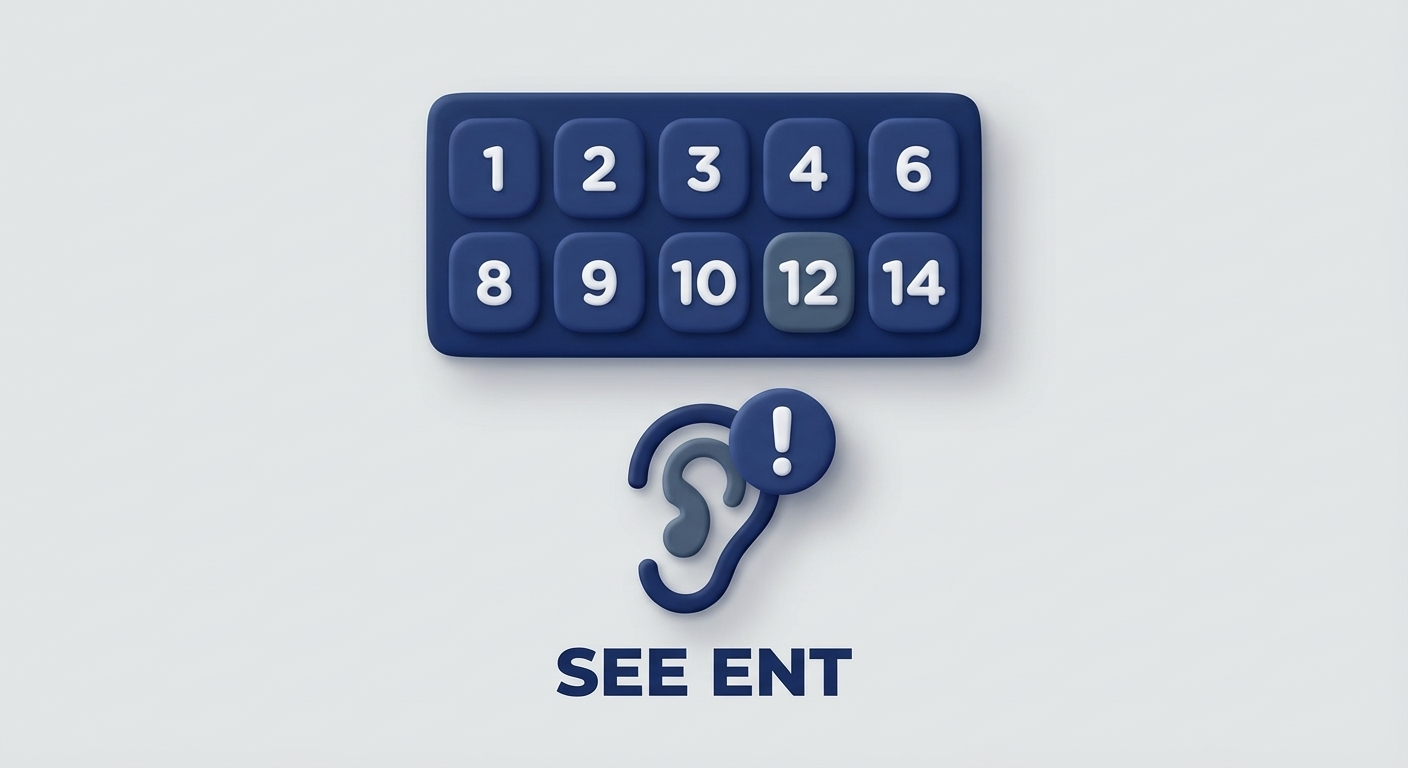
Many cases improve with time and conservative care, but if pressure won’t equalize, an evaluation can clarify the cause and protect hearing. If symptoms aren’t improving after about 2 weeks, consider an ENT referral—sooner if severe. Some cases are monitored for 6–12 weeks depending on severity, hearing, and exam.
If ear pressure that won’t equalize lasts more than 2 weeks, keeps recurring, or affects one ear, consider an ENT evaluation—especially if you notice hearing loss, worsening pain, or drainage. Seek urgent care for severe pain, high fever, pus-like drainage, or sudden hearing loss.
Sooner-than-later reasons
Persistent one-sided pressure, noticeable hearing change, or recurrent episodes affecting sleep, work, travel, or daily life.
Pediatric referral guideline
For children, middle-ear fluid persisting longer than 3 months with documented hearing loss commonly prompts ENT referral: https://pmc.ncbi.nlm.nih.gov/articles/PMC4600223/
Red Flags—When to Seek Urgent Care (Same Day/ASAP)
Severe or worsening ear pain.
High fever.
Pus-like drainage from the ear.
Sudden hearing loss (hours to a day).
Persistent one-sided symptoms with new neurologic signs (severe dizziness, facial weakness, significant imbalance).
If pain, fever, drainage, or sudden hearing changes occur, seek urgent care immediately.
What to Expect at an ENT Appointment

History questions
How long it’s been going on (days vs. weeks), recent triggers (cold, allergies, flying/diving, sinus symptoms), one ear or both, hearing changes or ringing, dizziness/vertigo, drainage or fever. For children: speech, school, or suspected hearing difficulty.
Common in-office exams/tests
Otoscopy to assess the canal and eardrum, brief nasal exam if congestion is suspected, tympanometry to measure middle-ear pressure, and a hearing test if changes are reported or suspected.
A focused ENT exam can quickly sort out ear-canal, middle-ear, and nasal contributors.
ENT Treatments for Ear Pressure That Won’t Equalize
Treating the underlying driver
Allergy management, chronic rhinitis/sinus treatment planning, and sometimes reflux management if history suggests a role.
Procedures an ENT may recommend
Tympanostomy tubes to ventilate the middle ear.
Adenoidectomy in children when enlarged adenoids contribute.
Balloon Eustachian tuboplasty (balloon dilation) for selected chronic ETD cases. Details: https://sleepandsinuscenters.com/blog/eustachian-tube-balloon-dilation-fix-ear-pressure-fullness
Treat what’s causing the blockage first; procedures are for persistent, disruptive cases.
Lifestyle Tips to Prevent Repeat “Won’t Pop” Episodes
For flying
Swallow or chew during ascent and descent. If very congested, consider postponing travel when possible and discuss safe management with your clinician. Some use filtered earplugs designed for pressure changes.
For allergies and colds
Address nasal inflammation early with saline and clinician-recommended sprays/medications. Prioritize hydration and sleep. Reduce triggers when possible.
For divers
Avoid diving with congestion. Equalize early and often. Stop if pain occurs—pushing through can worsen injury.
Symptom Checklist: What It Might Mean and When to Call
Ear fullness or pressure after a cold
Common possibilities: ETD, middle-ear fluid.
When to call: If not improving after about 2 weeks.
“Ears won’t pop” during/after flying
Common possibilities: ETD, ear barotrauma.
When to call: If pain is significant or symptoms persist.
Muffled hearing
Common possibilities: ETD, middle-ear fluid, earwax.
When to call: If a noticeable change lasts more than 1–2 weeks or worsens.
One-sided pressure
Common possibilities: ETD, localized blockage, other causes.
When to call: If persistent or recurrent—ENT evaluation recommended.
Drainage from ear
Common possibilities: Infection, eardrum issue.
When to call: Urgent or same-day evaluation.
Sudden hearing loss
Common possibilities: Multiple causes.
When to call: Urgent or emergency evaluation.
FAQs
Why does ear pressure last weeks after a cold?
Lingering inflammation around the Eustachian tube can persist after cold symptoms improve, prolonging fullness and difficulty equalizing. Cleveland Clinic describes this pattern in ETD education.
Can ETD cause vertigo or dizziness?
Some people experience dizziness or imbalance with ETD, though persistent or severe vertigo deserves evaluation to confirm the cause.
Is it safe to do the Valsalva maneuver repeatedly?
Use a gentle technique only. Forcing can increase pain or risk injury. If symptoms persist or attempts are painful, seek medical evaluation. Safe techniques: https://sleepandsinuscenters.com/blog/safe-eustachian-tube-exercises-pressure-equalizing-tips-and-when-to-see-an-ent-in-atlanta
Why is one-sided ear pressure more concerning?
Persistent unilateral symptoms may warrant ENT evaluation to rule out a localized blockage or other conditions, especially if not improving over time.
When should my child see an ENT for ear fluid?
If middle-ear fluid persists longer than 3 months and a hearing test documents hearing loss, referral is commonly recommended: https://pmc.ncbi.nlm.nih.gov/articles/PMC4600223/
Conclusion / Next Step
Most cases of ear pressure that won’t equalize are related to ETD and improve with time plus conservative measures. The biggest decision points are how long symptoms last and whether red flags like severe pain, drainage, fever, or sudden hearing loss are present. If symptoms persist beyond a couple of weeks or keep returning, an ENT evaluation can clarify the cause and next steps.
Book an appointment: https://sleepandsinuscenters.com/appointments
Medical disclaimer: This article is for general education and is not a substitute for personalized medical advice, diagnosis, or treatment. If you have severe symptoms or think you may be experiencing an emergency (such as sudden hearing loss), seek urgent medical care.
Disclaimer: This article is for educational purposes only and is not medical advice. Please consult a qualified healthcare provider for diagnosis and treatment.
Don’t let allergies slow you down. Schedule a comprehensive ENT and allergy evaluation at Sleep and Sinus Centers of Georgia. We’re here to find your triggers and guide you toward lasting relief.