Doxylamine Succinate: Uses, Dosage, Side Effects, and Safety Guide
Many people look up doxylamine succinate because they’re dealing with trouble sleeping, bothersome allergy symptoms, or nausea in pregnancy. It’s widely available over the counter (OTC), which can make it feel “simple.” But OTC doesn’t always mean risk-free—especially with medications that can cause sedation and anticholinergic effects (like dry mouth, constipation, and confusion in higher-risk groups). [1][5]
A helpful way to think about it: OTC status often means “appropriate for self-care when used exactly as directed,” not “safe for everyone in every situation.” With sedating antihistamines, small choices—like taking it too late at night, mixing it with alcohol, or accidentally doubling up in a cold medicine—can make side effects much more likely. [2][3]
Medical disclaimer: This article is for educational purposes only and is not medical advice. Always follow the product label and seek guidance from a clinician or pharmacist for personal dosing and safety questions.
What Is Doxylamine Succinate?
Quick overview: Doxylamine succinate is a first-generation H1 antihistamine, an older class of allergy medications. [1] In the U.S., it’s commonly found in OTC sleep products such as Unisom SleepTabs (which contain doxylamine succinate); note that the Unisom brand also sells other formulations that contain different active ingredients, such as diphenhydramine. [2]
You’ll often see it marketed for “nighttime” symptoms because its most noticeable effect for many people is drowsiness. That can be useful in the right context—but inconvenient (or unsafe) in the wrong one.
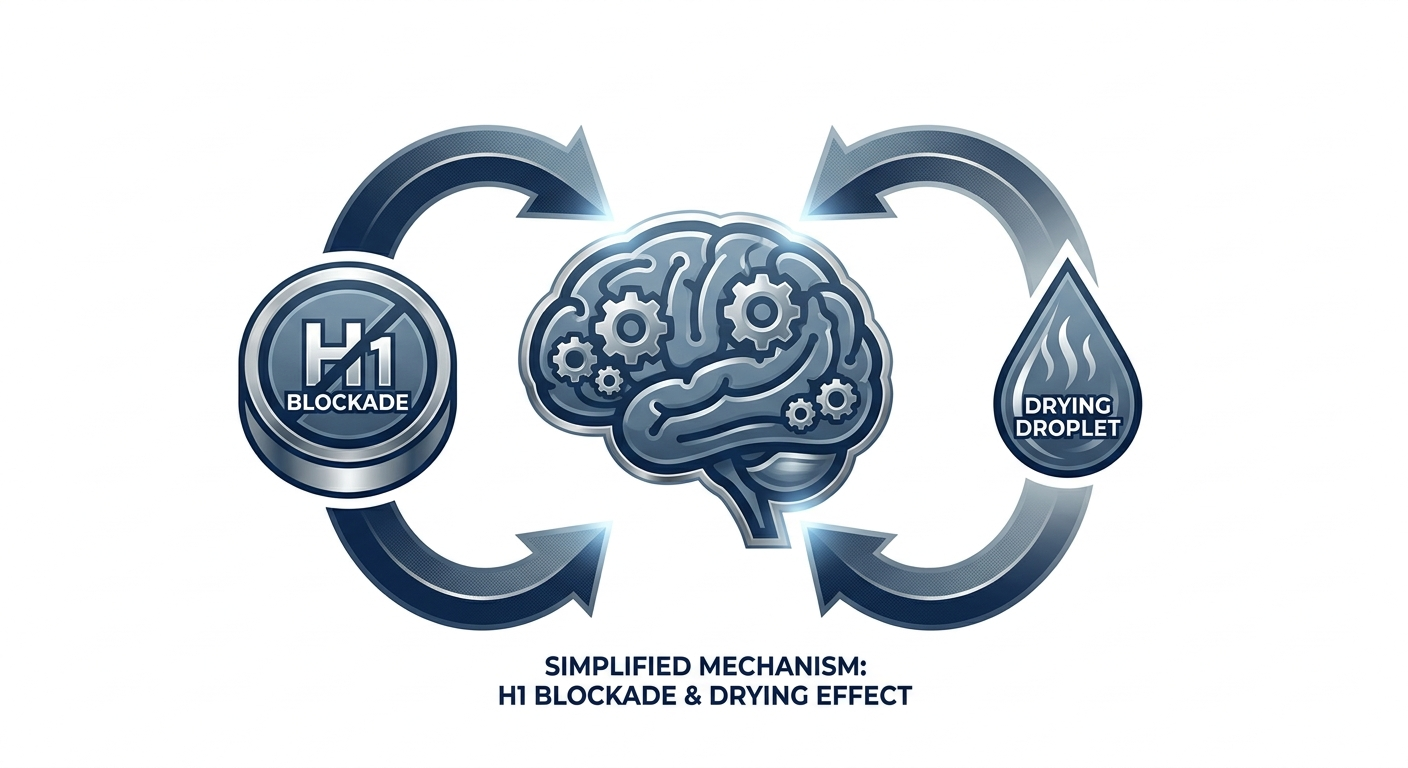
Why it can make you sleepy: Unlike newer “non-drowsy” antihistamines, doxylamine can cross into the brain and block central H1 receptors, leading to marked sleepiness. It also has anticholinergic properties, which explains many of its side effects. [1]
Another way to think about it: it dampens wake-promoting signals in the brain and also “dries” secretions and slows certain body functions—useful in some situations but a driver of side effects in others. [1]
Bottom line: Doxylamine is an older, sedating antihistamine often used as a sleep aid, but the same properties that promote sleep can also cause side effects.
How Doxylamine Works (Mechanism of Action)
Antihistamine effect (H1 blockade): By blocking H1 receptors, doxylamine can reduce histamine-related symptoms such as sneezing, runny nose, and itching. [1] Because it is quite sedating, many people don’t find it practical for daytime allergy control, though it may help when nighttime symptoms disrupt sleep.
Anticholinergic effect (why side effects happen): Anticholinergic activity can reduce secretions, but it can also cause:
- Dry mouth
- Constipation
- Urinary retention
- Blurry vision
- Confusion (especially in older adults) [1][5]
In short: Doxylamine blocks histamine and has anticholinergic effects—both contribute to benefits and side effects.
Uses of Doxylamine Succinate (What It Treats)
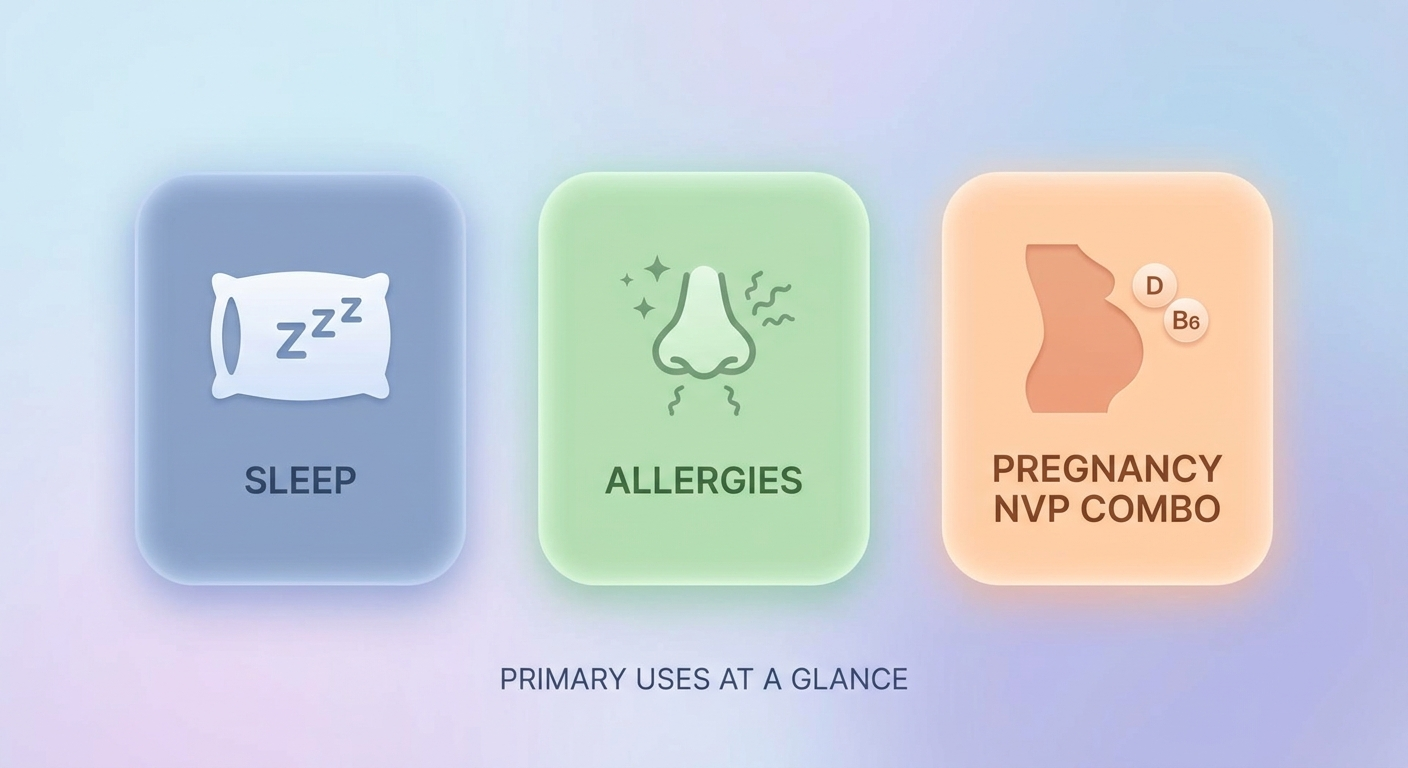
1) Short-term insomnia (OTC sleep aid): Doxylamine is commonly used as an OTC sleep aid for occasional sleeplessness, largely because it’s sedating. [2][3] It does not treat the underlying drivers of chronic insomnia (such as sleep apnea, circadian rhythm disorders, anxiety, or uncontrolled nasal/allergy symptoms). If the root cause is still there, the sleep problem often returns when the medication wears off.
2) Allergy symptom relief (limited role today): Doxylamine may help some histamine-related symptoms, but because it is sedating, it is not usually a preferred choice for routine allergy relief. Less-sedating options are typically favored for daytime use.
3) Nausea and vomiting of pregnancy (NVP) when combined with pyridoxine (vitamin B6): For nausea and vomiting of pregnancy—often called morning sickness, though it can occur at any time of day—the evidence-supported option is doxylamine + pyridoxine (vitamin B6), not doxylamine alone. This combination is commonly recommended when lifestyle measures aren’t enough, with details varying by clinical scenario and country. [4]
Takeaway: Doxylamine is most often used for short-term insomnia; it’s not a first-choice daytime allergy medicine, and in pregnancy it’s used with vitamin B6 under clinical guidance.
Symptoms & Scenarios Where Doxylamine Might (or Might Not) Help
If your main issue is trouble sleeping: People often reach for doxylamine when they have trouble falling asleep, frequent waking, or non-restorative sleep. If nasal blockage or snoring are contributors, it can help to address those root causes—see can’t breathe through your nose at night: https://sleepandsinuscenters.com/blog/cant-breathe-through-nose-at-night
If your main issue is “allergies”: Symptoms that may respond to an antihistamine include sneezing, itchy/watery eyes, and runny nose. Symptoms like persistent facial pressure with fever or thick, discolored drainage may require a different approach. For timing strategies, see best time to take allergy medicine: https://sleepandsinuscenters.com/blog/best-times-to-take-allergy-medicine-morning-vs-night
If your main issue is pregnancy nausea: Common NVP patterns include nausea, vomiting, food aversions, and fatigue. More urgent situations include signs of dehydration or inability to keep fluids down—reasons to seek prompt OB guidance. [4]
Key point: Match the tool to the problem—sedation alone won’t fix airflow, inflammation, or dehydration.
Doxylamine Dosage Guide (Typical OTC Use)
Important: Doses vary by product formulation and indication—always follow the package label or a clinician’s directions. [2][3]
Typical adult dosing for sleep (OTC): Some OTC sleep products contain 25 mg doxylamine per tablet and are taken once at bedtime. [2][3] Sensible tips include:
- Use only when you can allow a full night of sleep (to reduce next-day drowsiness). [2][3]
- Avoid “re-dosing” in the middle of the night.
Typical dosing for allergies (if used): Label directions vary by product. It’s especially important not to combine multiple sedating antihistamines. If unsure whether two products overlap, ask a pharmacist to check the active ingredients.
Pregnancy nausea dosing (doxylamine + pyridoxine): For NVP, dosing and formulation matter. Options include prescription delayed-release combinations and coordinated OTC regimens (doxylamine + vitamin B6) under OB guidance. [4]
Pediatrics: Sleep-aid products with doxylamine are not intended for young children; follow the label’s minimum age and pediatric directions, and consult a clinician before use. [2][3]
Practical rule: Follow the exact label, avoid doubling up across products, and plan for a full night’s sleep to limit residual sedation.

How Long Does Doxylamine Last?
Onset and duration (what people notice): Doxylamine often causes sleepiness within a few hours, though effects vary. Next-day drowsiness is a common complaint because sedative effects can linger. [1][2]
Why “hangover” effects happen: Residual sedation is more likely with older age, smaller body size, liver impairment, and when combined with alcohol or other central nervous system depressants. [1][5]
In essence: The sedative effect can outlast the night—plan ahead for morning alertness and safety.
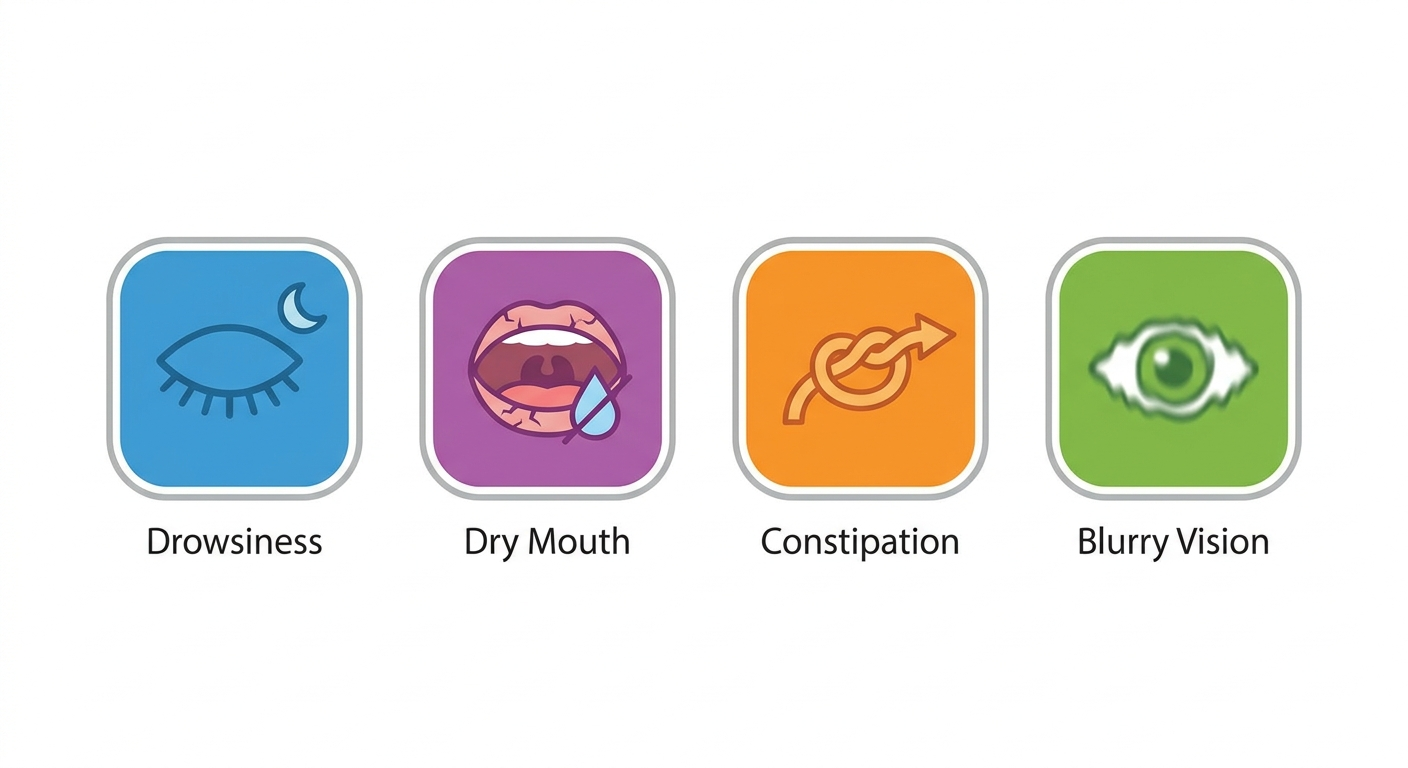
Side Effects of Doxylamine Succinate
Common side effects:
- Drowsiness/sedation (most common) [1][2]
- Dry mouth, constipation, blurry vision [1]
- Dizziness or impaired coordination (which can increase fall risk) [1]
Concerning side effects (get medical guidance):
- Trouble urinating (urinary retention) [1][5]
- Confusion, agitation, hallucinations (more likely in older adults or at higher doses) [1][5]
- Fast heartbeat or palpitations [1]
Older adults: higher risk category: First-generation antihistamines (including doxylamine) appear in the American Geriatrics Society Beers Criteria as potentially inappropriate for many older adults due to anticholinergic burden and fall/cognitive risks. [5]
Core idea: Expect sedation and “drying” effects; older adults face higher risks of confusion and falls.
Safety Guide: Who Should Avoid Doxylamine or Use Extra Caution
Do not use (or ask a clinician first) if you have:
- A history of severe reaction to antihistamines [1]
- Narrow-angle glaucoma, urinary retention, or significant prostate enlargement symptoms (anticholinergic effects can worsen these) [1][5]
- Conditions where added sedation could heighten risk (individualized—discuss with a clinician) [1]
Use caution if you:
- Are 65+ (higher fall/confusion risk) [5]
- Suspect sleep apnea (sedatives may worsen breathing in some people)
- Need to drive or operate machinery the next day [2]
Short version: Screen for anticholinergic and sedation risks before using doxylamine, especially in older adults.
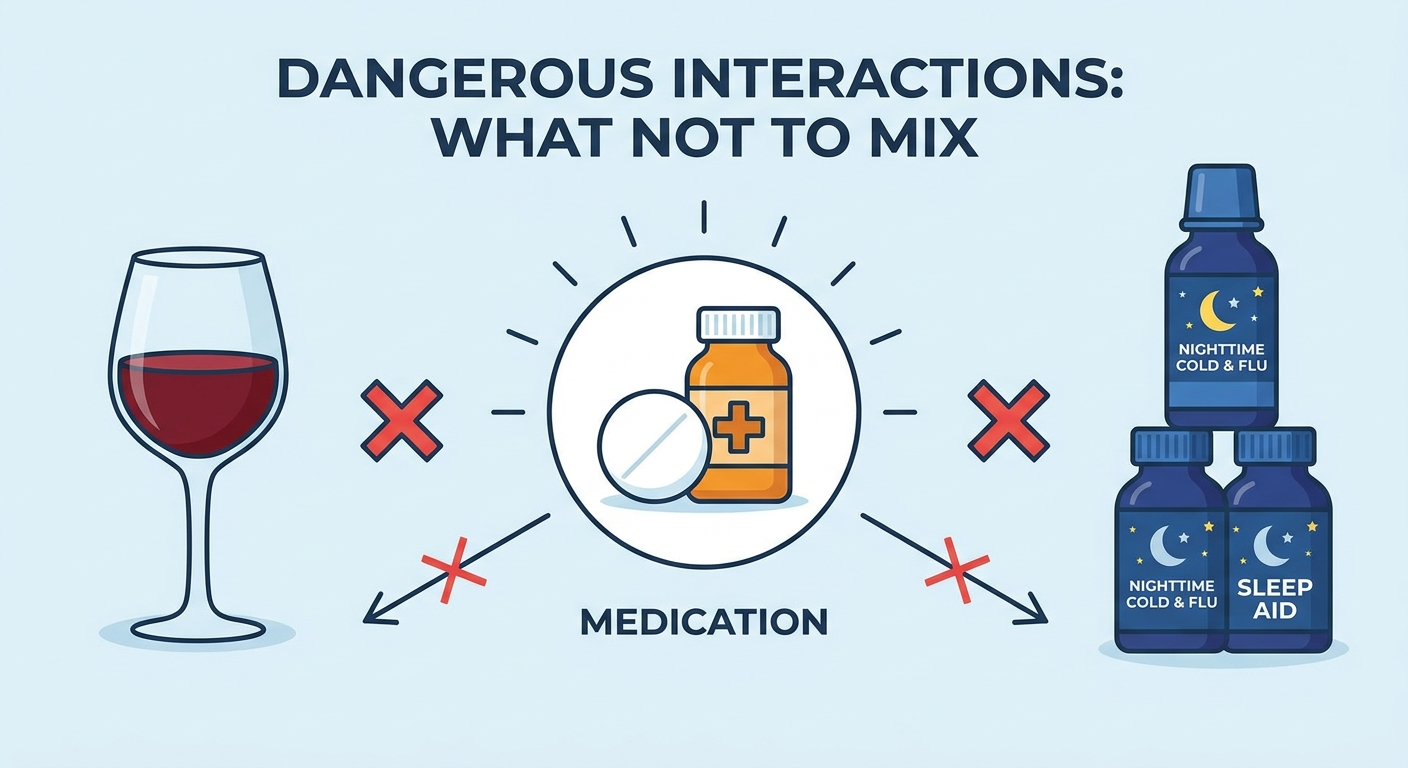
Drug Interactions (What Not to Mix With Doxylamine)
Alcohol and other sedatives: Alcohol can increase sedation and make next-day grogginess more likely. Similar caution applies to benzodiazepines, opioids, cannabis, and other sleep medications. [1][2]
Other anticholinergic medications: Combining anticholinergic drugs can increase the risk of constipation, urinary retention, dry mouth, and confusion. [1][5]
MAO inhibitors and certain antidepressants: Monoamine oxidase inhibitors (MAOIs) and some antidepressants can potentiate anticholinergic and sedative effects; consult a clinician or pharmacist before use. [1]
Multi-symptom cold/flu products (hidden duplication): One of the most common OTC safety issues is “doubling up” unintentionally—especially with nighttime cold products that may contain sedating antihistamines. Always check the Drug Facts label. [2]
Remember: Stack sedatives or anticholinergics, and side effects stack too—check labels carefully.
Overdose Risk and Emergency Warning Signs
Why overdose is dangerous: Too much doxylamine can cause anticholinergic toxicity, which can be serious and potentially life-threatening. [1][7] Overdose risk rises when people mix multiple OTC products or assume “more = better sleep.” [2]
Overdose symptoms (seek emergency help or contact Poison Control): Warning signs can include severe agitation/confusion, hallucinations, very dry/hot skin, high fever, fast heart rate, seizures, or fainting. [1][7] In the U.S., contact Poison Control at 1-800-222-1222 or visit poisonhelp.org for immediate guidance.
If toxicity signs appear after doxylamine use, treat it as an emergency, not something to “wait out.”
Doxylamine in Pregnancy and Breastfeeding
Pregnancy (NVP/morning sickness): Clinical guidance often supports doxylamine + pyridoxine as a first-line medication option for persistent nausea and vomiting of pregnancy after lifestyle changes. Recommendations and product availability vary by country and clinical scenario. Coordinate with an OB clinician for dosing, formulation, and escalation if symptoms are severe. [4]
Breastfeeding considerations: Sedating antihistamines may cause sleepiness in the nursing parent and may also cause infant drowsiness; in some cases, they may affect milk supply. Evidence is limited, and discussing options with a clinician is the safest approach. [6]
In pregnancy and lactation, use doxylamine only with individualized guidance to balance benefits and risks.
Treatment Alternatives (Depending on the Reason You’re Taking It)
If you’re using it for sleep: safer long-term strategies: When sleep issues are frequent, durable improvement usually focuses on habits and root causes rather than nightly medication. See our guide to sleep hygiene and ENT-related factors: https://sleepandsinuscenters.com/blog/sleep-hygiene-and-its-impact-on-ent-disorders-key-insights
If you’re using it for allergies: If allergies affect sleep or persist most days, newer, less-sedating antihistamines and targeted nasal therapies are often better fits. For context, see chronic allergic rhinitis and sleep quality: https://sleepandsinuscenters.com/blog/chronic-allergic-rhinitis-and-its-impact-on-sleep-quality
Focus on cause-based care: targeted treatments usually outperform sedation for chronic problems.
Lifestyle Tips (Practical and Patient-Friendly)
To reduce next-day grogginess:
- Avoid alcohol and other sedatives when using doxylamine. [1][2]
- Plan for 7–9 hours of sleep time when using a sedating OTC product. [2]
- Use “timing discipline”: taking it too late (for example, after midnight) can make morning fog more likely.
To support sleep without medication:
- Keep a consistent schedule
- Create a wind-down routine
- Keep the bedroom cool, dark, and quiet
- Address nasal congestion triggers (nighttime breathing discomfort can disrupt sleep)
To reduce allergy triggers at night:
- Wash bedding regularly
- Consider showering after outdoor exposure
- Reduce bedroom dust accumulation
Small changes in timing, environment, and routine can reduce reliance on sedating medications.
FAQs About Doxylamine Succinate
Is doxylamine succinate the same as diphenhydramine (Benadryl)? No. Both are first-generation antihistamines and can be sedating, but they are different medications with different dosing and product formulations.
Can I take doxylamine every night? OTC labeling positions doxylamine as a short-term option for occasional insomnia. If sleep problems are persistent, evaluate underlying causes rather than relying on nightly sedation. [2][3]
Will it help me sleep if congestion is keeping me up? It may cause drowsiness, but it doesn’t address all causes of congestion. Ongoing nighttime congestion can point to allergic rhinitis or nasal obstruction that may need different treatment.
Can I drive the next morning? Residual sedation is possible. If you feel drowsy or less coordinated, driving and other safety-sensitive tasks may be impaired. [2]
Is it habit-forming? It’s not considered addictive in the same way as some prescription sedatives, but some people develop reliance on the sedating effect or notice it works less well over time.
What should I do if I accidentally took too much? Because overdose can be dangerous, contact Poison Control or seek urgent medical evaluation—especially if any toxicity symptoms occur. [1][7]
When to Talk to a Doctor (or Sleep/ENT Specialist)
Sleep-related reasons: Seek evaluation if insomnia lasts more than a few weeks, or if there’s loud snoring, witnessed breathing pauses, morning headaches, or excessive daytime sleepiness—these can point to sleep-disordered breathing or other treatable conditions.
Allergy-related reasons: If symptoms occur most days, disrupt sleep, or don’t improve with appropriate first-line approaches, a targeted plan can make a big difference.
Pregnancy-related reasons: Persistent vomiting, dehydration signs, weight loss, or inability to keep fluids down should be addressed promptly with OB care. [4]
Appointment note (CTA): If nasal congestion, allergies, or snoring are contributing to poor sleep, you can book an appointment with Sleep and Sinus Centers of Georgia to evaluate underlying ENT and sleep-related factors: https://www.sleepandsinuscenters.com/
If symptoms persist, escalate to cause-based care—don’t rely on sedation to mask ongoing problems.
References
1. StatPearls (NCBI Bookshelf). Doxylamine. 2023. https://www.ncbi.nlm.nih.gov/books/NBK551646/
2. DailyMed. Unisom SleepTabs (doxylamine succinate 25 mg) label. https://dailymed.nlm.nih.gov/
3. U.S. FDA. 21 CFR Part 338 — Nighttime sleep-aid drug products for over-the-counter human use. https://www.ecfr.gov/current/title-21/chapter-I/subchapter-D/part-338
4. American College of Obstetricians and Gynecologists (ACOG). Practice Bulletin No. 189: Nausea and Vomiting of Pregnancy. 2018 (reaffirmed). https://www.acog.org/
5. American Geriatrics Society 2023 Updated AGS Beers Criteria for Potentially Inappropriate Medication Use in Older Adults. https://geriatricscareonline.org/
6. Drugs and Lactation Database (LactMed), National Library of Medicine. Doxylamine. https://www.ncbi.nlm.nih.gov/books/NBK501922/
7. StatPearls (NCBI Bookshelf). Anticholinergic Toxicity. 2023. https://www.ncbi.nlm.nih.gov/books/NBK534798/
This article is for educational purposes only and is not medical advice. Please consult a qualified healthcare provider for diagnosis and treatment.
Don’t let allergies slow you down. Schedule a comprehensive ENT and allergy evaluation at Sleep and Sinus Centers of Georgia. We’re here to find your triggers and guide you toward lasting relief.