Can You Take Melatonin at 3 a.m.? Benefits, Risks, and Best Timing for Sleep
It’s 3 a.m. You wake up, glance at the clock, and feel that familiar frustration: Why am I awake again? If you have melatonin on the nightstand, it’s natural to wonder: can you take melatonin at 3 a.m. and still get back to sleep?
Melatonin can be helpful for some sleep problems—but it’s not a fast “knockout pill,” and timing matters more than most people realize. Johns Hopkins notes that melatonin works differently than traditional sleeping pills and is often more about timing and the body clock than immediate sedation. Source: Johns Hopkins Medicine: https://www.hopkinsmedicine.org/health/wellness-and-prevention/melatonin-for-sleep-does-it-work
Below is an educational guide to potential benefits, downsides, and better long-term strategies—especially if you’re waking up at 3 a.m. often.
Quick Answer: Is It Okay to Take Melatonin at 3 a.m.?
Yes, sometimes—but it depends on your situation.
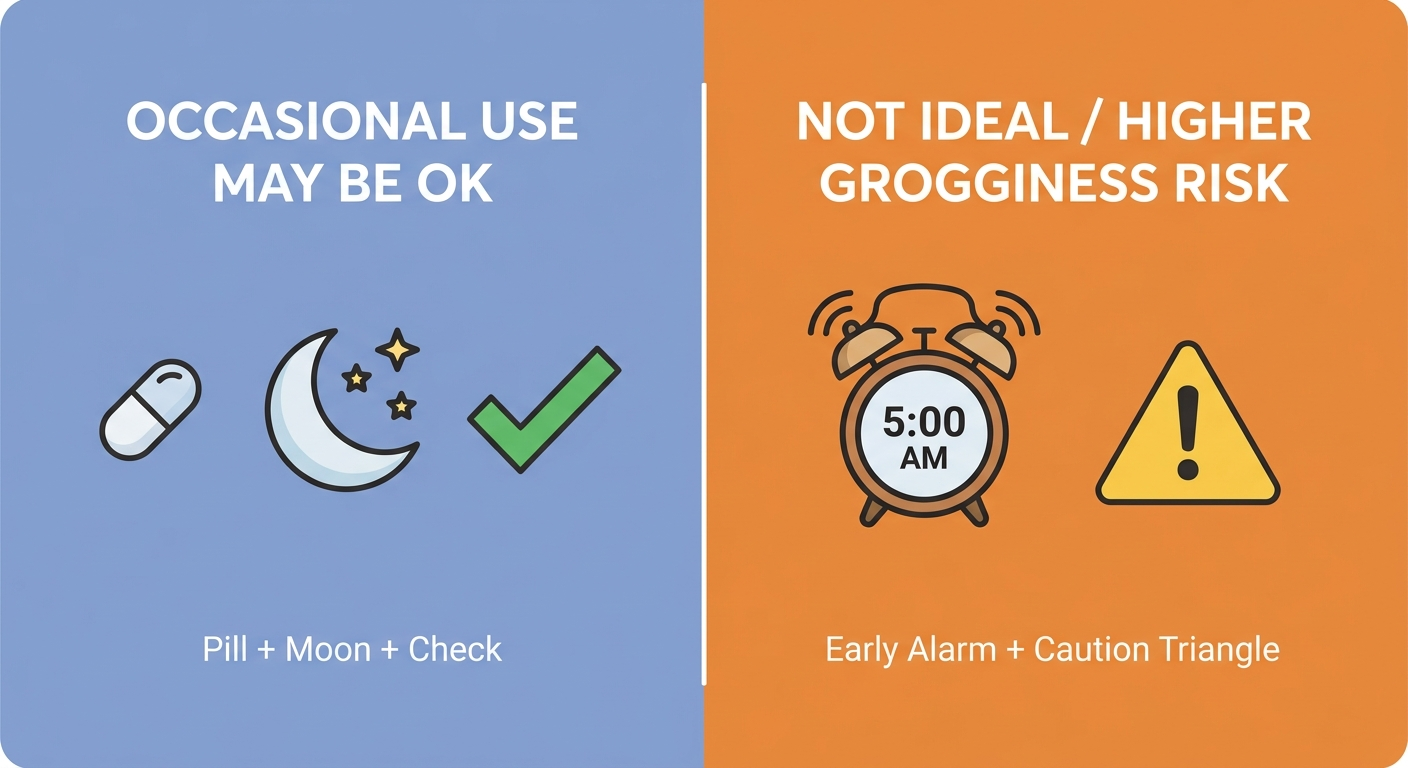
- Some people may consider an occasional dose, but the appropriateness depends on the product, dose, timing, and individual health factors. Melatonin often begins to take effect within about 30–120 minutes.
- It’s usually not ideal as a nightly habit (regular “middle-of-the-night” dosing), because results can be inconsistent and the chance of next-day grogginess may be higher—especially if you need to be up soon.
- If 3 a.m. wake-ups are frequent, it’s typically more helpful to look for patterns and causes (stress, reflux, sleep apnea, schedule misalignment) and consider a more scheduled/timed approach rather than “as-needed” dosing in the middle of the night.
Research reviews emphasize that melatonin’s effects are closely tied to circadian rhythm timing. Source (review): https://pmc.ncbi.nlm.nih.gov/articles/PMC3558560
Bottom line: Taking melatonin at 3 a.m. may help some people fall back asleep on occasion, but it’s rarely the best default plan.
What Melatonin Actually Does (and Why Timing Matters)
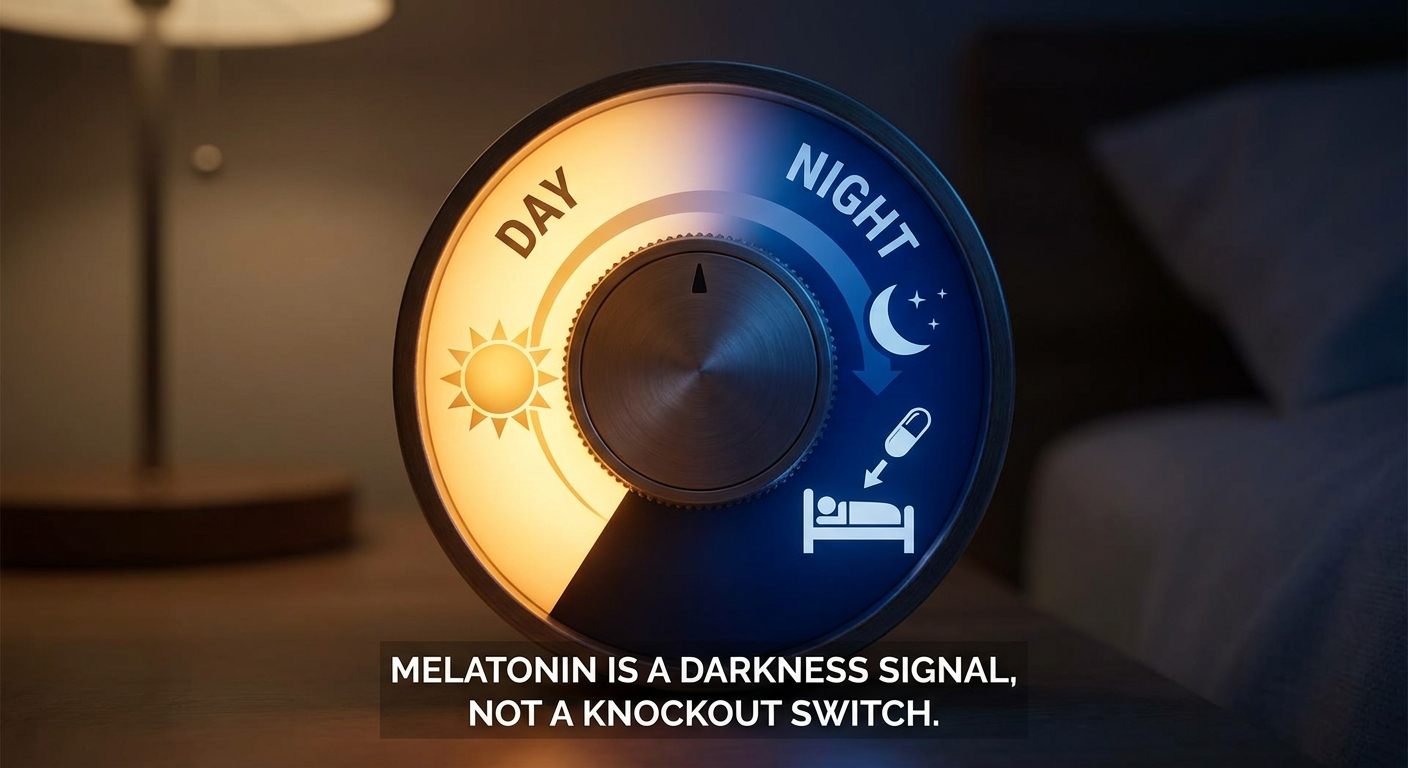
Melatonin = a “darkness signal,” not an instant sedative. Melatonin is a hormone your brain releases in the evening in response to darkness. Think of it as a biological “nighttime cue” that helps your body recognize that it’s time for sleep—more like a dimmer switch than an on/off button.
That’s different from medications designed to sedate you quickly. UC Davis explains melatonin’s role and highlights that effects and side effects vary from person to person. Source: UC Davis Health: https://health.ucdavis.edu/blog/cultivating-health/melatonin-and-your-sleep-is-it-safe-what-are-the-side-effects-and-how-does-it-work/2025/02
Onset window: why “30–120 minutes before sleep” is the usual guidance. Because melatonin is a signal—not a switch—many guidelines suggest taking it before the sleep period you want to start, often 30–120 minutes before bedtime.
For example, the NHS describes prolonged-release melatonin as commonly taken 1–2 hours before bedtime (in prescription contexts). Source: NHS: https://www.nhs.uk/medicines/melatonin/how-and-when-to-take-melatonin/
This is why taking melatonin after you’ve already woken up at 3 a.m. may help some people fall back asleep, but it can be hit-or-miss—especially if you’re already alert by the time you reach for it. Effectiveness can depend on dose, formulation, and how much time remains before wake-up.
Think of melatonin as a consistent nighttime signal for your body clock, not a quick sleep switch.
Benefits of Taking Melatonin at 3 a.m. (When It Might Help)
If you woke up and still have enough time to sleep. If you wake at 3 a.m. and still have a substantial window before you need to be up, melatonin might help you return to sleep. Whether there is enough time for it to be useful depends on how much sleep remains before wake time, the formulation used, and how sensitive you are to next-day drowsiness.
If your sleep schedule is shifted (circadian misalignment). Melatonin may be more useful when the issue involves circadian rhythm misalignment, such as:
- Jet lag
- Shift work sleep challenges
- A naturally delayed schedule (“night owl” tendency)
In these situations, the benefit often comes from consistent timing with guidance, not taking melatonin randomly whenever you wake. Source (review): https://pmc.ncbi.nlm.nih.gov/articles/PMC3558560
Melatonin may help most when used consistently and strategically, especially for body-clock issues.
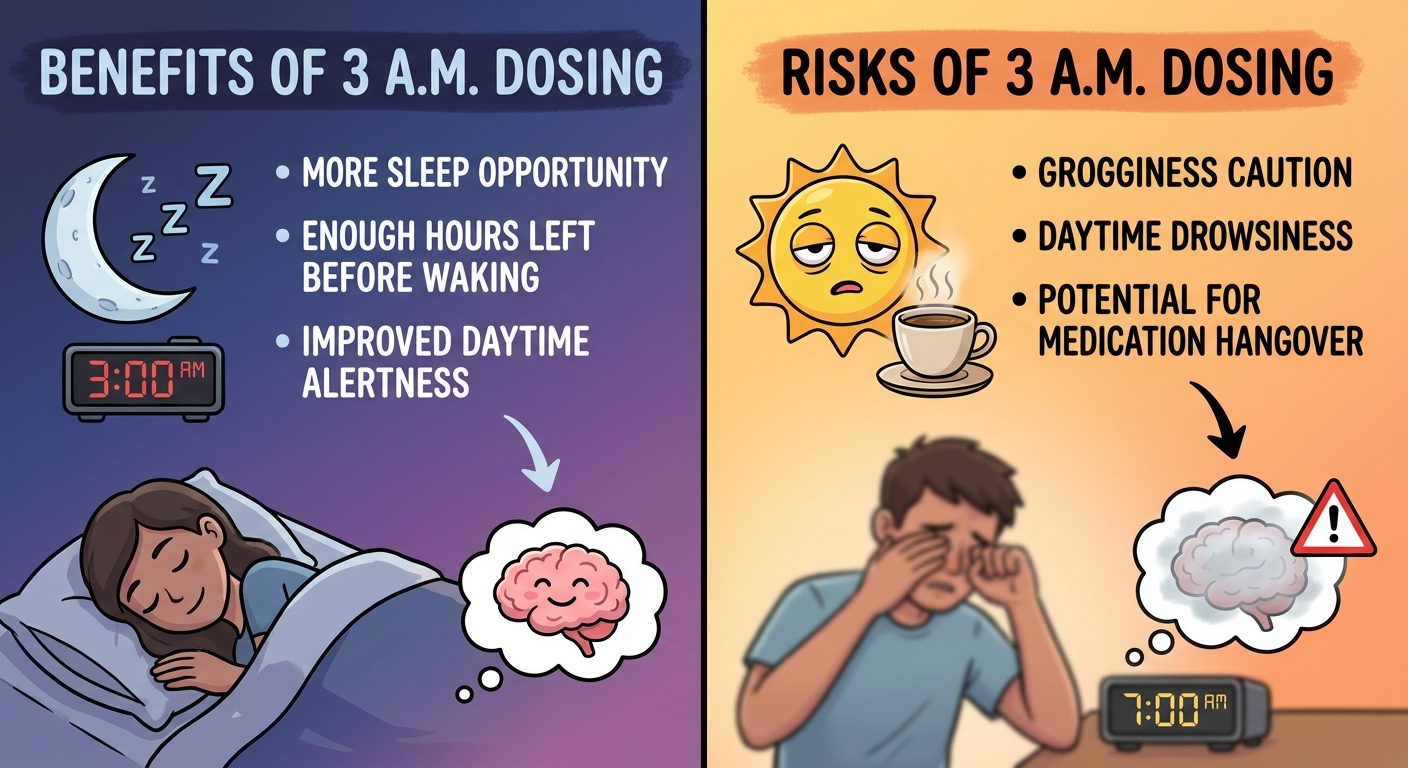
Risks of Taking Melatonin at 3 a.m. (Why It’s Often Not Ideal)
Next-day grogginess (especially if you must wake soon). If you plan to be up early, taking melatonin at 3 a.m. may raise the chance of:
- Morning drowsiness or “hangover” feelings
- Slower reaction time
- Mental fog that can affect driving or safety-sensitive tasks
UC Davis includes drowsiness among common potential side effects. Source: https://health.ucdavis.edu/blog/cultivating-health/melatonin-and-your-sleep-is-it-safe-what-are-the-side-effects-and-how-does-it-work/2025/02
Disrupting your body clock with poorly timed dosing. Melatonin interacts with your body’s clock. Taking it at an inconsistent or very late time may be less effective and, in some cases, may not align well with your circadian rhythm. Source (review): https://pmc.ncbi.nlm.nih.gov/articles/PMC3558560
Nighttime dosing can become a “sleep crutch.” If you take something every time you wake, your brain can start to associate waking with needing a pill—rather than using behavioral tools to drift back to sleep. Some sleep experts emphasize that timing and routine can affect how well melatonin works. Source: Everyday Health: https://www.everydayhealth.com/melatonin/melatonin-mistakes-sleep-doctors-want-you-to-avoid/
Late, inconsistent dosing can increase grogginess risk and may not align well with your body clock.
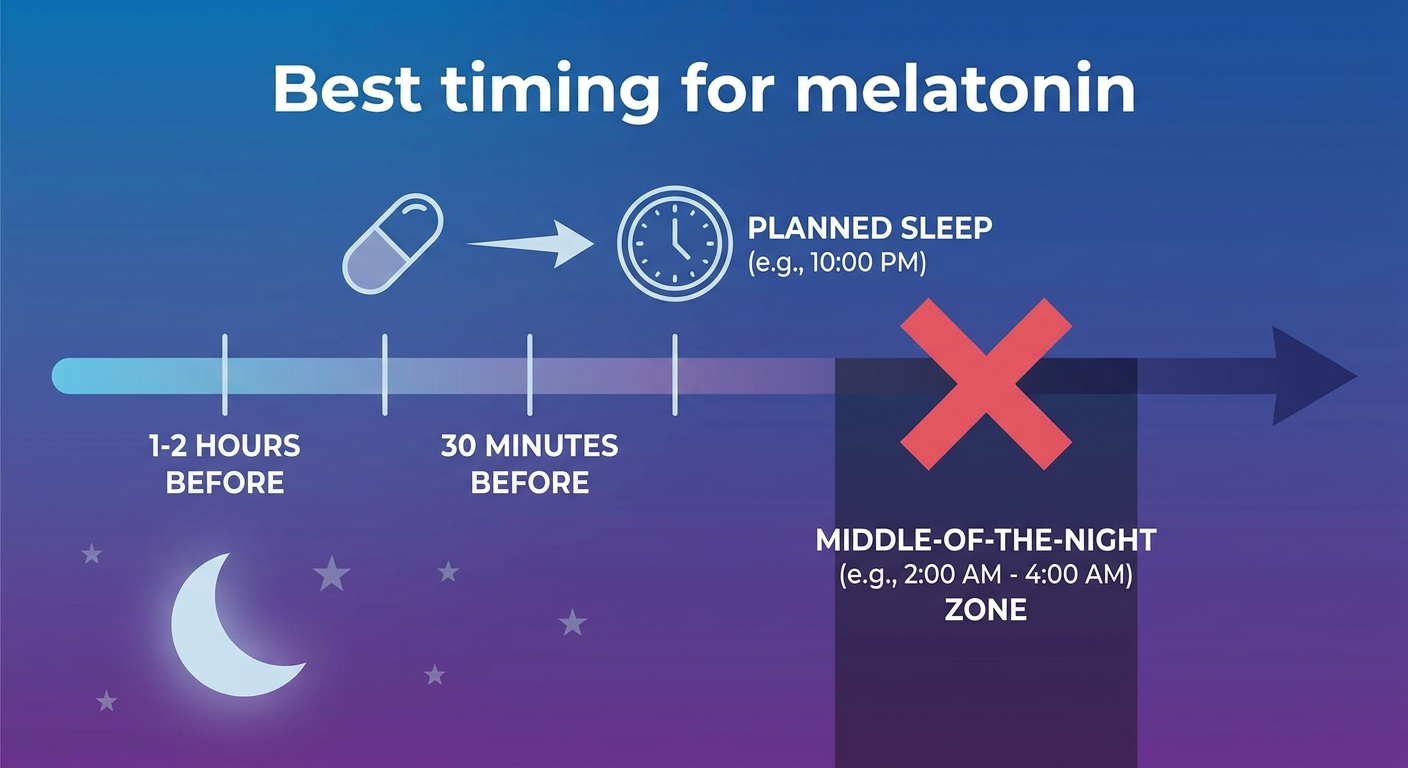
Best Timing for Melatonin (So You Don’t Need It at 3 a.m.)
General timing rule: 30–120 minutes before your planned bedtime. Most guidance focuses on taking melatonin before the sleep period you’re trying to start—not after a wake-up.
If melatonin seems to begin taking effect too late, the adjustment is often about earlier timing, not a higher dose. If morning grogginess appears, reassess dose, timing, or formulation (with clinician guidance if needed).
Sources:
- NHS timing overview: https://www.nhs.uk/medicines/melatonin/how-and-when-to-take-melatonin/
- Johns Hopkins overview: https://www.hopkinsmedicine.org/health/wellness-and-prevention/melatonin-for-sleep-does-it-work
“Set it and test it” approach (consistent trial). For circadian-related sleep issues, melatonin often makes more sense as a short, consistent trial (for example, one to two weeks) rather than taking it sporadically at 3 a.m. some nights. The goal is to provide your brain with a reliable “nighttime” cue—not surprise it with a different signal every day. If insomnia is persistent, consider non-medication approaches and evaluation for underlying causes.
Aim for consistent timing before bedtime; think schedule tool, not emergency button.

Dose and Formulation: What to Consider If You’re Thinking About 3 a.m. Melatonin
Typical OTC doses (and why lower often works). Over-the-counter melatonin commonly ranges from 0.3 mg to 5 mg. Johns Hopkins emphasizes a “start low” mindset—higher isn’t always better, and effects vary. Source: https://www.hopkinsmedicine.org/health/wellness-and-prevention/melatonin-for-sleep-does-it-work
Immediate-release vs prolonged-release melatonin
- Immediate-release: often used to help with sleep onset (falling asleep).
- Prolonged-release (also called extended-release or slow-release): designed to last longer and may be aimed more at sleep maintenance (staying asleep), but it can also increase the chance of morning drowsiness if taken late at night.
The NHS provides an example timing framework for prolonged-release melatonin in prescription use (often 1–2 hours before bed). Source: https://www.nhs.uk/medicines/melatonin/how-and-when-to-take-melatonin/
3 a.m. considerations (educational, not a decision tool)
- Do you have several hours left before wake time? Some people use a general rule of thumb of having a few hours left to sleep before considering a dose, but this is not a one-size-fits-all recommendation.
- Do you need to drive early or do safety-sensitive work where next-day drowsiness would be risky?
- Have you already taken melatonin earlier tonight (stacking can increase side effects)?
- Is this an occasional situation—or a frequent pattern that may benefit from a broader plan?
Choose dose and formulation carefully, and avoid late-night “stacking,” especially if morning alertness is critical.
Waking Up at 3 a.m. Often? Symptoms That Suggest You Should Look Deeper
Common patterns to note (symptom tracking). Frequent 3 a.m. awakenings aren’t always a melatonin problem. Tracking patterns can help you and your clinician identify what’s going on, such as:
- Waking at the same time nightly
- Snoring, gasping, or waking up choking
- Morning headaches, dry mouth, daytime sleepiness
- Reflux symptoms (sour taste, throat clearing)
- Anxiety, racing thoughts
- Frequent urination, pain, hot flashes/night sweats
A simple note in your phone—bedtime, wake time, alcohol/caffeine timing, and symptoms—can make patterns easier to spot.
When it’s time to talk to a clinician. Consider a clinical conversation if it happens 3+ nights per week for 3+ months, or sooner if there are red flags like choking/gasping or severe daytime sleepiness. Johns Hopkins notes melatonin isn’t for everyone and that underlying sleep disorders may need attention. Source: https://www.hopkinsmedicine.org/health/wellness-and-prevention/melatonin-for-sleep-does-it-work
If you’re specifically waking with choking or gasping, this resource may help you understand one possible cause: waking up choking: is it sleep apnea? https://sleepandsinuscenters.com/blog/wake-up-choking-is-it-sleep-apnea
Frequent 3 a.m. awakenings deserve a closer look for medical, behavioral, and lifestyle contributors.
Causes of 3 a.m. Wake-Ups (Why Melatonin Isn’t Always the Fix)
Sleep apnea or airway issues. Repeated breathing disruptions can cause brief arousals that feel like random awakenings—even if you don’t fully remember them.
Stress, anxiety, and hyperarousal insomnia. A revved-up nervous system can create “tired but wired” sleep, where you fall asleep fine but wake in the early morning and struggle to settle your mind.
Reflux (GERD/LPR), nasal congestion, allergies. Throat irritation, coughing, or nasal blockage can pull you out of sleep, especially when lying down.
Lifestyle and environment. Alcohol close to bedtime, late caffeine, and bright light/screens can all contribute to fragmented sleep. If screens are part of your late-night routine, you may find this helpful: how blue light affects melatonin and sleep. https://sleepandsinuscenters.com/blog/blue-light-and-its-impact-on-ent-related-sleep-disorders-1bca5
Finding the driver of nighttime awakenings usually works better than treating the clock alone.
Treatments and Lifestyle Tips to Try Instead of (or Before) 3 a.m. Melatonin
What to do in the moment when you wake at 3 a.m.
If you wake up and you’re alert:
- Keep lights dim and avoid phone scrolling.
- Try calm, low-stimulation activities (breathing, quiet reading).
- If you’re awake for a while, some sleep experts suggest leaving the bed briefly to reduce the “bed = awake” association.
If you do get up, keep it boring: low light, no emails, no chores that raise your heart rate.
Sleep hygiene upgrades that make melatonin work better (or unnecessary)
- A consistent wake time
- Morning light exposure
- Caffeine cutoff and less late alcohol
- A cool, dark, quiet bedroom
For a practical overview, see sleep hygiene tips that improve insomnia naturally. https://sleepandsinuscenters.com/blog/sleep-hygiene-and-its-impact-on-ent-disorders-key-insights
Everyday Health also discusses common melatonin mistakes and the importance of timing and routines. Source: https://www.everydayhealth.com/melatonin/melatonin-mistakes-sleep-doctors-want-you-to-avoid/
Consider a clinician-guided, timed melatonin plan. If your issue is primarily circadian (shift work, jet lag, delayed sleep schedule), a timed plan may be more effective than wondering nightly whether you should take melatonin at 3 a.m. Source (review): https://pmc.ncbi.nlm.nih.gov/articles/PMC3558560
Good sleep habits and a clear plan often reduce the need for middle-of-the-night melatonin.
Safety: Who Should Be Careful with Melatonin?
Possible side effects
- Next-day drowsiness
- Headache
- Vivid dreams
- Nausea
Source: UC Davis Health: https://health.ucdavis.edu/blog/cultivating-health/melatonin-and-your-sleep-is-it-safe-what-are-the-side-effects-and-how-does-it-work/2025/02
Medication interactions to ask about
- Blood thinners/anticoagulants
- Immunosuppressants
- Other sedating medications
Source: UC Davis Health: https://health.ucdavis.edu/blog/cultivating-health/melatonin-and-your-sleep-is-it-safe-what-are-the-side-effects-and-how-does-it-work/2025/02
Pregnancy and breastfeeding. It’s generally best to consult a clinician before using melatonin during pregnancy or breastfeeding. (NHS guidance provides broader context on appropriate use.) Source: https://www.nhs.uk/medicines/melatonin/how-and-when-to-take-melatonin/
If you have medical conditions, take other medicines, or are pregnant/breastfeeding, ask a clinician before using melatonin.
FAQs
Will melatonin put me to sleep immediately if I take it at 3 a.m.?
Usually not. Many resources describe taking melatonin in advance of sleep, often 30–120 minutes before. Source: https://www.nhs.uk/medicines/melatonin/how-and-when-to-take-melatonin/
Can I take a second dose if I already took melatonin before bed?
“Stacking” a second dose may increase the chance of next-day grogginess and other side effects. If this is a recurring need, it may be worth discussing a safer plan with a clinician rather than escalating on your own. Source: https://www.everydayhealth.com/melatonin/melatonin-mistakes-sleep-doctors-want-you-to-avoid/
What’s the best melatonin dose for nighttime awakenings?
There isn’t one perfect dose. Many people do well with lower doses, and immediate-release vs prolonged-release melatonin can change how it feels. Johns Hopkins supports a cautious “start low” approach and emphasizes individualized response. Source: https://www.hopkinsmedicine.org/health/wellness-and-prevention/melatonin-for-sleep-does-it-work
Is prolonged-release melatonin better for staying asleep?
It may help some people with sleep maintenance, but the longer effect can also increase the chance of morning drowsiness if taken too late. Source: https://www.nhs.uk/medicines/melatonin/how-and-when-to-take-melatonin/
Is it safe to take melatonin every night?
Melatonin is often considered safe for short-term use in healthy adults, but longer-term nightly use is a good reason to review sleep habits and check for underlying causes with a clinician. Source: https://health.ucdavis.edu/blog/cultivating-health/melatonin-and-your-sleep-is-it-safe-what-are-the-side-effects-and-how-does-it-work/2025/02
Use melatonin thoughtfully, and ask a clinician if you have ongoing sleep problems or medical questions.
When to Seek Help (Clear Next Step)
If you’re frequently waking up at 3 a.m., it may help to look beyond “treating the clock” and instead identify the driver—airway issues, chronic insomnia patterns, reflux, medication effects, or circadian rhythm disruption. If you’re unsure where to start, Sleep and Sinus Centers of Georgia has guidance on evaluation pathways here: when to see an ENT for sleep problems. https://sleepandsinuscenters.com/blog/when-to-see-an-ent-for-sleep-problems
Ready for a clearer plan than trial-and-error at 3 a.m.? You can book an appointment with Sleep and Sinus Centers of Georgia here: https://www.sleepandsinuscenters.com/
References
- NHS. How and when to take melatonin https://www.nhs.uk/medicines/melatonin/how-and-when-to-take-melatonin/
- Johns Hopkins Medicine. Melatonin for sleep: does it work? https://www.hopkinsmedicine.org/health/wellness-and-prevention/melatonin-for-sleep-does-it-work
- UC Davis Health. Melatonin and your sleep: is it safe, what are side effects, how does it work? https://health.ucdavis.edu/blog/cultivating-health/melatonin-and-your-sleep-is-it-safe-what-are-the-side-effects-and-how-does-it-work/2025/02
- Everyday Health. Melatonin mistakes sleep doctors want you to avoid https://www.everydayhealth.com/melatonin/melatonin-mistakes-sleep-doctors-want-you-to-avoid/
- PubMed/NCBI. Melatonin timing and effects (review) https://pmc.ncbi.nlm.nih.gov/articles/PMC3558560
This article is for educational purposes only and is not medical advice. Please consult a qualified healthcare provider for diagnosis and treatment.
Don’t let allergies slow you down. Schedule a comprehensive ENT and allergy evaluation at Sleep and Sinus Centers of Georgia. We’re here to find your triggers and guide you toward lasting relief.