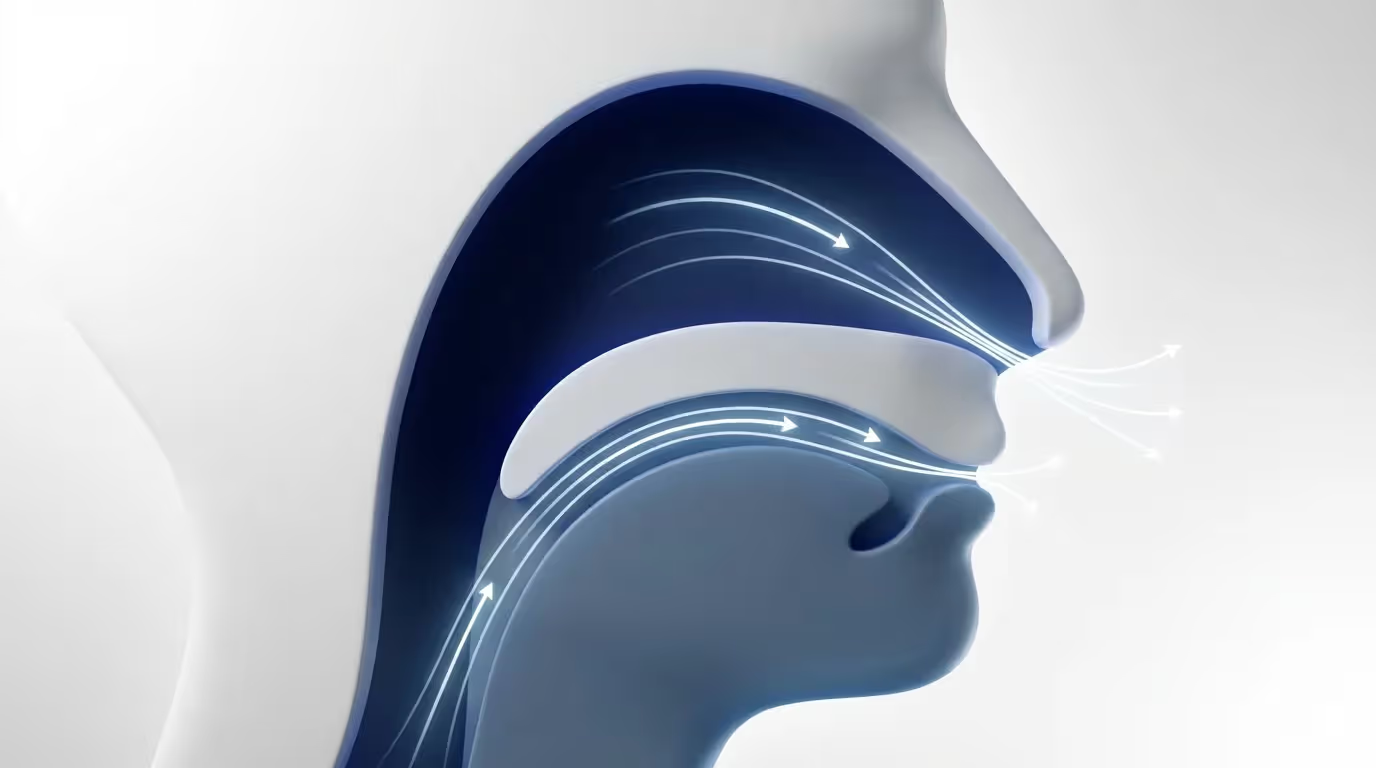
Can a Deviated Septum Cause Sleep Apnea? Symptoms, Risks, and Treatment Options
Waking up tired, snoring loudly, or feeling like you can’t breathe through your nose at night can be frustrating—and confusing. It’s especially tricky when you can feel the blockage and assume that must be the whole story.
Many people ask: can a deviated septum cause sleep apnea, or is something else going on? Below is a patient-friendly guide to how septum deviation and sleep-disordered breathing can overlap, what symptoms to watch for, how the problem is diagnosed, and which treatment paths tend to help most.
Quick Answer: Can a Deviated Septum Cause Sleep Apnea?
A deviated septum can worsen nasal blockage, snoring, and sleep-disordered breathing, and observational research shows an association between septal deviation and higher rates of obstructive sleep apnea (OSA) diagnoses. However, in most people, a deviated septum is a contributing factor—not the main cause. OSA most often results from collapse of the throat (pharyngeal airway) during sleep. Yeom SW et al., 2021: https://pmc.ncbi.nlm.nih.gov/articles/PMC8494085/
A helpful way to think about it is “two bottlenecks.” The nose can be a narrow entry point, and the throat can be the collapsible section. Fixing the entry may improve airflow and comfort, but it doesn’t always prevent collapse farther down.
This is why the “right next step” is usually confirming whether OSA is present (with sleep testing) and then building a plan that addresses both:
- OSA itself (often with CPAP or other proven therapies), and
- Nasal obstruction, which can worsen symptoms and make treatments harder to use.
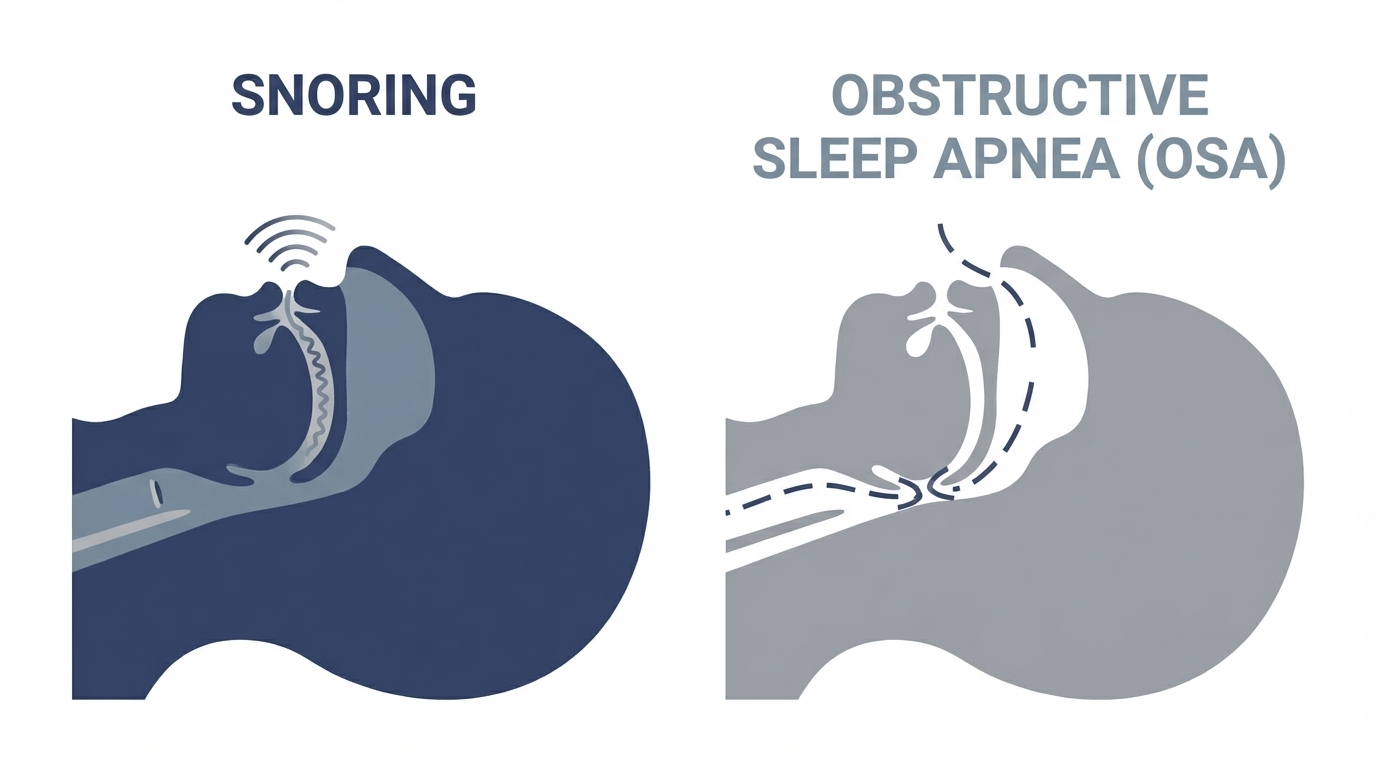
Why this topic is confusing (snoring vs. OSA)
- Snoring is sound from vibration of tissues as air moves through a narrowed airway.
- Obstructive sleep apnea (OSA) involves repeated breathing reductions or pauses that can lead to oxygen drops and frequent micro-arousals (sleep fragmentation).
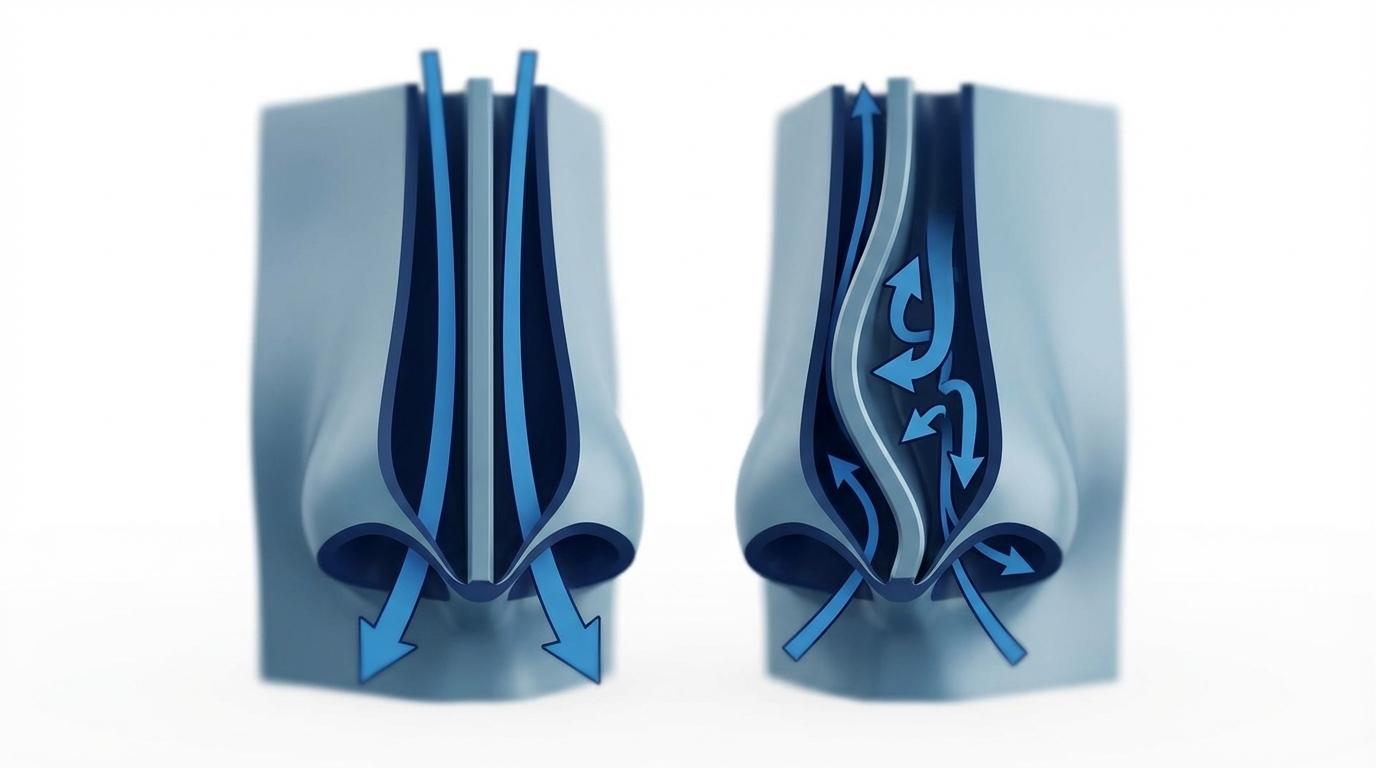
A deviated septum can make nasal breathing feel like “trying to drink through a bent straw”—you can get air, but it takes more effort. That extra resistance often pushes people into mouth breathing, which can increase upper-airway vibration and instability—helping explain why nasal obstruction and snoring are so commonly linked.
Bottom line: a deviated septum can contribute to snoring and sleep-disordered breathing, but OSA usually stems from throat-level collapse.
What Is a Deviated Septum (and Why It Matters at Night)?
The nasal septum is the wall of cartilage and bone that divides the nose into left and right sides. A deviated septum means that wall is off-center, making one nasal passage narrower than the other.
Common reasons it happens:
- Natural anatomy (congenital shape)
- Growth-related changes
- Injury or trauma to the nose
Classic deviated septum symptoms
A deviated septum can be noticeable—or not—depending on how much it narrows airflow. Common symptoms include:
- One-sided nasal blockage, often more noticeable at night
- Difficulty breathing through the nose (especially during exercise or sleep)
- Dryness, crusting, or nosebleeds in some people
- Facial pressure or a “stuffy” sensation that may be mistaken for constant congestion
Mayo Clinic overview: https://www.mayoclinic.org/diseases-conditions/deviated-septum/symptoms-causes/syc-20351710
If nasal blockage is a recurring issue for you, learn more on our deviated septum relief page: https://sleepandsinuscenters.com/deviated-septum-relief
Why nasal obstruction can feel worse at night
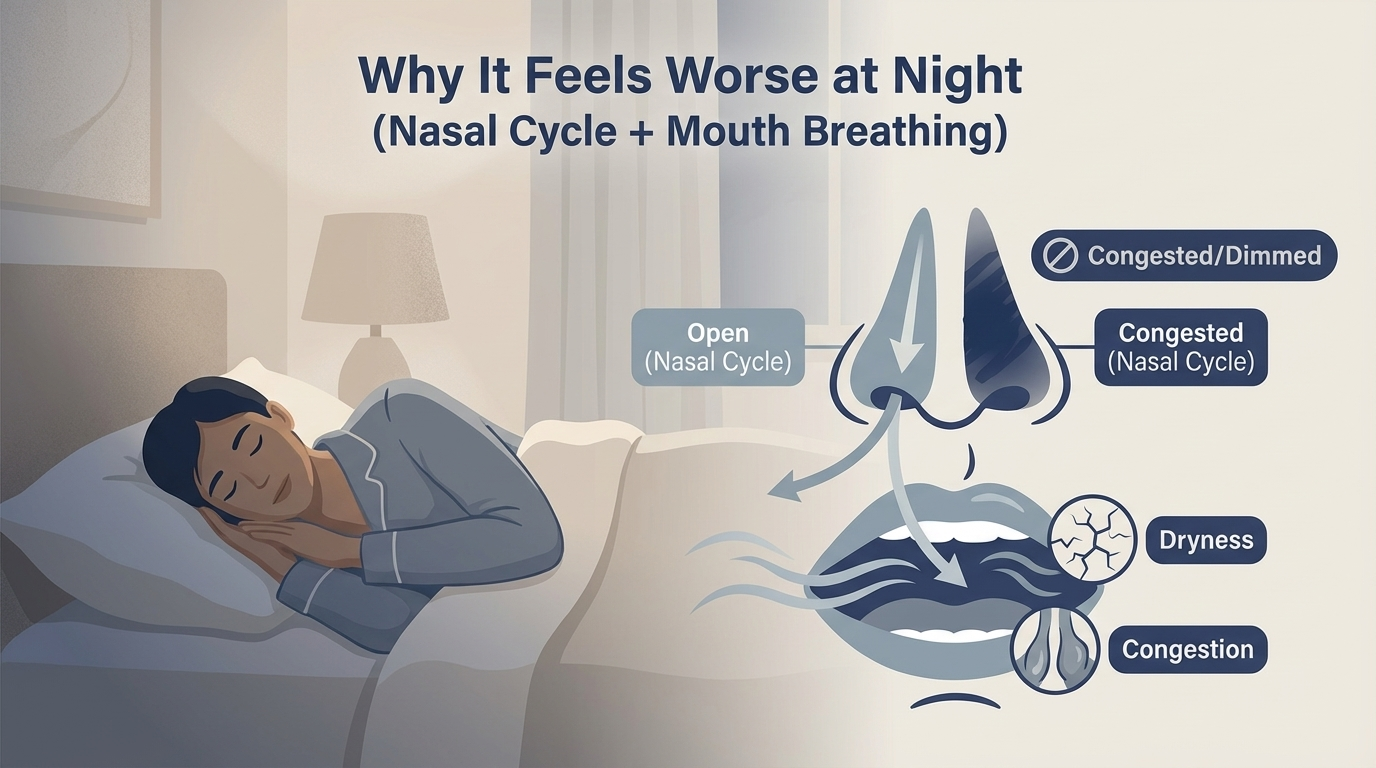
Many people notice septum deviation symptoms at night because:
- The nasal cycle naturally alternates congestion between sides of the nose, which can make a narrowed side feel “completely blocked.”
- Lying flat can increase nasal blood flow and swelling in the tissues.
- Allergies or a cold can temporarily narrow the airway further, amplifying the effect of a deviated septum.
A common real-life example: you fall asleep breathing “okay,” then wake at 2 a.m. with one side fully blocked and a dry mouth—because you’ve shifted into mouth breathing.
In short, a deviated septum narrows airflow—often most noticeable at night when normal nasal cycling and swelling amplify the blockage.
How a Deviated Septum Can Contribute to Sleep Apnea
The “nasal resistance” pathway (how blockage affects breathing)
A deviated septum can increase nasal resistance, meaning it takes more effort to pull air through the nose, which may contribute to increased breathing effort and related symptoms. That can lead to:
- More mouth breathing
- More dryness and throat irritation
- More tissue vibration and narrowing in the upper airway—often perceived as louder snoring
Clinicians often summarize it like this: “The nose doesn’t have to be the collapse point to still be a problem—if it’s hard to breathe in, the whole system gets less stable.”
What research shows (association ≠ direct cause)
A large observational study reported that people with septal deviation had higher rates of OSA diagnosis compared with those without septal deviation. Yeom SW et al., 2021: https://pmc.ncbi.nlm.nih.gov/articles/PMC8494085/
Important nuance: an association doesn’t prove the deviated septum caused OSA. Many factors can cluster together (anatomy, inflammation, weight distribution, age, and more).
Why OSA usually isn’t “caused by the nose alone”
In most OSA, the main obstruction happens in the throat, where soft tissues can collapse during sleep (soft palate, tongue base, lateral pharyngeal walls). That’s why nasal treatments alone often don’t “solve” established OSA—especially moderate to severe cases—even if they make sleep and breathing feel noticeably better.
Think of the nose as a contributor: improving it can help comfort and snoring, but OSA typically needs throat-focused treatment too.
Symptoms: Deviated Septum vs. Sleep Apnea (What You Might Notice)
Signs your symptoms may be “mostly nasal”
If your main issue is nasal airflow, you might notice:
- Persistent or alternating nasal blockage (often one side worse)
- Sleep disruption due to congestion (waking and shifting positions to “find air”)
- Dry mouth from mouth breathing
Signs you should suspect obstructive sleep apnea (OSA)
Symptoms that raise concern for OSA include:
- Loud, habitual snoring—especially with witnessed pauses
- Choking or gasping awakenings
- Excessive daytime sleepiness, morning headaches, or brain fog
- High blood pressure or other cardiovascular risk factors
A typical patient description is: “I’m in bed long enough, but I never feel rested.”
When both are happening together
When nasal obstruction and OSA overlap:
- Snoring and sleep disruption can become more severe and noticeable.
- Nasal obstruction may cause early problems with CPAP tolerance, such as discomfort, mouth leaks, or discontinuation.
If nasal blockage coexists with daytime sleepiness or witnessed apneas, both the nose and sleep apnea deserve attention.
Risks of Leaving Possible Sleep Apnea Untreated
Nasal obstruction can certainly reduce sleep quality. But the bigger medical concern is unrecognized or untreated OSA, which is linked with:
- Cardiovascular strain (including higher blood pressure and increased arrhythmia risk)
- Metabolic effects
- Safety risks such as drowsy driving and reduced alertness
Because symptoms of nasal obstruction and sleep apnea overlap, sleep testing is important to accurately diagnose and guide treatment.
If you suspect OSA, timely testing and treatment can lower health risks and improve quality of life.
How Doctors Diagnose the Real Problem
Step 1 — Sleep evaluation (don’t guess)
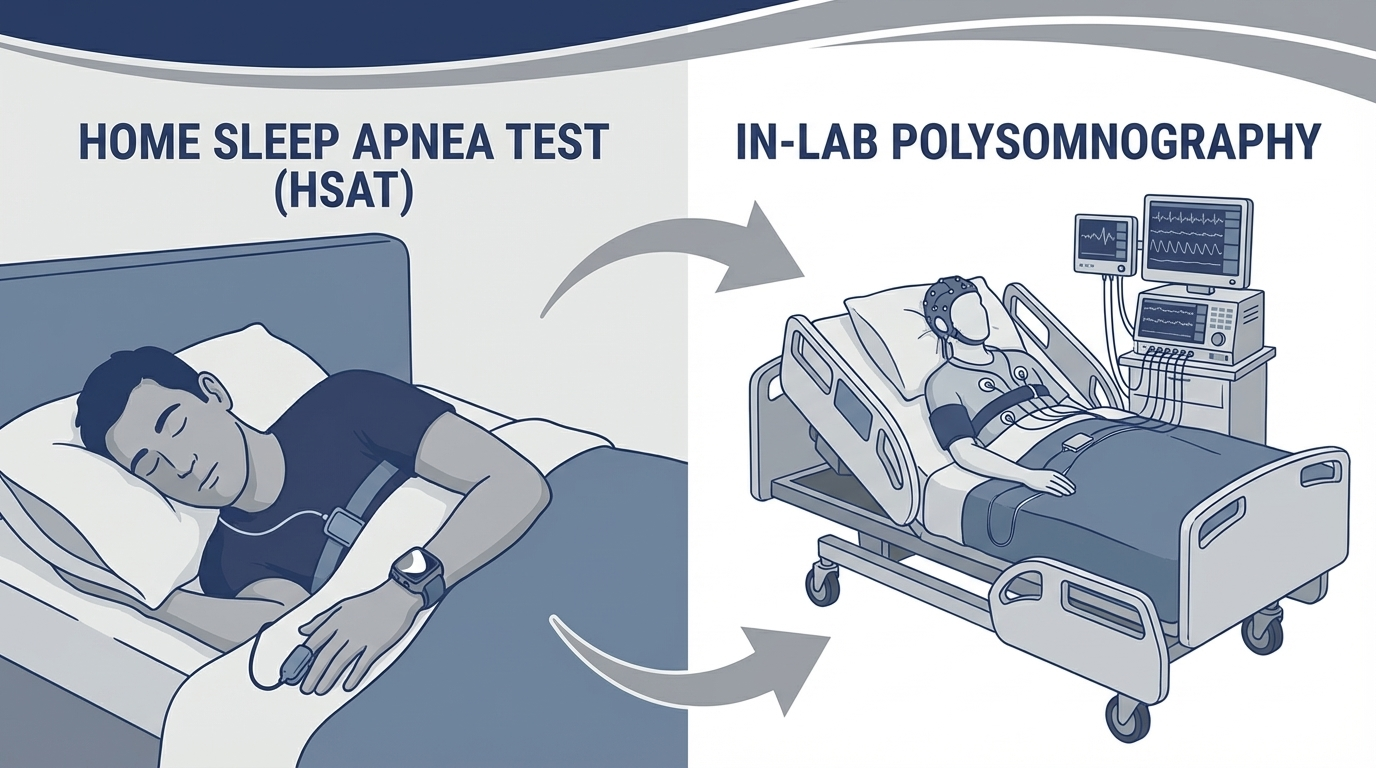
Sleep testing helps confirm whether OSA is present and how severe it is. Common options include:
- Home sleep apnea testing (HSAT): convenient for many patients and often used when OSA is strongly suspected.
- In-lab polysomnography: more comprehensive monitoring, sometimes used when symptoms are complex or other sleep disorders are possible.
This step prevents a common pitfall: treating the nose, expecting a “cure,” and still feeling exhausted because throat-based OSA was never addressed.
Step 2 — Comprehensive airway evaluation
A thorough evaluation often looks beyond the septum, including:
- Nasal exam (and sometimes endoscopy): septum position, turbinate size, nasal valve function
- Signs of inflammation (allergies, chronic rhinitis)
- Throat/jaw/tongue factors that can contribute to collapse during sleep
Step 3 — Understanding severity (AHI and beyond)
Severity is often described using the AHI (Apnea-Hypopnea Index), but symptoms, oxygen levels, and sleep fragmentation also matter. For a simple breakdown of the numbers, see: https://sleepandsinuscenters.com/blog/ahi-score-explained-understanding-your-sleep-apnea-severity
Accurate diagnosis looks at the whole airway and your sleep data—not the septum alone.
Treatment Options (What Actually Helps)
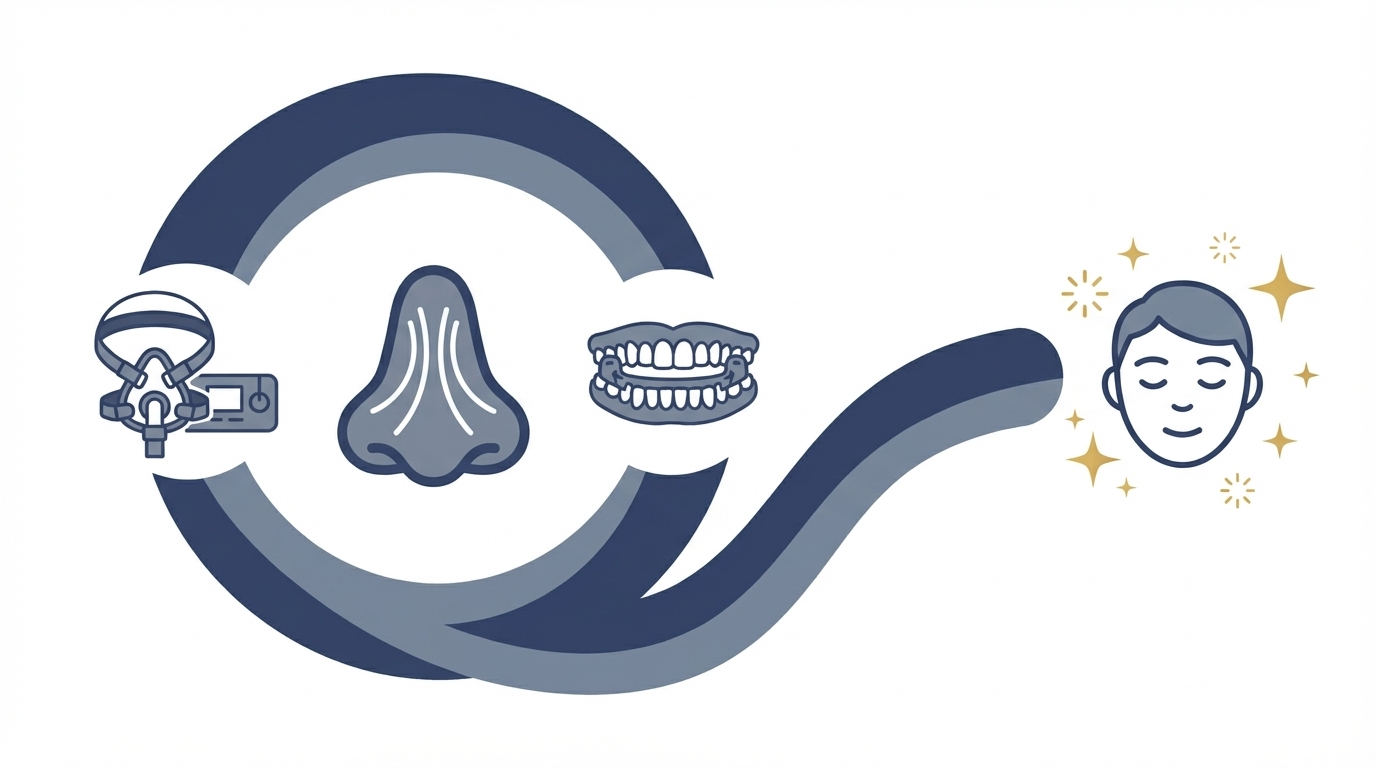
In real-world care, the best results usually come from treating OSA appropriately while also addressing nasal obstruction to improve breathing and comfort.
Lifestyle and non-surgical strategies (often first line for nasal symptoms)
Depending on the cause of congestion, non-surgical approaches may include:
- Saline rinses and nighttime humidification
- Allergy management and trigger reduction
- Avoiding overuse of topical decongestant sprays (which can cause rebound congestion in some people)
These strategies may help reduce nasal symptoms but are unlikely to treat sleep apnea itself.
CPAP (and why nasal obstruction can be a major barrier)
CPAP is a highly effective therapy for OSA, but nasal blockage can cause discomfort or barriers:
- A feeling of “air hunger”
- More mouth breathing and mask leak
- Poor adherence due to frustration
Addressing nasal obstruction can improve comfort and use. For practical strategies, see: https://sleepandsinuscenters.com/blog/blocked-nose-during-cpap-ent-strategies
Research also suggests that surgical treatment of nasal obstruction can improve CPAP adherence in appropriate patients. AJMC, 2022: https://www.ajmc.com/view/study-finds-surgical-intervention-for-nasal-obstruction-improves-cpap-adherence-outcomes-in-patients-with-osa
Septoplasty and other nasal surgery: what to expect (benefits + limitations)
People often ask about septoplasty for sleep apnea. Here’s the balanced view:
What septoplasty (and related nasal procedures) can improve:
- Nasal airflow and breathing comfort
- Subjective snoring in many patients
- Sleep quality (how you feel)
- CPAP comfort and adherence when nasal blockage is a barrier
What septoplasty typically does not achieve on its own:
- Cure moderate/severe OSA in most patients
- Produce large average reductions in AHI
A systematic review/meta-analysis found that isolated nasal surgery typically results in small average AHI reductions, often not enough to resolve established OSA on its own. Schoustra E et al., 2022: https://pmc.ncbi.nlm.nih.gov/articles/PMC9688553/
When septoplasty is most helpful in an OSA plan
Septoplasty may be especially helpful when:
- Nasal obstruction is significant and persistent
- CPAP use is limited by nasal blockage (comfort, leaks, intolerance)
- OSA is mild and nasal resistance appears to be a major contributor (expectations still matter)
- It’s part of a multi-level approach (nose + other airway factors as needed)
Other OSA treatments (brief overview)
Depending on anatomy, severity, and preference, options may include:
- Oral appliance therapy (often for mild–moderate OSA in selected patients)
- Positional therapy (for supine-dependent OSA)
- Weight management strategies (when relevant)
- Targeted surgical procedures beyond the nose for selected cases
Explore a broader overview here: https://sleepandsinuscenters.com/snoring-sleep-apnea-treatment
Most patients do best with a two-pronged plan: treat OSA effectively and optimize nasal airflow for comfort and adherence.
Lifestyle Tips to Reduce Snoring and Sleep Disruption (Even Before Treatment)
Sleep positioning and nighttime habits
- Side sleeping can reduce snoring and supine-worsened OSA in some people.
- Alcohol and sedatives close to bedtime can relax airway muscles and worsen collapse.
Reduce nasal inflammation at night
- Manage allergies consistently (when they’re a factor).
- Consider bedroom humidity and reducing irritants (smoke, strong fragrances, dust).
Practical CPAP comfort tips if you’re congested
- Heated humidification can reduce dryness and irritation.
- Mask selection matters (nasal vs. full-face when blocked).
- Coordinating adjustments with your sleep team is often more effective than stopping CPAP abruptly.
Simple habit changes can meaningfully reduce snoring and make medical treatments easier to use.
FAQs
Can fixing a deviated septum cure sleep apnea?
Usually no, especially for moderate or severe OSA. Isolated nasal surgery tends to produce small average AHI changes, but it can improve breathing comfort, snoring, and CPAP tolerance. Schoustra E et al., 2022: https://pmc.ncbi.nlm.nih.gov/articles/PMC9688553/
If I can’t breathe through my nose at night, does that mean I have sleep apnea?
Not necessarily. Nasal obstruction alone can fragment sleep. However, if nasal blockage is paired with loud snoring, witnessed pauses, gasping/choking, or significant daytime sleepiness, sleep testing can clarify what’s happening.
Why do I snore more when my nose is blocked?
Higher nasal resistance can lead to more mouth breathing and greater vibration/collapse risk in the upper airway—one reason nasal obstruction and snoring often go together.
Should I get a sleep study before septoplasty?
Often, yes—if OSA is suspected. Because a deviated septum is usually a contributor rather than the sole cause, confirming OSA first helps set expectations and sequence treatments appropriately.
Will septoplasty lower my AHI?
On average, only modestly when nasal surgery is done alone, according to systematic-review evidence. Schoustra E et al., 2022: https://pmc.ncbi.nlm.nih.gov/articles/PMC9688553/
Can septoplasty help me tolerate CPAP better?
Yes, in the right context. Improving nasal airflow can reduce discomfort and improve adherence for some CPAP users. AJMC, 2022: https://www.ajmc.com/view/study-finds-surgical-intervention-for-nasal-obstruction-improves-cpap-adherence-outcomes-in-patients-with-osa
When to See a Specialist (and What to Ask)
Make an appointment if you have…
- Persistent nasal blockage that disrupts sleep
- Snoring with witnessed apneas, choking/gasping, or notable daytime sleepiness
- CPAP intolerance that seems tied to nasal obstruction
Questions to bring to your visit
- Do I need a sleep study?
- Is my obstruction due to the septum, turbinates, nasal valves, allergies—or a mix?
- If I do septoplasty, how will we measure success (breathing, CPAP tolerance, AHI)?
If symptoms point to both nasal blockage and OSA, a coordinated plan with sleep testing and airway evaluation is the best path forward.
Conclusion + Next Step
So, can a deviated septum cause sleep apnea? In most cases, it’s better described as a factor that can worsen nasal blockage, snoring, and sleep-disordered breathing, while OSA itself most often comes from throat-based airway collapse. The most effective path is typically: confirm OSA with testing, evaluate the entire airway, and treat both the sleep disorder and nasal obstruction in a coordinated plan.
To take the next step, explore snoring and sleep apnea treatments: https://sleepandsinuscenters.com/snoring-sleep-apnea-treatment — and if you’re ready for a personalized evaluation, book an appointment with Sleep and Sinus Centers of Georgia: https://www.sleepandsinuscenters.com/
References
- Yeom SW et al. (2021). Association between septal deviation and OSA diagnoses: https://pmc.ncbi.nlm.nih.gov/articles/PMC8494085/
- Schoustra E et al. (2022). The role of isolated nasal surgery in obstructive sleep apnea (systematic review/meta-analysis): https://pmc.ncbi.nlm.nih.gov/articles/PMC9688553/
- Mayo Clinic. Deviated septum—Symptoms & causes: https://www.mayoclinic.org/diseases-conditions/deviated-septum/symptoms-causes/syc-20351710
- AJMC (2022). Surgical intervention for nasal obstruction improves CPAP adherence outcomes in OSA: https://www.ajmc.com/view/study-finds-surgical-intervention-for-nasal-obstruction-improves-cpap-adherence-outcomes-in-patients-with-osa
- PubMed record supporting reference: https://pubmed.ncbi.nlm.nih.gov/34606442/
Disclaimer
This article is for educational purposes only and is not medical advice. Please consult a qualified healthcare provider for diagnosis and treatment.
Don’t let allergies slow you down. Schedule a comprehensive ENT and allergy evaluation at Sleep and Sinus Centers of Georgia. We’re here to find your triggers and guide you toward lasting relief.