Poor Sleep Quality: Causes, Symptoms, and Effective Treatments
If you’re spending enough time in bed but still waking up tired, you’re not alone. Poor sleep quality isn’t only about how many hours you sleep—it’s about how restorative that sleep feels. You might get “a full night” and still feel foggy, irritable, or drained the next day.
Sleep problems are common. In a large 2023 meta-analysis of medical students (95 studies; 54,894 people), the pooled prevalence of poor sleep quality was about 55–57%—and it was even higher during COVID-19 (~62% vs ~54% pre-pandemic). This estimate comes from medical students and may not reflect the general population. (Source: https://pmc.ncbi.nlm.nih.gov/articles/PMC10238781/)
Beyond day-to-day fatigue, sleep is a public health issue. The CDC notes associations between disturbed or insufficient sleep and mental health, cognition, and performance, and longer-term risks related to cardiometabolic and immune health. (Source: https://www.cdc.gov/pcd/issues/2023/23_0197.htm)
This guide covers:
- A simple way to understand poor sleep quality
- Common insomnia symptoms and other signs to watch for
- The most common causes of poor sleep
- Evidence-based treatments (including CBT-I for insomnia and digital CBT-I)
- When to see a sleep specialist—and what evaluation can look like
What Is “Poor Sleep Quality” (and how is it different from insomnia)?
Poor sleep quality vs. not enough sleep
- Poor sleep quality: Sleep feels light, fragmented, or unrefreshing. You may wake up often or feel like you “never got into deep sleep.”
- Not enough sleep: You simply don’t have enough total sleep time (for example, a short night due to work, parenting, travel, or late-night scrolling)—even if the sleep you did get felt solid.
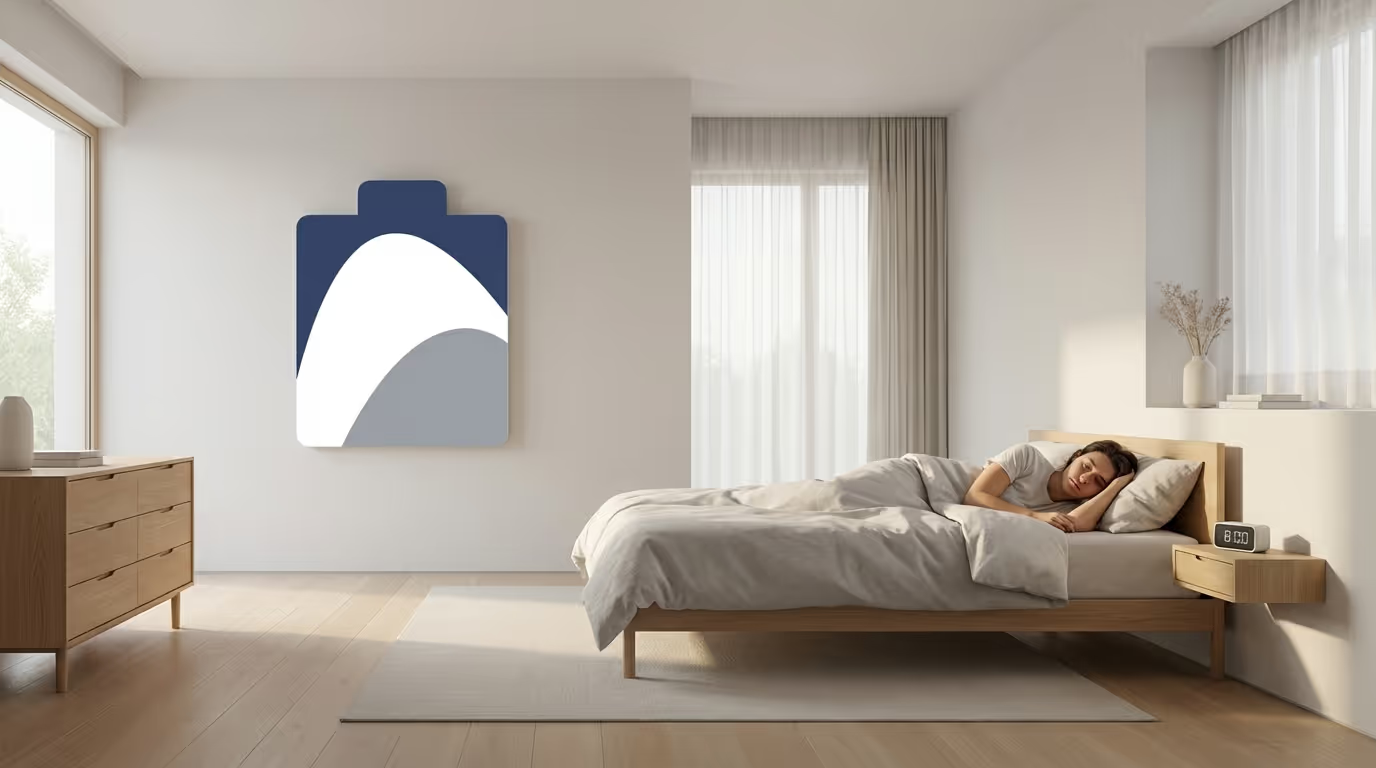
You can have either one—or both. Think of it like charging a phone: you can plug in for 8 hours, but if the connection is loose (fragmented sleep), you may still wake up with a low “battery.”
Poor sleep quality vs. insomnia disorder
People often use “insomnia” to describe any rough night, but clinically, insomnia generally includes:
- Trouble falling asleep, staying asleep, or waking too early plus
- Daytime impairment (fatigue, mood changes, concentration problems)
When symptoms occur at least 3 nights per week for 3 months or longer and cause daytime impairment, it may be considered chronic insomnia.
Why you can “sleep 8 hours” and still feel exhausted
- Fragmented sleep (many brief awakenings you may not remember)
- Sleep-disordered breathing (such as obstructive sleep apnea)
- Circadian mismatch (your sleep timing doesn’t match your internal clock)
- Stress-related hyperarousal (your brain/body stays “on alert”)
Clinicians hear this all the time: “I’m in bed for 8 hours, but I don’t feel like I slept.” That experience is often a clue that the issue is quality, not just quantity. In short: how you sleep matters as much as how long you sleep.
Nighttime symptoms
These are common insomnia symptoms and related sleep-disrupting patterns:
- Taking a long time to fall asleep
- Waking up frequently or waking too early
- Restless or very light sleep
- Snoring, gasping/choking, or witnessed pauses in breathing (possible sleep apnea)
- Night sweats, reflux/heartburn, pain, congestion, or frequent urination
A practical example: if you regularly wake up at 2:00 a.m. “for no reason,” then spend 30–60 minutes scrolling, worrying, or tossing and turning, your sleep may be getting interrupted enough to feel unrefreshing—even if you technically logged plenty of time in bed.

Daytime symptoms (often overlooked)
Poor sleep doesn’t stop when morning comes. Watch for:
- “I slept, but I’m not refreshed”
- Daytime sleepiness or nodding off (meetings, reading, watching TV)
- Brain fog, poor focus, memory lapses
- Irritability, anxiety, or low mood
- Morning headaches
- Reduced performance at work or school
The CDC notes associations between disturbed or insufficient sleep and impaired cognition and performance—one reason sleep affects safety and productivity. (Source: https://www.cdc.gov/pcd/issues/2023/23_0197.htm)

Quick self-check (mini checklist)
For 1–2 weeks, jot down:
- How many days per week you have trouble falling asleep or staying asleep
- How often you wake unrefreshed
- Whether you nap (and for how long)
- Caffeine/alcohol timing
- Bedtime/wake time consistency (including weekends)
- Snoring or breathing concerns (if a partner notices them)
If you want a concrete format, try: bedtime, estimated sleep onset, number of awakenings, final wake time, naps, and how you felt at 10 a.m. and 3 p.m. Patterns often pop out quickly.
You can also use a structured self-assessment to help screen for daytime sleepiness, but it does not diagnose a sleep disorder: test your sleepiness (https://sleepandsinuscenters.com/test-your-sleepiness).
If nighttime sleep is off and your days feel foggy, your sleep quality may be the culprit.
Common Causes of Poor Sleep Quality (Root Causes You Can Act On)
Poor sleep quality usually has more than one contributor. Understanding the “why” helps you choose the most effective fix—because the best treatment for stress-related insomnia may look different than the best treatment for sleep apnea.

Lifestyle and schedule-related causes
- Irregular sleep schedule (weekday vs weekend “social jet lag”)
- Shift work or rotating schedules
- Late caffeine, nicotine, or alcohol
- Heavy meals late at night, reflux triggers
- Limited daylight exposure and low physical activity
Even small timing shifts can matter. For example, sleeping in much later on weekends can make Sunday night feel like “instant insomnia” because your body clock is no longer lined up with Monday morning.
Screen time and “always-on” stimulation
Phones, games, streaming, late-night work, and constant notifications can interfere with sleep in two ways:
- Light exposure can delay sleep timing for some people
- Mental stimulation keeps the brain engaged when it needs to downshift
If your brain associates your bed with “catching up,” problem-solving, or doomscrolling, it can become harder to flip into sleep mode—especially when you’re already overtired.
Stress, anxiety, depression, and hyperarousal
Stress can trigger a loop: poor sleep increases stress reactivity, and stress makes sleep harder. The high prevalence of sleep problems in medical students (and the increase seen during the pandemic) is a good example of how workload, uncertainty, and disrupted routines can worsen poor sleep quality. (Source: https://pmc.ncbi.nlm.nih.gov/articles/PMC10238781/)
Many people describe this as “tired but wired”—physically exhausted, but mentally stuck in high gear.
Sleep disorders and medical contributors
Some sleep problems are driven by treatable conditions, including:
- Obstructive sleep apnea (OSA): loud snoring, gasping, morning headaches, hard-to-control blood pressure, excessive sleepiness
- Restless legs syndrome or periodic limb movement disorder
- Circadian rhythm disorders (e.g., delayed sleep phase)
- Chronic pain, arthritis
- GERD (reflux), asthma, allergies/sinus congestion
- Medications that can disrupt sleep (stimulants, some antidepressants, steroids, decongestants)
If snoring or apnea symptoms are part of the picture, learn more about evaluation options through snoring and sleep apnea treatment (https://sleepandsinuscenters.com/snoring-sleep-apnea-treatment).
Why Poor Sleep Quality Is a Health Issue (Not Just an Annoyance)
Ongoing sleep disruption affects more than energy. Over time, “just pushing through” can become a cycle of lower mood, weaker focus, and increased stress—making sleep even harder.
Mental and behavioral health: The CDC notes associations between insufficient or disturbed sleep and mental/behavioral health challenges, including mood symptoms and worsened overall functioning. (Source: https://www.cdc.gov/pcd/issues/2023/23_0197.htm)
Brain function and safety: When sleep is poor, attention and reaction time can suffer—important for driving, caregiving, and high-stakes work. Learning and productivity can also decline. (Source: https://www.cdc.gov/pcd/issues/2023/23_0197.htm)
Long-term physical health: Research summarized by the CDC connects insufficient sleep with chronic disease risk, including cardiometabolic health and immune function. (Source: https://www.cdc.gov/pcd/issues/2023/23_0197.htm)
Sleep isn’t a luxury—it’s a cornerstone of health.
When to See a Doctor (Red Flags + Timing)
It can be reasonable to seek a sleep evaluation sooner (rather than waiting it out) if you notice:
- Loud habitual snoring plus gasping/choking or witnessed apnea
- Excessive daytime sleepiness (especially if it affects driving safety)
- Blood pressure that’s difficult to control
- Sleep symptoms lasting more than 3 months
- Anxiety/depression symptoms that are worsening alongside sleep loss
If you’re wondering when to see a sleep specialist, this guide outlines common signs: when to see an ENT for sleep problems (https://sleepandsinuscenters.com/blog/when-to-see-an-ent-for-sleep-problems).
Early evaluation can prevent months of trial-and-error.
Diagnosis: How Clinicians Evaluate Poor Sleep Quality
Sleep history + sleep diary: Expect questions about sleep timing, awakenings, naps, caffeine/alcohol, medications, snoring, and breathing symptoms. A short sleep diary can reveal patterns that aren’t obvious day to day.
If you can, bring specifics (even approximate): “2 coffees, last at 3 p.m.” or “awake for 45 minutes around 1 a.m. most nights.” Details help clinicians narrow the “why.”
Questionnaires: Many clinics use validated tools for insomnia severity and daytime sleepiness to help guide next steps.
Objective testing (when needed): If sleep apnea is suspected, testing may include a home sleep test or an in-lab sleep study.
Research continues to refine how sleep outcomes are measured (including the need for more objective sleep measures and long-term results in some areas). (Source: https://pmc.ncbi.nlm.nih.gov/articles/PMC12965280/)
A clear picture of your sleep guides the most effective, least invasive next step.
Effective Treatments for Poor Sleep Quality (What Works)
Improving poor sleep quality usually works best with a layered approach: start with foundations, then add targeted therapy, then address medical causes if present.
Step 1 — Sleep hygiene (helpful foundation, not a cure-all)
“Sleep hygiene” won’t solve every case of insomnia by itself, but it can remove common barriers:
- Keep a consistent wake time (even weekends)
- Use the bed for sleep and intimacy (reduce wakeful time in bed)
- Create a simple wind-down routine (20–30 minutes)
- Set a caffeine cutoff (often earlier in the afternoon)
- Know that alcohol can fragment sleep later in the night
- Make the room cool, dark, and quiet
- Get bright light in the morning; dim lights in the evening
One helpful mindset: aim for “repeatable basics,” not perfection. A consistent wake time and a short wind-down routine often do more than chasing a flawless bedtime.
For more practical ideas, see these sleep hygiene tips (https://sleepandsinuscenters.com/blog/sleep-hygiene-and-its-impact-on-ent-disorders-key-insights).
Step 2 — CBT-I for insomnia: the first-line behavioral treatment
CBT-I is a structured, skills-based program that addresses the behaviors and thought patterns that keep insomnia going. It commonly includes:
- Stimulus control (re-linking bed with sleep)
- Sleep scheduling (often called sleep restriction therapy)
- Cognitive strategies to reduce sleep-related worry
- Relaxation training
- Sleep education
A common “aha” moment in CBT-I is realizing that more time in bed doesn’t always equal more sleep. For some people, it actually increases tossing and turning—which teaches the brain that bed is a place to be awake.

Step 3 — Digital CBT-I (dCBT-I): accessible and evidence-based
Digital CBT-I delivers CBT-I techniques through an app or web program—often helpful for people with limited access to trained therapists or tight schedules.
A 2025 meta-analysis found fully automated dCBT-I produced clinically significant improvements in insomnia severity and sleep quality, including an average improvement on the Insomnia Severity Index (pooled WMD about –3.42). (Source: https://pmc.ncbi.nlm.nih.gov/articles/PMC12965280/)
Many programs last about 6–8 weeks, though duration varies by program. As with physical therapy, benefits depend on consistent engagement.
Step 4 — Treat underlying sleep disorders (example: sleep apnea)
If evaluation points to sleep apnea, treatment options may include positive airway pressure (PAP; CPAP/APAP), oral appliances for selected patients, and addressing contributing factors such as nasal obstruction when relevant. Treating sleep apnea can often improve sleep quality and daytime symptoms.

Step 5 — Medications and supplements (use carefully)
Some people ask about sleep medications or melatonin. In general, these approaches are best discussed with a clinician so risks, interactions, and goals are clear—especially for persistent symptoms. Melatonin timing matters and is often more useful for circadian rhythm issues than for all-cause insomnia.
Small, consistent steps—plus targeted therapy when needed—add up to better sleep.
FAQs About Poor Sleep Quality
How many hours of sleep do I actually need?
Many adults do best in the 7–9 hour range, but individual needs vary. Sleep quality and daytime functioning matter as much as the number.
Can stress alone cause poor sleep quality?
Yes. Stress can drive a “hyperarousal” pattern—tired but wired. CBT-I strategies often help break that cycle.
Is it normal to wake up during the night?
Brief awakenings can be normal. Frequent or prolonged awakenings—especially with daytime impairment—are more concerning.
Does melatonin improve sleep quality?
Sometimes, particularly for sleep timing issues. It’s not a universal fix for insomnia symptoms.
What’s the best treatment for chronic insomnia?
CBT-I is widely recommended as a first-line approach, and digital CBT-I (dCBT-I) can be an evidence-based option when in-person CBT-I access is limited. (Source: https://pmc.ncbi.nlm.nih.gov/articles/PMC12965280/)
How do I know if it might be sleep apnea?
Common signs include loud snoring, gasping/choking, witnessed pauses in breathing, and excessive daytime sleepiness. A formal evaluation can clarify whether apnea is contributing to poor sleep quality.
Conclusion + Next Step
Poor sleep quality is common, often multifactorial, and closely tied to mental health, daily performance, and long-term physical health. The good news: many contributors are identifiable, and evidence-based treatments—especially CBT-I and digital CBT-I—can make a meaningful difference.
A simple starting point today: track your sleep pattern for 1–2 weeks and note what seems to worsen or improve your sleep.
If poor sleep lasts more than 3 months or you suspect sleep apnea, schedule a sleep evaluation. You can book an appointment.
Medical disclaimer: This article is for general educational purposes only and isn’t medical advice. If you have persistent sleep symptoms, safety concerns (like drowsy driving), or signs of sleep apnea, seek care from a qualified clinician.
Don’t let allergies slow you down. Schedule a comprehensive ENT and allergy evaluation at Sleep and Sinus Centers of Georgia. We’re here to find your triggers and guide you toward lasting relief.