Confusional Arousal: Symptoms, Causes, and Treatment Options
Quick definition: Confusional arousal is a partial awakening from deep NREM sleep where someone appears awake but is confused, disoriented, and often has poor recall afterward. [2][3][5]
Reassurance: It’s common in children and often improves over time as sleep patterns and nervous system maturation change. [1][2][3]
Safety first: The main focus is reducing injury risk and identifying triggers that fragment sleep. [2][3][5]
What Is Confusional Arousal?
Confusional arousals explained in plain language: A confusional arousal is a type of NREM parasomnia—a sleep behavior event that occurs when the brain is partly asleep and partly awake. It’s part of a group called disorders of arousal. [2][3][5]
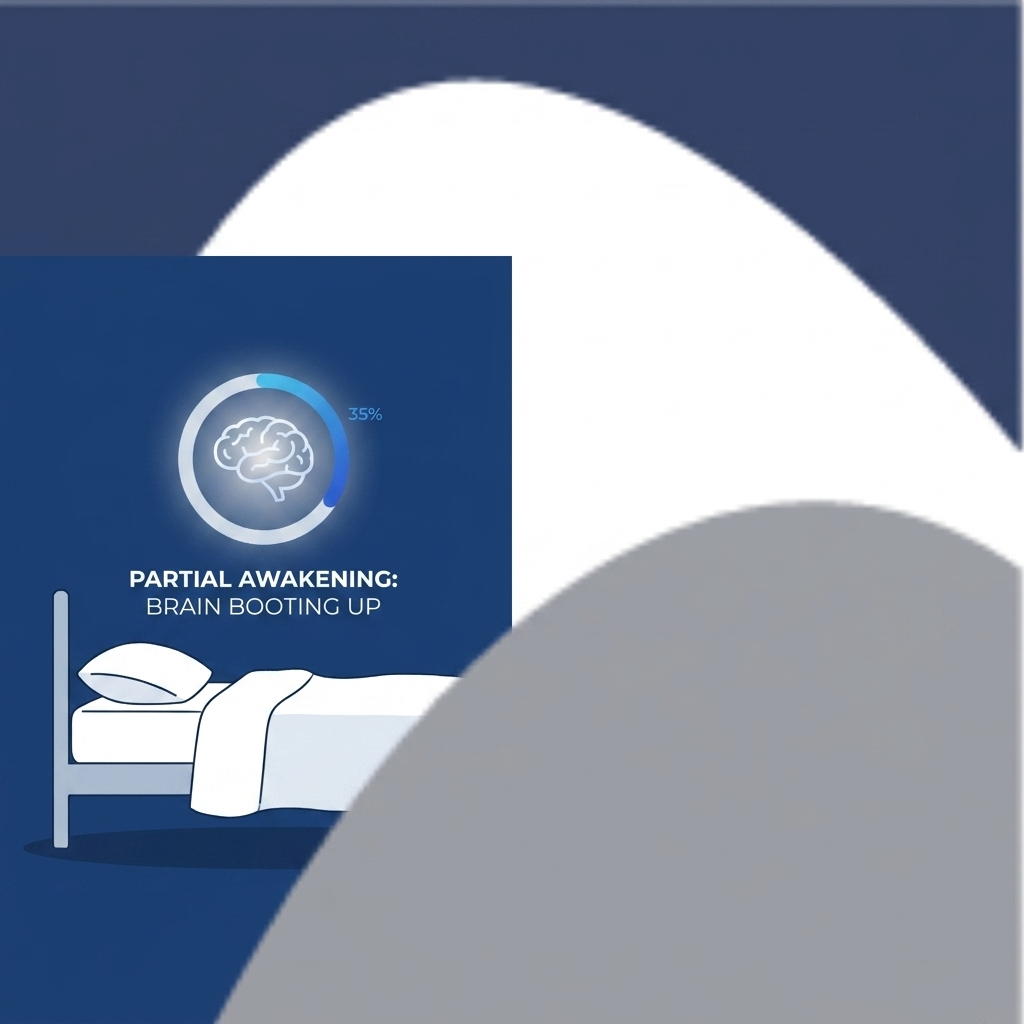
One way to picture it: the body “boots up” before the thinking parts of the brain are fully online. The person may look awake (eyes open, sitting up), but their awareness and decision-making are still in deep sleep. [2][3][5]
These episodes most often happen early in the night, during slow-wave (deep) sleep, when the brain is hardest to wake fully. [2][3][5]
During an episode, a person may:
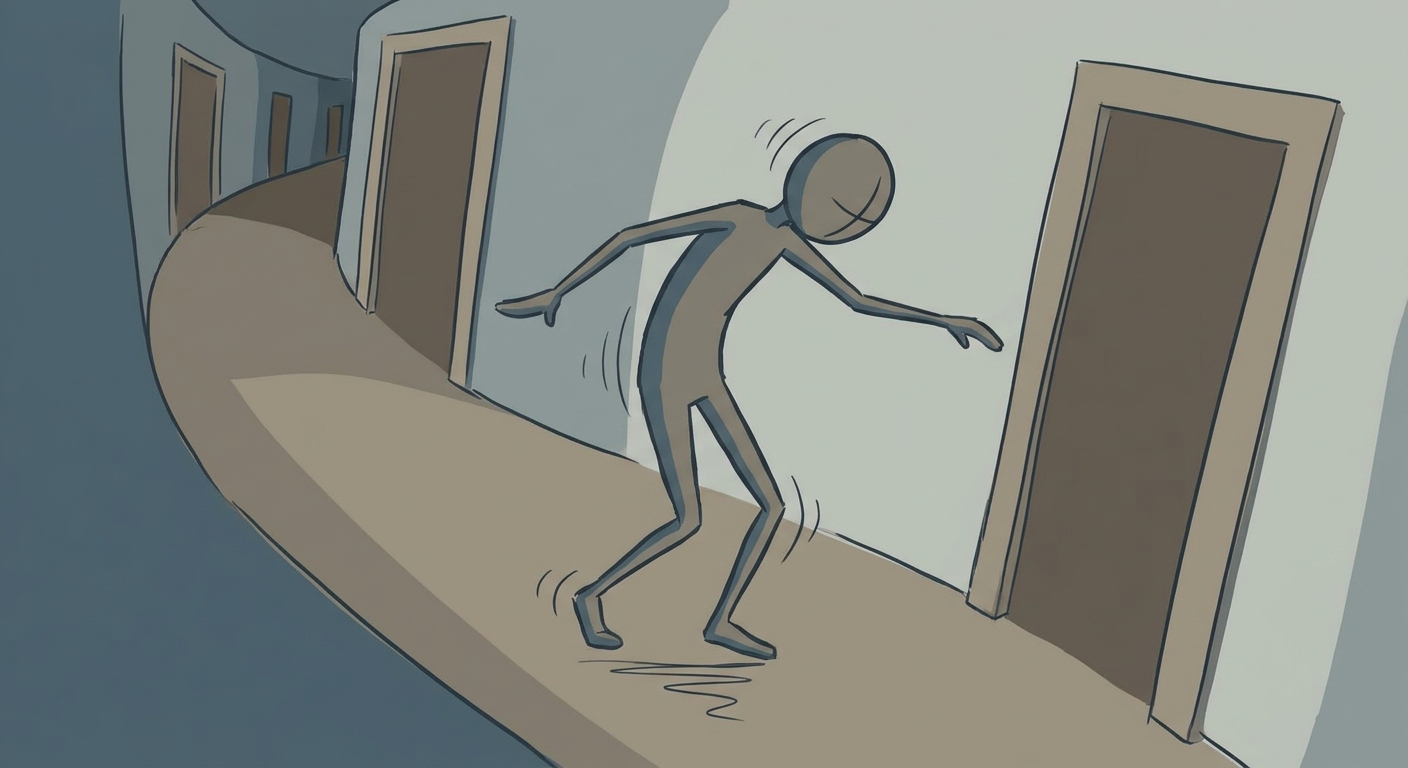
- Sit up in bed and look “awake,” but seem confused or “glassy”
- Speak slowly, mumble, or give nonsensical answers
- React poorly to questions or directions
- Seem startled or irritated, sometimes resisting comfort or help (not intentional)
- Settle back down and return to sleep after a few minutes (sometimes longer) [2][3][5]
A concrete example: a child might sit up, stare past a parent, and push away a comforting hand—then lie back down and sleep normally, with no memory of it the next morning. An adult might answer questions with short, jumbled phrases and seem annoyed if pressed to “wake up,” even though they aren’t choosing to be difficult. [2][3][5]
Confusional arousal vs. similar sleep issues (quick comparisons):
- Sleep inertia vs confusional arousal: Sleep inertia is the groggy, slow-to-start feeling after waking that improves as you fully wake up. It’s not usually a discrete event arising out of deep sleep with notable confusion and poor responsiveness. [1][2][5]
- Sleepwalking: Can involve more complex behaviors—getting out of bed and moving around—rather than mainly confusion in bed. [2][5]
- Night terrors (sleep terrors): Often include intense fear and strong physical signs (sweating, rapid heart rate) with a “terrified” appearance. [1][2][5]
If you’re unsure which category fits, the timing (often in the first third of the night) and the lack of recall afterward are two clues clinicians commonly weigh when considering confusional arousals. [2][3][5]
Bottom line: confusional arousals are partial awakenings from deep NREM sleep that can look alarming but typically reflect a temporary “in-between” state of the brain.
How Common Are Confusional Arousals?
Prevalence in children vs adults: Some studies estimate that confusional arousals occur in a notable proportion of children and less commonly in adults, though exact rates vary by study. [1][2][5]
In other words, many families will encounter at least a few episodes at some point, especially during the preschool and grade-school years. For most children, this is more of a “phase of sleep development” than a sign something is wrong. [1][2][3]
Why kids get them more often: Children spend more time in deep (slow-wave) sleep, and their nervous systems are still maturing—two factors that likely make partial awakenings more likely. Many children outgrow these events over time. [1][2][3]
Episodes can also show up more during times that deepen sleep pressure—like after a missed nap, a late bedtime, travel, or an illness. Those situations don’t cause the condition by themselves, but they can make events more likely in someone who’s prone to them. [1][2][3][5]
Key takeaway: confusional arousals are relatively common in kids and less common in adults, and rates can fluctuate based on how studies define and measure them.
Symptoms of Confusional Arousal (What You Might Notice)
Symptoms during an episode—common signs include:
- Confusion, disorientation, blank or “glassy” stare
- Incoherent speech or delayed, nonsensical responses
- Slowed reaction time and difficulty following directions
- Pushing away a caregiver/partner or resisting assistance (usually not purposeful) [2][3][5]
It can help to think of these behaviors as “automatic”—the brain is not fully available for reasoning, conversation, or cooperation in the usual way. Trying to debate, correct, or interrogate the person often backfires because they cannot process information normally mid-episode. [2][3][5]
Symptoms after an episode—afterward, the person typically:
- Has little to no memory of what happened
- May feel tired if episodes are frequent or sleep becomes disrupted [2][3][5]
Partners and parents sometimes feel more shaken than the sleeper does. That mismatch is common: observers remember the event clearly, while the person experiencing it may genuinely have no recollection the next day. [2][3][5]
In children vs adults (typical differences):
- Confusional arousal in children: Often brief and self-limited in otherwise healthy children, with improvement as sleep patterns and brain maturation evolve. [1][2][3]
- Confusional arousal in adults: More likely to have identifiable triggers—sleep loss, alcohol/sedatives, or coexisting sleep disorders—and may warrant evaluation if persistent or risky. [2][3]
A clinician might phrase it like this: “In kids, we often watch and focus on safety and sleep routine; in adults, we also look harder for what’s fragmenting sleep.” That doesn’t mean adults always have a serious underlying problem—just that treatable contributors are more common. [2][3][5]
When symptoms may signal something else (red flags):
- Injury, attempts to leave the home, or other dangerous behaviors
- Episodes happening many times per night or most nights
- Features that raise concern for seizures (highly stereotyped movements, tongue biting, events that also occur while awake) [2][3]
If an event pattern changes suddenly (new behaviors, new frequency, or new daytime symptoms), that’s another reason to seek professional guidance rather than assuming it’s “just a parasomnia.” [2][3][5]
If episodes are frequent, unsafe, or changing, consider a medical evaluation to rule out look-alike conditions.
Causes and Triggers of Confusional Arousal
Episodes are often linked to anything that increases sleep pressure (more deep sleep) or fragments sleep. [1][2][3][5]
The most common triggers
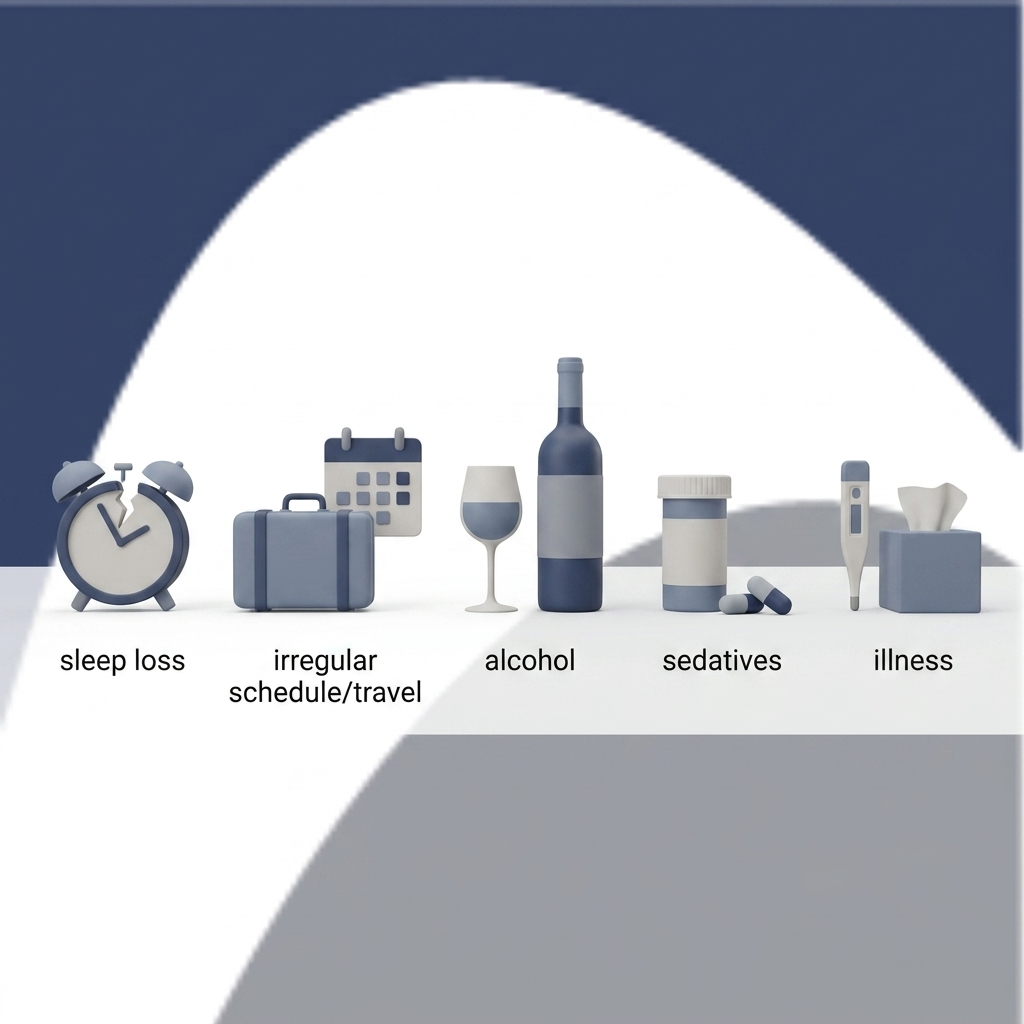
Common triggers include:
- Sleep deprivation (sleep loss) [1][2][3][5]
- Irregular sleep schedules or shift work [2][3]
- Fever or illness (especially in children) [1][2][3]
- Alcohol and parasomnias: Alcohol can disrupt sleep architecture and increase arousals, which may contribute to events in susceptible people. [2][3][5] For more background, see how alcohol affects sleep: https://sleepandsinuscenters.com/blog/alcohol-and-sleep-apnea-what-are-the-risks
- Sedating medications (including some sleep aids), which can alter arousal thresholds and sleep stability [2][3][5]
A practical way to use this list is to look for patterns. For example: Do episodes cluster after late nights, during stressful weeks, or when someone has a cold and keeps partially waking? If yes, those are actionable targets—often the simplest “treatment” is preventing the sleep disruption in the first place. [2][3][5]
Sleep disorders that can contribute
Sleep conditions that repeatedly disrupt sleep can make disorders of arousal more likely, including:
- Obstructive sleep apnea (OSA): Repeated breathing interruptions and micro-arousals may destabilize deep sleep. [2][3]
- Restless legs syndrome / periodic limb movements (in some individuals) [2][3]
- Overlap with other NREM parasomnias in some patients [2][3]
If symptoms suggest OSA (snoring, gasping, witnessed pauses in breathing, excessive daytime sleepiness), learning about sleep apnea symptoms and treatment can be a useful next step: https://sleepandsinuscenters.com/snoring-sleep-apnea-treatment
Why episodes tend to happen early in the night
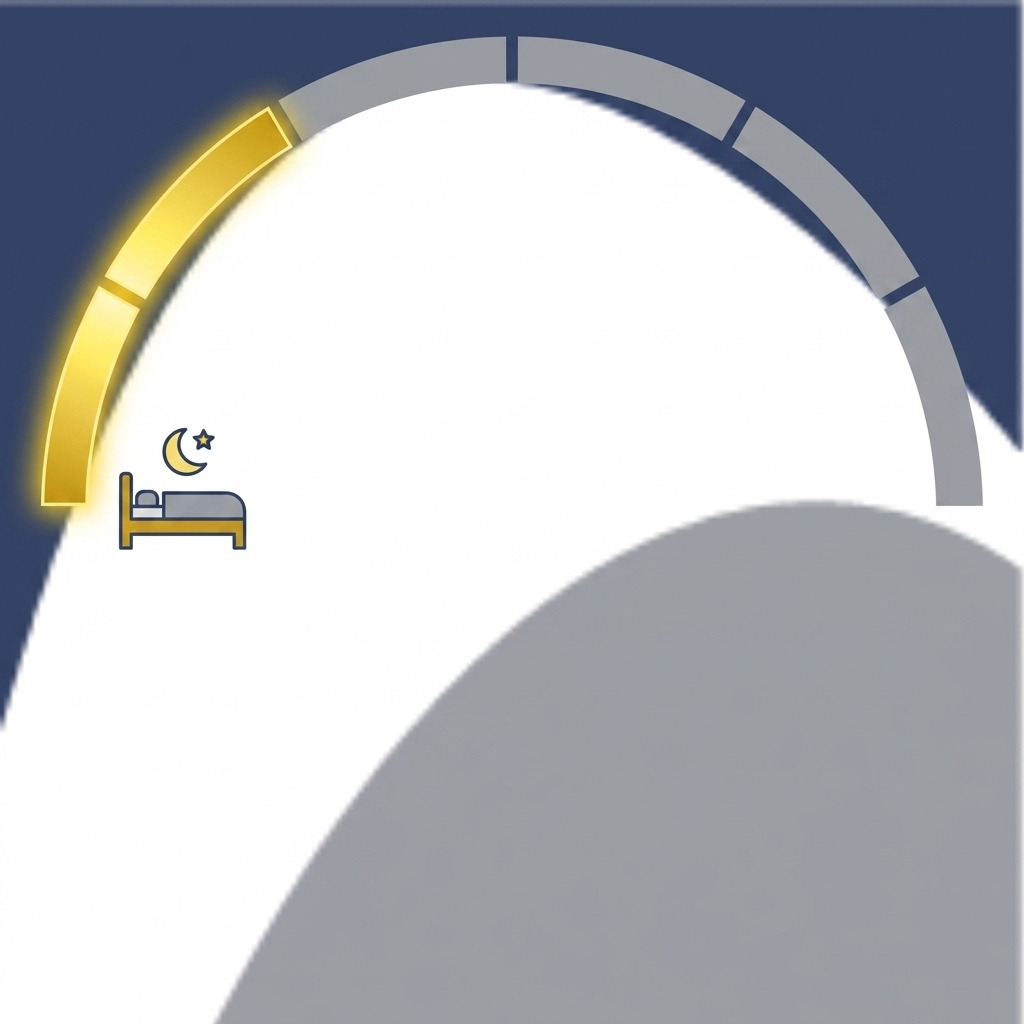
Deep slow-wave sleep is more concentrated in the first third of the night, which is why episodes from partial awakening from deep sleep often cluster earlier rather than near morning. [2][5]
This timing detail can be reassuring: an event that reliably happens soon after bedtime is often consistent with deep-sleep arousal phenomena—though it still deserves evaluation if it’s frequent, unsafe, or atypical. [2][3][5]
In many people, reducing sleep disruption and stabilizing schedules can meaningfully reduce episodes over time.
Is Confusional Arousal Dangerous?
Most episodes are not harmful—but safety matters. Most episodes aren’t medically dangerous by themselves and can be more alarming to observers than to the person experiencing them. The main concern is accidental injury (falling, bumping into furniture) or—less commonly than in sleepwalking—unsafe wandering. [2][3][5]
In day-to-day life, that can look like a child standing unsteadily in bed, an adult reaching for a nightstand and knocking over a lamp, or someone becoming briefly agitated when a partner tries to physically restrain them. The goal is to reduce opportunities for injury, not to “force wakefulness.” [2][3][5]
When to contact a clinician promptly—common guidance emphasizes evaluation for:
- New onset in adulthood without an obvious trigger
- Escalating frequency, aggression, or any injury risk
- Suspicion of another condition (OSA, seizures, medication effects) [2][3][5]
Safety planning and timely evaluation are the priorities when episodes are frequent, changing, or risky.
How Confusional Arousals Are Diagnosed
What your clinician will ask: Diagnosis often starts with a detailed history, including timing (often early night), frequency, typical behaviors, recall the next day, recent sleep loss/schedule changes/illness/alcohol/sedatives, and family history of parasomnias. [2][3]
It’s also common for clinicians to ask what happens around the event: Was the person hard to console? Did they appear “not themselves”? How long did it last? Those details can help distinguish confusional arousals from other nighttime events that need different workups. [2][3][5]
At-home tracking that can help: A sleep diary (bedtime/wake time, naps, alcohol, illness, stress), partner observations, and in some cases a safely recorded bedroom video may help clarify behaviors. If you do record a video, keep safety and privacy in mind and focus on capturing general behavior and timing—not on provoking or prolonging the episode. [2][5]
When a sleep study may be recommended: When there’s concern for OSA, the diagnosis is unclear or events are atypical, or episodes are dangerous or persist despite improved sleep routines. [2][3]
Clear descriptions, simple tracking, and targeted testing help confirm the diagnosis and uncover treatable contributors.
Treatment Options for Confusional Arousal
Overview: Start with stabilizing sleep and safety; address underlying sleep problems next; use medication only when necessary and with specialist input.
First-line treatment: sleep hygiene + trigger control
For many people, the foundation is reducing sleep disruption and avoiding known triggers. A patient-friendly checklist that may help support stable sleep includes:
- Keeping a consistent sleep schedule
- Prioritizing adequate sleep time (reducing sleep deprivation)
- Avoiding alcohol close to bedtime and reviewing sedating medications with a prescriber
- Limiting caffeine later in the day
- Avoiding late heavy meals that may disrupt sleep
- Emptying the bladder before bed if awakenings are frequent [2][3][5]
Small changes can add up. For instance, moving bedtime earlier by even 20–30 minutes during a sleep-debt week, or setting a consistent wake time on weekends, may reduce deep-sleep “rebound” that can set the stage for partial arousals. [2][3][5] For more background: https://sleepandsinuscenters.com/blog/sleep-hygiene-and-its-impact-on-ent-disorders-key-insights
Safety steps for the bedroom (especially for kids)
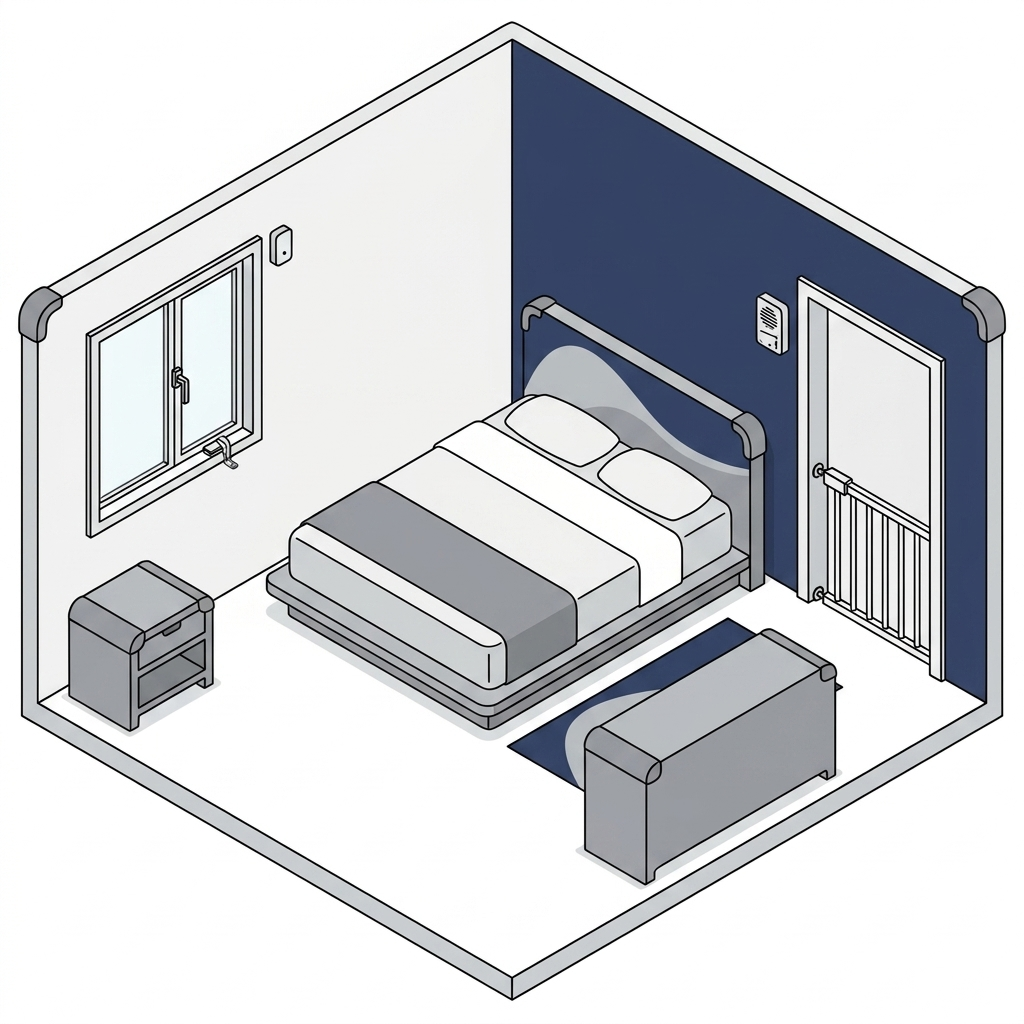
Because confusion and poor coordination can occur during episodes, safety-focused adjustments are commonly recommended as general guidance, such as:
- Clearing floor hazards and padding sharp furniture edges
- Using door alarms/locks as appropriate for safety if wandering occurs
- Gating stairs and securing windows
- Considering a lower bed or temporary mattress-on-floor setup if falls are a concern [2][3][5]
For families, it may help to make a simple safety plan ahead of time (who responds, what to do, what not to do). Having a plan can reduce panic in the moment and lower the chance of accidental injury. [2][3][5]
Treat underlying conditions (often the “missing piece”)
When sleep fragmentation drives events, addressing contributors may reduce episodes. Common examples include evaluation for OSA when symptoms fit, and managing other sources of disrupted sleep such as pain, reflux, or nasal congestion. [2][3] Learn more: https://sleepandsinuscenters.com/snoring-sleep-apnea-treatment
This is especially important in adults with new or worsening episodes: the parasomnia may be a signal that sleep is being repeatedly interrupted, even if the person doesn’t fully wake and remember it. [2][3]
Behavioral strategies that may be used in some cases
For some children with predictable timing, scheduled awakenings (briefly waking the child before the typical event time) may reduce episodes, usually with clinician guidance. This approach is often used as a short-term experiment—aimed at breaking up the pattern—rather than as a permanent nightly routine. [2][5]
Medications (reserved for certain situations)
Medication is generally not first-line. It may be considered when episodes are frequent, injurious, or significantly disruptive—typically under sleep specialist guidance and based on individual risks and comorbidities. [2][3]
Prognosis (What to Expect Long-Term)
Children: Many children improve as they get older, likely due to changes in deep sleep and nervous system maturation. If a child is otherwise healthy, growing well, and the episodes are infrequent and safe, families are often able to manage with routine, reassurance, and basic bedroom safety steps. [1][2][3][5]
Adults: In adults, episodes may persist when triggers remain (sleep loss, alcohol/sedatives, untreated OSA). OSA may contribute to or worsen confusional arousals in some individuals. Persistent or hazardous cases often benefit from specialist input. [2][3][5]
The encouraging part is that when a clear trigger is identified—like chronic sleep restriction or untreated sleep apnea—addressing it can be a practical path toward fewer episodes. [2][3]
Most children outgrow episodes; in adults, reducing triggers and treating sleep disorders can lead to meaningful improvement.
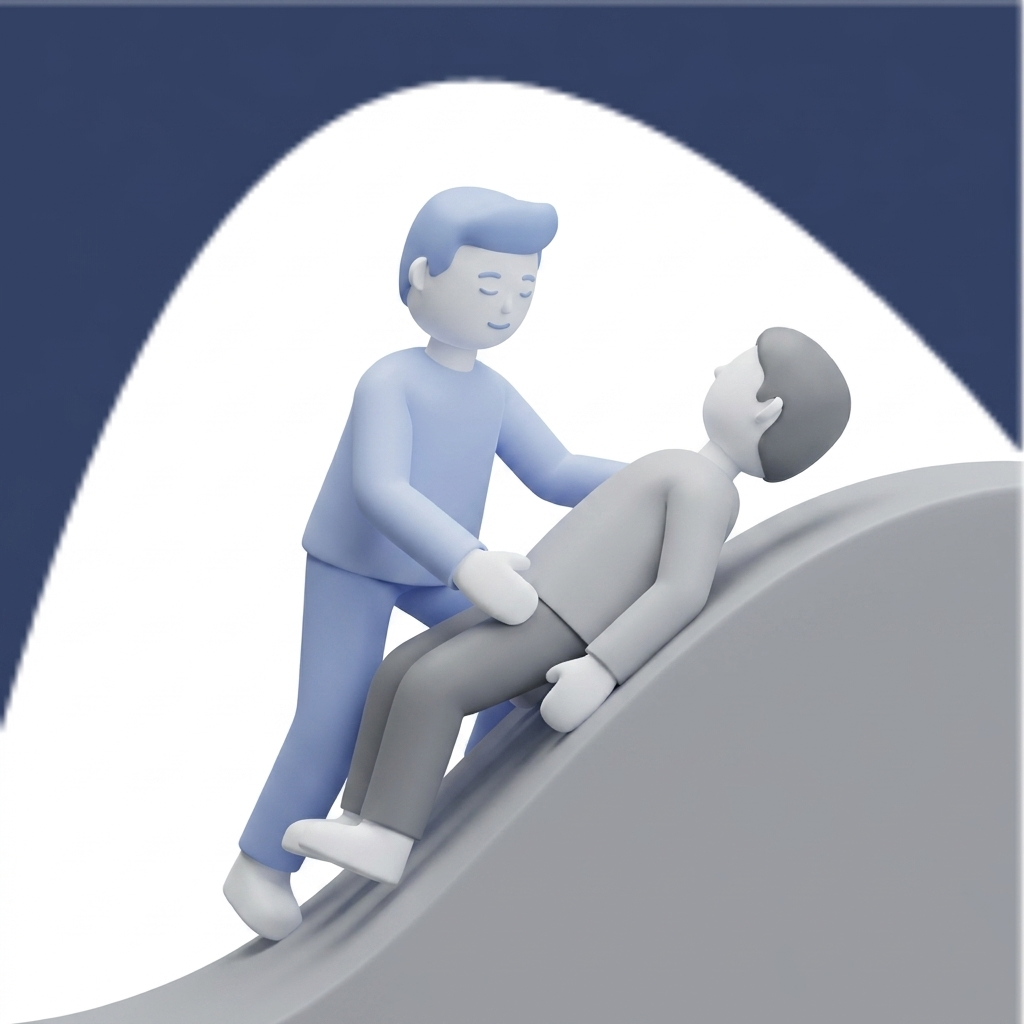
Tips for Parents and Partners: What To Do During an Episode
Do’s (general safety suggestions):
- Stay calm, keep lights low, and speak softly
- Gently guide the person back to bed if it’s safe to do so
- Focus on injury prevention (block stairs, remove hazards) [3][5]
A helpful mindset is “protect, don’t persuade.” You’re aiming to keep the person safe until the episode passes and they naturally settle back into sleep. [3][5]
Don’ts (general safety suggestions):
- Don’t shake, shout, or startle them awake
- Don’t argue or demand explanations—during the event, the brain may not be fully awake and reasoning may be impaired [3][5]
Think safety first, calm second, and let the episode pass without confrontation.
FAQs About Confusional Arousals
How long do confusional arousals last? Many last a few minutes, though some can be longer. Episodes often end with the person returning to sleep. [2][3][5]
Will I (or my child) remember it in the morning? Often there is little to no memory of the episode. [2][3][5]
Do confusional arousals mean there’s a mental health disorder? Not necessarily. These are classified as NREM sleep-related events rather than a mental health diagnosis, though stress and sleep disruption can influence sleep quality. [2][3][5]
Can alcohol or sleep aids trigger confusional arousals? They can in some people, because they may fragment sleep or alter arousal thresholds. Learn more: https://sleepandsinuscenters.com/blog/alcohol-and-sleep-apnea-what-are-the-risks [2][3][5]
Are confusional arousals a type of seizure? They are typically a parasomnia, not a seizure—but some seizure disorders can mimic nighttime events. A clinician may consider further evaluation when events are atypical or concerning. [2][3]
When should I see a sleep specialist? Consider evaluation if events are frequent, worsening, involve injury risk, or begin suddenly in adulthood. Guidance: https://sleepandsinuscenters.com/blog/when-to-see-an-ent-for-sleep-problems [2][3][5]
Can sleep apnea contribute to confusional arousals? OSA may contribute to or worsen confusional arousals in some individuals by increasing arousals and sleep fragmentation. [2][3]
What’s the best way to prevent episodes? Prevention typically centers on consistent sleep, avoiding sleep deprivation, reducing triggers (including alcohol/sedatives when relevant), and addressing contributing sleep disorders. [2][3][5]
Good sleep habits plus treating any underlying sleep disorder is the most reliable prevention strategy.
When to Seek Help
If episodes are frequent, escalating, creating safety concerns, or you suspect sleep apnea, scheduling an evaluation with a sleep professional can help clarify what’s happening and what options fit your situation. For additional guidance: https://sleepandsinuscenters.com/blog/when-to-see-an-ent-for-sleep-problems
If you’d like help sorting out triggers, safety steps, or whether a sleep study is appropriate, you can book an appointment with Sleep and Sinus Centers of Georgia here: https://www.sleepandsinuscenters.com/
Medical disclaimer: This article is for educational purposes only and does not replace personalized medical advice, diagnosis, or treatment. If you’re worried about safety, seizures, breathing pauses during sleep, or sudden changes in nighttime behavior, seek medical care promptly.
This article is for educational purposes only and is not medical advice. Please consult a qualified healthcare provider for diagnosis and treatment.
References
[1] Singh S. Parasomnias: A Comprehensive Review (2018). PMC. https://pmc.ncbi.nlm.nih.gov/articles/PMC6402728/
[2] Mainieri G. Diagnosis and Management of NREM Sleep Parasomnias (2023). PMC. https://pmc.ncbi.nlm.nih.gov/articles/PMC10093221/
[3] Cleveland Clinic. Confusional Arousals (updated 2024). https://my.clevelandclinic.org/health/diseases/confusional-arousals
[4] Irfan M. NonREM Disorders of Arousal and Related Parasomnias (2021). ScienceDirect. https://www.sciencedirect.com/science/article/pii/S1878747923011856
[5] Sleep Foundation. Confusional Arousal (web resource). https://www.sleepfoundation.org/parasomnias/confusional-arousal
Don’t let allergies slow you down. Schedule a comprehensive ENT and allergy evaluation at Sleep and Sinus Centers of Georgia. We’re here to find your triggers and guide you toward lasting relief.