Can a Deviated Septum Cause Sleep Problems? Symptoms, Sleep Apnea Risk, and Treatment Options
If you’re tossing and turning, waking up with a dry mouth, or hearing complaints about your snoring, it’s reasonable to wonder: can a deviated septum cause sleep problems? For many people, a deviated septum may contribute—especially when nasal blockage feels worse at night and nudges the body toward mouth breathing.
Think of your nose like a two-lane road for airflow. If the “divider” (the septum) is pushed to one side, you may end up with one lane that’s partly closed. In the daytime you might compensate without noticing much. At night—when tissues can swell and you’re less aware—traffic backs up.
Below is a patient-friendly guide to how a deviated septum can affect sleep, how it relates to snoring and obstructive sleep apnea (OSA), and which treatment options may help.
Quick Answer: Can a Deviated Septum Cause Sleep Problems?
Yes—nasal blockage may disrupt sleep
Can a deviated septum cause sleep problems? It can, because a crooked or off-center septum may narrow one side of the nose (or both), increasing airflow resistance. During sleep, that added resistance may contribute to:
- Snoring and noisy breathing
- Fragmented sleep (micro-awakenings you may not remember)
- Dry mouth and sore throat (often from mouth breathing at night)
- Feeling unrefreshed in the morning
A common real-life pattern: you fall asleep fine, then wake at 2–4 a.m. with a “stuffy” nose, flip from side to side trying to find the position where breathing feels easiest, and wake up tired despite “enough hours.”
Important note: it may contribute to OSA, but isn’t the only cause
A deviated septum can be part of the picture, but it’s rarely the only reason someone has sleep apnea. Treating nasal obstruction often improves comfort, sleep quality, and snoring—yet OSA may still require targeted treatment. As one clinician-style way of putting it: “Better nasal breathing can make sleep easier—but it doesn’t always fix what’s happening lower in the throat.”
In short, a deviated septum may contribute to snoring and disrupted sleep, but it’s usually one piece of a larger puzzle.

What Is a Deviated Septum (and Why It Matters at Night)?
Septum basics—what it is and what “deviated” means
The nasal septum is the wall of cartilage and bone that divides the nose into left and right air passages. When it’s “deviated,” it’s shifted off center. This can happen from growth patterns, injury, or previous nasal trauma (even something as simple as a childhood bump that was never evaluated). Some people also have a deviation plus other narrowing issues—so the overall “space” for airflow is smaller than it looks from the outside.
Why symptoms often feel worse when you lie down
- When you lie down, normal blood flow changes can increase nasal tissue swelling.
- Your nose naturally cycles between sides (the “nasal cycle”), which can feel more dramatic when one side is already narrow.
- During sleep, you may tolerate reduced airflow less comfortably—especially in deeper sleep stages.
If this sounds familiar, you may also relate to feeling like you can’t breathe through your nose at night (helpful read here: https://sleepandsinuscenters.com/blog/cant-breathe-through-nose-at-night).
Nighttime feels worse because normal swelling and the nasal cycle can magnify preexisting narrowing.

How a Deviated Septum May Disrupt Sleep (Mechanisms Explained Simply)
Nasal obstruction → snoring vibrations
Snoring often comes from vibration of soft tissues as air squeezes through a narrowed passage. When the nose is blocked, airflow becomes more turbulent—like wind whistling through a partially closed window. Some people snore primarily because nasal breathing is restricted—this is commonly described as deviated septum snoring.
A practical clue: if your snoring is noticeably worse during allergy seasons or when you’re congested, nasal resistance may be playing a bigger role.
Nasal blockage → mouth breathing and a less stable airway
When nasal breathing is difficult, the body often defaults to mouth breathing at night. Mouth breathing can change jaw and tongue position and may make the upper airway more likely to narrow during sleep. Research reviews describe associations between nasal obstruction, mouth breathing, and sleep-disordered breathing/OSA risk.¹
In plain terms, a blocked nose can “push” airflow to a route that’s less structurally stable during sleep for some people.
Why nasal blockage can make CPAP harder to use
For people already diagnosed with OSA, nasal obstruction can be a major comfort barrier. Nasal congestion while using CPAP (or a feeling of not getting enough air through the nose) can lead to:
- Mask removal overnight
- Mouth leak and dryness
- Reduced nightly use
Evidence reviews also discuss how nasal obstruction can reduce CPAP tolerance and adherence.¹ Even small improvements in nasal airflow can make CPAP feel less “fight-y,” especially with nasal masks.
Nasal resistance can set off a chain reaction—more turbulence, more mouth breathing, and a less stable airway during sleep.
Symptoms: Signs Your Deviated Septum May Be Affecting Your Sleep
Nighttime symptoms
- Trouble breathing through one side of the nose (often worse when lying on that side)
- Waking up congested
- Dry mouth, sore throat, or bad breath in the morning (often from mouth breathing)
- Restless sleep or frequent awakenings
Some people describe a “mini panic” moment: waking up and immediately opening the mouth to get air, then falling back asleep once breathing feels easier.
Snoring-related symptoms
- Loud or worsening snoring
- A bed partner notices choking, gasping, or breathing pauses (a major red flag)
Daytime symptoms that can point to poor sleep quality
- Morning headaches
- Fatigue, brain fog, irritability
- Excessive daytime sleepiness
Clinical tip (education-focused): If you have snoring plus significant daytime sleepiness, the problem may be more than “just your nose,” and sleep apnea testing may be worth discussing with a clinician.
If nighttime nasal blockage and snoring align with daytime fatigue, consider that more than one factor may be involved.

Deviated Septum and Sleep Apnea: What the Research Says About Risk
Septal deviation is linked to a higher prevalence of OSA
In one review, people with septal deviation had a 4.39-fold higher prevalence of obstructive sleep apnea compared with those without septal deviation, suggesting an association rather than proof of causation.¹ This doesn’t mean a deviated septum causes OSA in every case, but it supports a meaningful link.
A helpful way to interpret that statistic: septal deviation may be a risk amplifier—especially in someone who already has other OSA risk factors.
Why a deviated septum may raise OSA risk
When nasal breathing becomes difficult, you may shift toward mouth breathing and higher airway resistance—factors that can contribute to upper-airway collapse in vulnerable sleepers. This is one reason deviated septum and sleep apnea are often discussed together.
Who may be at higher OSA risk
- Male sex, age over 40
- Higher BMI or larger neck circumference
- High blood pressure, diabetes, or atrial fibrillation history
- Family history of OSA
Septal deviation is associated with OSA risk, but association does not equal causation.
When Sleep Problems Might Be Something More Than a Deviated Septum
Red flags for obstructive sleep apnea
- Witnessed pauses in breathing
- Gasping or choking during sleep
- Severe daytime sleepiness or drowsy driving
If those are present, it’s safer to assume there may be more going on than nasal blockage alone until evaluated by a clinician.
Other nasal or airway issues that can “stack” with septal deviation
A deviated septum often overlaps with other contributors to blockage, such as:
- Turbinate hypertrophy (enlarged turbinates)
- Allergic rhinitis or chronic inflammation
- Sinus issues
- Nasal valve collapse
This “stacking” effect matters because treatment may need to address more than one contributor to meaningfully improve nighttime breathing.
Medication and lifestyle factors that may worsen snoring/OSA
- Alcohol close to bedtime
- Sedatives
- Weight gain
- Sleeping on the back
Multiple anatomic and lifestyle factors can stack together, so a broad look often helps.
How Doctors Evaluate a Deviated Septum Causing Sleep Issues
ENT evaluation
An ENT visit typically includes a nasal exam and may include nasal endoscopy to assess:
- Septal deviation location/severity
- Turbinate size
- Signs of inflammation or other obstruction sources
Patients often find it reassuring to hear whether the problem looks mostly structural (shape/narrowing) versus inflammatory (swelling), because those pathways can respond to different treatments.
Sleep apnea evaluation
Because nasal blockage and OSA can overlap, sleep testing may be recommended based on symptoms and risk factors. Options often include:
- Home sleep testing (convenient for many people)
- In-lab sleep study (more detailed monitoring)
What results mean (simple glossary)
A common measure in sleep testing is the AHI (Apnea-Hypopnea Index), which reflects how often breathing disruptions occur per hour. For a plain-English breakdown, see: https://sleepandsinuscenters.com/blog/ahi-score-explained-understanding-your-sleep-apnea-severity
A targeted exam plus sleep testing when indicated can clarify whether the nose, the throat, or both are driving symptoms.

Treatment Options (Stepwise): From Conservative Relief to Surgery
At-home and medical treatments to improve nasal airflow
Depending on the cause of blockage (structure vs inflammation), approaches may include:
- Saline rinses and humidification
- Allergy management when relevant
- Nasal steroid sprays when inflammation is part of the problem
- Caution with short-term decongestant sprays due to rebound congestion in some users
These are educational examples—an individualized plan depends on your anatomy and symptoms.
Devices that may help some patients
Some people get temporary relief from:
- External nasal strips
- Internal nasal dilators
These may improve airflow enough to reduce snoring for certain sleepers, but results vary. If they help, that can be a useful hint that nasal resistance is a meaningful contributor—even if it’s not the only one.
Septoplasty (surgery): when it’s considered and what it can improve
If the septum’s shape is a primary cause of obstruction, septoplasty may be considered. Septoplasty is designed to straighten the septum and open nasal airflow.
Potential sleep-related benefits may include:
- Easier nasal breathing at night
- Reduced snoring and better sleep quality in many patients²
However, expectation-setting matters: even when breathing improves, septoplasty may improve symptoms and some OSA measures in selected patients, but it rarely cures OSA on its own.² That’s why OSA evaluation remains important when symptoms suggest it.
If you’re exploring next steps, you can also read about deviated septum relief, including how evaluation and treatment planning typically work: https://sleepandsinuscenters.com/deviated-septum-relief
Septoplasty and OSA risk reduction (what studies suggest)
In one review, septoplasty was associated with lower OSA risk (HR 0.71), but this does not prove surgery prevents OSA in all patients.² In plain language, that points to a meaningful association at a population level, though it doesn’t guarantee OSA prevention or resolution for every individual.
Combined procedures (common add-ons)
If there are multiple blockage sources, septoplasty may be paired with treatments such as turbinate reduction or correction of other nasal narrowing issues.
Many people do best with a combination of nasal care and sleep-focused therapy rather than a single fix.
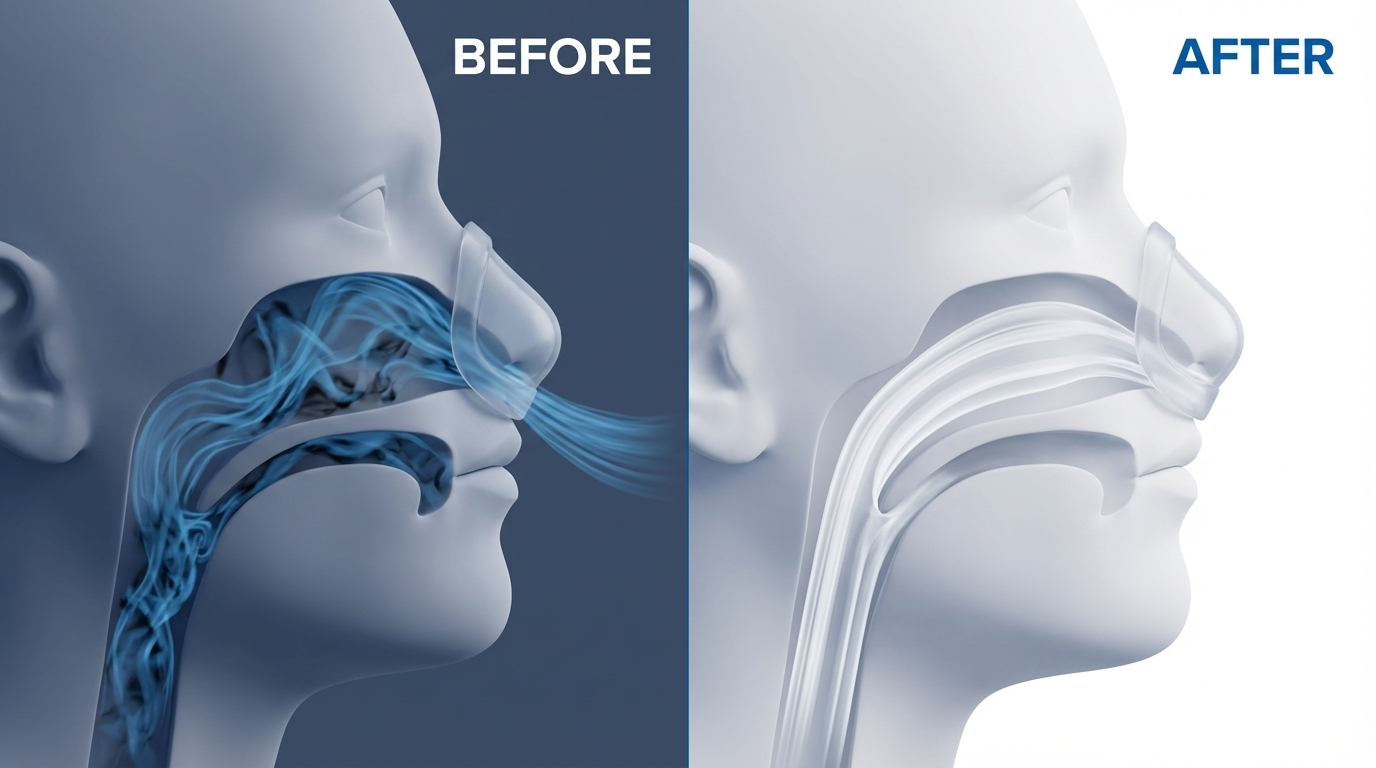
If You Already Use CPAP: How Treating Nasal Obstruction Can Help
Why nasal airflow matters for comfort and adherence
If you’ve ever felt like CPAP “pushes against” a blocked nose, you’re not alone. Studies and reviews describe nasal obstruction as a factor that can reduce CPAP tolerance and nightly use.¹ Improving nasal airflow can make CPAP feel easier—especially with nasal masks.
Practical CPAP comfort strategies
- Heated humidification settings
- Mask choice (nasal vs full-face depending on mouth leak and comfort)
- Treating allergies or chronic rhinitis that worsens congestion
When to consider ENT evaluation to support CPAP success
If you consistently feel blocked with CPAP, remove the mask overnight, or struggle with mouth leak/dryness, addressing nasal obstruction can be a helpful part of improving comfort.
Improving nasal airflow can make CPAP feel more tolerable, which often improves consistency.
Lifestyle Tips for Better Sleep When You Have a Deviated Septum
Sleep position strategies
- Side-sleeping can reduce snoring for many people
- Head-of-bed elevation may help some people who feel more congested lying flat
Bedroom environment
- Consider keeping bedroom humidity at a comfortable level
- Reduce allergens when relevant (dust, pet dander, etc.)
Habits that may reduce snoring
- Avoid alcohol near bedtime
- Aim for consistent sleep timing
- Weight management (when applicable) can improve snoring and OSA risk
Small nightly habits can add up, especially when combined with medical care.
FAQs
Can a deviated septum cause insomnia?
Can a deviated septum cause sleep problems that feel like insomnia? It may contribute—especially if congestion leads to repeated awakenings or discomfort. But insomnia can also have many other causes, so a broader evaluation may be helpful.
Can a deviated septum cause snoring without sleep apnea?
Yes. Deviated septum snoring can occur even without OSA. That said, loud snoring plus gasping or witnessed pauses should raise concern for sleep apnea.
Will fixing a deviated septum stop snoring?
It can reduce snoring for some people—especially if nasal obstruction is a major driver. If snoring is caused by multiple factors (weight, soft palate anatomy, alcohol, sleep position), additional treatments may still be needed.
Will septoplasty cure sleep apnea?
Usually not. Evidence suggests septoplasty can improve symptoms and may improve some OSA measures, but it rarely cures OSA on its own.² Many patients still need OSA-specific treatment.
How do I know if I need a sleep study or just an ENT visit?
If you have loud snoring, witnessed apneas, choking/gasping, or significant daytime sleepiness, sleep testing is often worth discussing. If chronic nasal blockage is a major complaint, an ENT evaluation can clarify the anatomy and options.
How long does it take to notice sleep improvement after septoplasty?
Recovery and perceived improvement vary by individual and by whether swelling, allergies, or other nasal issues are present. Many people notice gradual improvement as healing progresses.
What if my nose is blocked on only one side at night—is that a deviated septum?
It can be, but it can also relate to the normal nasal cycle, turbinate swelling, allergies, or other structural narrowing. An exam helps sort out the cause.
When to Seek Help (Clear Next Steps)
See an ENT if:
- You have chronic nasal obstruction, frequent nighttime mouth breathing, or recurring sinus/nasal issues
- You’re wondering again and again, can a deviated septum cause sleep problems in your specific case
Seek prompt evaluation for possible sleep apnea if:
- Someone witnesses pauses in breathing
- You wake up choking or gasping
- You have severe daytime sleepiness or drowsy driving
If you suspect both nasal obstruction and sleep apnea, addressing them together is typically most effective.
Summary / Key Takeaways
- Can a deviated septum cause sleep problems? Yes—by increasing nasal resistance, promoting mouth breathing, and contributing to snoring and fragmented sleep.
- Research links septal deviation with higher OSA prevalence (4.39-fold), an association rather than proof of causation.¹
- Septoplasty can improve airflow, snoring, and sleep quality, and has been associated with lower OSA risk (HR 0.71), but it rarely cures OSA alone.²
- If symptoms point to OSA, testing matters—treating nasal obstruction and sleep-disordered breathing together often works best.
If you’d like help clarifying whether your symptoms are coming from nasal obstruction, sleep apnea, or both, you can book an appointment at Sleep and Sinus Centers of Georgia: https://www.sleepandsinuscenters.com/
References
1. PubMed Central (2021). Review discussing nasal obstruction, septal deviation, mouth breathing, CPAP tolerance, and OSA association (includes OSA prevalence comparison). https://pmc.ncbi.nlm.nih.gov/articles/PMC8494085/
2. PubMed Central (2022). Review discussing septoplasty outcomes, symptom/snoring improvement, OSA risk association (HR ~0.71), and limitations (may improve but does not cure OSA). https://pmc.ncbi.nlm.nih.gov/articles/PMC9736816/
This article is for educational purposes only and is not medical advice. Please consult a qualified healthcare provider for diagnosis and treatment.
Don’t let allergies slow you down. Schedule a comprehensive ENT and allergy evaluation at Sleep and Sinus Centers of Georgia. We’re here to find your triggers and guide you toward lasting relief.