
Bad Nose Jobs: Causes, Signs, and How to Fix a Botched Rhinoplasty
The idea of a “bad” outcome after rhinoplasty can be stressful—especially because healing takes time, and it’s not always obvious what’s normal swelling versus a true problem. Some concerns are purely cosmetic (shape, symmetry, tip position). Others affect function and safety (like breathing). This guide breaks down what unsatisfactory rhinoplasty outcomes can look like, why they happen, and how specialists typically evaluate and address them—without rushing the timeline.

What Counts as a “Bad Nose Job”?
Bad aesthetic result vs. true complication (function + safety)
A disappointing result can fall into two broad categories:
- Aesthetic dissatisfaction: The nose may look crooked, uneven, over-refined, or not aligned with the patient’s goals.
- Functional problems: Breathing can worsen due to changes in internal support, swelling, scarring, or nasal valve weakness.
A helpful way to think about it: swelling can be like looking at your nose through a “foggy lens.” Early on, the tissues can temporarily hide (or imitate) contour issues, especially at the tip. It’s also important to know that early swelling can mimic problems. Tip swelling, unevenness, and stiffness can linger for months, and refinement often continues for close to a year.
Primary rhinoplasty vs. revision rhinoplasty (what’s different)
A first-time (primary) rhinoplasty usually has more native structure to work with. Revision rhinoplasty is different because the surgeon may be working with:
- More scar tissue
- Weakened or missing cartilage support
- A higher likelihood of breathing-related concerns
That’s why revision planning often focuses on structure and airflow, not just appearance. As one clinician might summarize it: “In revisions, we’re often rebuilding the framework first—then fine-tuning the shape.”
- Bottom line: It’s normal for swelling to obscure early results; surgeons differentiate temporary changes from structural issues over time.
How Common Are Bad Nose Jobs, Really?
Revision rates after surgical rhinoplasty
Despite how often “botched” stories circulate online, true revision rates after primary rhinoplasty are generally low. Published studies report revision rates that vary by definition, patient population, and follow-up length. Some large analyses suggest primary septorhinoplasty revision rates around 3.1%–3.5%, while other series—especially those including complex referral populations or broader definitions of “revision”—report ranges up to 5%–15% (Spataro, 2016; Heilbronn, 2020; Neaman, 2013; Rettinger, 2008).
Why the variation? Research notes several reasons rates can look different across studies:
- Different definitions of “revision” (touch-up vs. major reconstruction)
- Referral patterns (revision-heavy practices may see more complex cases)
- Under-reporting and differences in follow-up time (Rettinger, 2008; Heilbronn, 2020; Spataro, 2016)
In other words: an internet search can make bad outcomes feel common, but the data suggests most patients don’t need a second surgery.
Nonsurgical rhinoplasty (filler) safety—low risk, but not “no risk”
Nonsurgical rhinoplasty using hyaluronic-acid filler is often described as low downtime, but it is not risk-free. Published reviews report low overall complication rates, but rare serious vascular complications can occur. Reported estimates in the literature include:
- Vascular occlusion ~0.35%
- Skin necrosis ~0.08%
- Vision loss ~0.09% (DeVictor, 2021)
- Bottom line: Both surgical and nonsurgical approaches have risks; the best numbers are estimates that depend on how studies define and track complications.
Signs of a Bad Nose Job (What Patients Notice)
When people search for “bad nose job signs,” they’re usually noticing changes in shape, breathing, or both. Many patients describe it as, “Something feels off,” even if they can’t name the exact feature—and that’s a valid reason to get checked.

Cosmetic signs (shape and symmetry concerns)
Concerns after rhinoplasty may include:
- Crooked nose or a new deviation
- Over-rotated (“piggy”) tip
- Droopy tip (tip ptosis)
- Dorsal hump not addressed—or an over-reduced “scooped” bridge
- Pinched tip or narrow mid-nose
- Asymmetrical nostrils
- Visible irregularities, dents, or shadowing
- Polybeak deformity (fullness above the tip)
Some of these can be swelling-related early on, while others suggest structural issues that may persist. For example, a subtle bump on the bridge at 3–6 weeks may soften as swelling drops, while a consistently pinched middle third with breathing changes may point to support problems.

Breathing and function signs (often the most important)
Breathing concerns are often what bring patients in for evaluation after rhinoplasty complications. Common symptoms include:
- New or worse nasal obstruction (one or both sides)
- Nasal valve collapse (nostrils can pull inward when inhaling)
- Mouth breathing, snoring worsening, or reduced exercise tolerance
- Dryness/crusting or frequent congestion
- Whistling (may suggest a septal perforation in some cases)
Function often matters more than the mirror: a nose can look “okay,” but if airflow is reduced, quality of life can suffer.
If you want to understand this better, see overviews of nasal valve collapse and how nasal valve collapse is treated: https://sleepandsinuscenters.com/blog/how-ent-doctors-fix-nasal-valve-collapse
Because obstruction can be related to a deviated septum, you can read more about deviated septum relief here: https://sleepandsinuscenters.com/deviated-septum-relief
Skin/sensation signs that may be normal vs. concerning
Some post-op sensations can be expected early:
- Temporary numbness or altered sensation (often improves with time)
- Temporary skin issues (including acne) have been reported in complication series (Heilbronn, 2020; Neaman, 2013)
In published complication reviews, issues like acne and numbness are reported—not because surgery “causes acne” in everyone, but because temporary skin and nerve changes can happen during recovery (Heilbronn, 2020). Persistent, worsening, or expanding skin changes should be evaluated, especially after filler.
- Bottom line: If something feels off—especially with breathing—get evaluated; many issues are treatable once the cause is clear.

Is It Too Soon to Judge? Normal Healing Timeline vs. Red Flags
What can look “wrong” early but often improves
In the first weeks to months, it’s common to see:
- Swelling (often more noticeable at the tip)
- Mild asymmetry as swelling resolves unevenly
- Temporary stiffness and numbness
Early healing rarely moves in a straight line. One week you may feel more open, the next week more congested—often because internal swelling shifts during recovery.
For a deeper expectation-setting resource, see this nasal surgery recovery timeline: https://sleepandsinuscenters.com/blog/how-long-does-nasal-surgery-recovery-take
When to contact your surgeon (non-emergency)
Educationally, many surgeons want to hear about issues such as:
- Persistent obstruction that doesn’t gradually improve
- Asymmetry that appears to worsen as swelling should be settling
- Ongoing pain, recurrent bleeding, or possible infection symptoms
It can help to bring specifics: which side feels blocked, what time of day it’s worse, and whether anything temporarily improves it (saline, humidification, position changes).
When to seek urgent/emergency care
Some symptoms are time-sensitive.
- After filler rhinoplasty: sudden severe pain, skin turning pale/blue, blistering, rapidly worsening swelling, or any vision changes may indicate vascular compromise and require urgent evaluation (DeVictor, 2021).
- After surgery: fever with spreading redness, severe bleeding, or sudden breathing difficulty should be urgently assessed.
- Bottom line: Give healing time, but don’t ignore red flags—contact your surgeon if concerns persist or escalate.
Causes of Bad Nose Jobs (Why Rhinoplasty Sometimes Goes Wrong)
Surgical technique and structural support issues
Many appearance and breathing concerns stem from support changes, such as:
- Over-resection of cartilage/bone → collapse, pinching, valve problems
- Under-correction or asymmetric correction
- Graft/implant visibility, shifting, or warping (when used)
A practical example: removing too much support from the mid-nose can narrow the internal airway. The outside may look “smaller,” but the inside can behave like a soft straw that collapses when you try to inhale.
Breathing problems that weren’t fully addressed
Some patients had breathing vulnerabilities before surgery that weren’t fully corrected, such as:
- Septal deviation
- Turbinate enlargement
- Unrecognized nasal valve weakness
Studies describing revision patterns note that revision drivers commonly include deformity, functional breathing issues, and dissatisfaction (Rettinger, 2008; Neaman, 2013).
Healing and patient-specific factors
Even with good technique, healing varies based on:
- Scar tissue behavior and skin thickness
- Prior trauma or prior surgery
- Post-op injury, premature strenuous activity, or smoking/vaping
Thicker skin, for example, can hold swelling longer—so the “final” contour may take more time to appear even when the underlying structure is sound.
Communication gaps and expectation mismatch
A result can feel like an unsatisfactory rhinoplasty outcome when expectations and anatomy don’t align:
- Computer imaging that suggests changes that aren’t structurally safe
- Goals that don’t match what the skin/structure can support
- Lack of screening when body image concerns may be a factor
Many surgeons view this as part of good planning: clarifying what’s possible, what’s safe, and what would require tradeoffs.
Nonsurgical rhinoplasty causes (filler-related)
Filler issues can relate to:
- Poor injection technique or wrong plane
- Overfilling (creating a wide or heavy bridge)
- Vascular occlusion risk due to nasal blood supply anatomy (rare but serious) (DeVictor, 2021)
- Bottom line: Causes range from structural over-resection to unaddressed airflow problems to individual healing responses—accurate diagnosis drives the fix.
How Doctors Evaluate an Unsatisfactory Rhinoplasty
History questions you should expect
A thorough consultation typically clarifies:
- Is the priority appearance, breathing, or both?
- When did symptoms start?
- Any post-op trauma?
- Prior operative report (if available)
It also helps to share your “top 1–2” concerns. Patients often arrive with ten worries; a good plan starts by prioritizing what affects function and what affects confidence the most.
Physical exam (what an ENT/facial plastics specialist checks)
An exam often includes:
- External shape and symmetry
- Internal exam of septum, turbinates, and scar bands
- Nasal valve testing (such as maneuvers that evaluate sidewall support)
- Overall breathing assessment
Clinicians are often looking for patterns—like whether pulling gently on the cheek improves airflow, which can hint at valve weakness.
Imaging and testing (when needed)
Some cases benefit from added evaluation:
- Nasal endoscopy to look at internal anatomy and obstruction patterns. Learn more about why nasal endoscopy is safe and how it’s used: https://sleepandsinuscenters.com/blog/is-nasal-endoscopy-safe
- CT scan when sinus disease or complex anatomy is suspected
- Bottom line: A structured exam—often including endoscopy—helps separate cosmetic concerns from airflow problems and guides next steps.
Treatment Options: How to Fix a “Bad Nose Job”
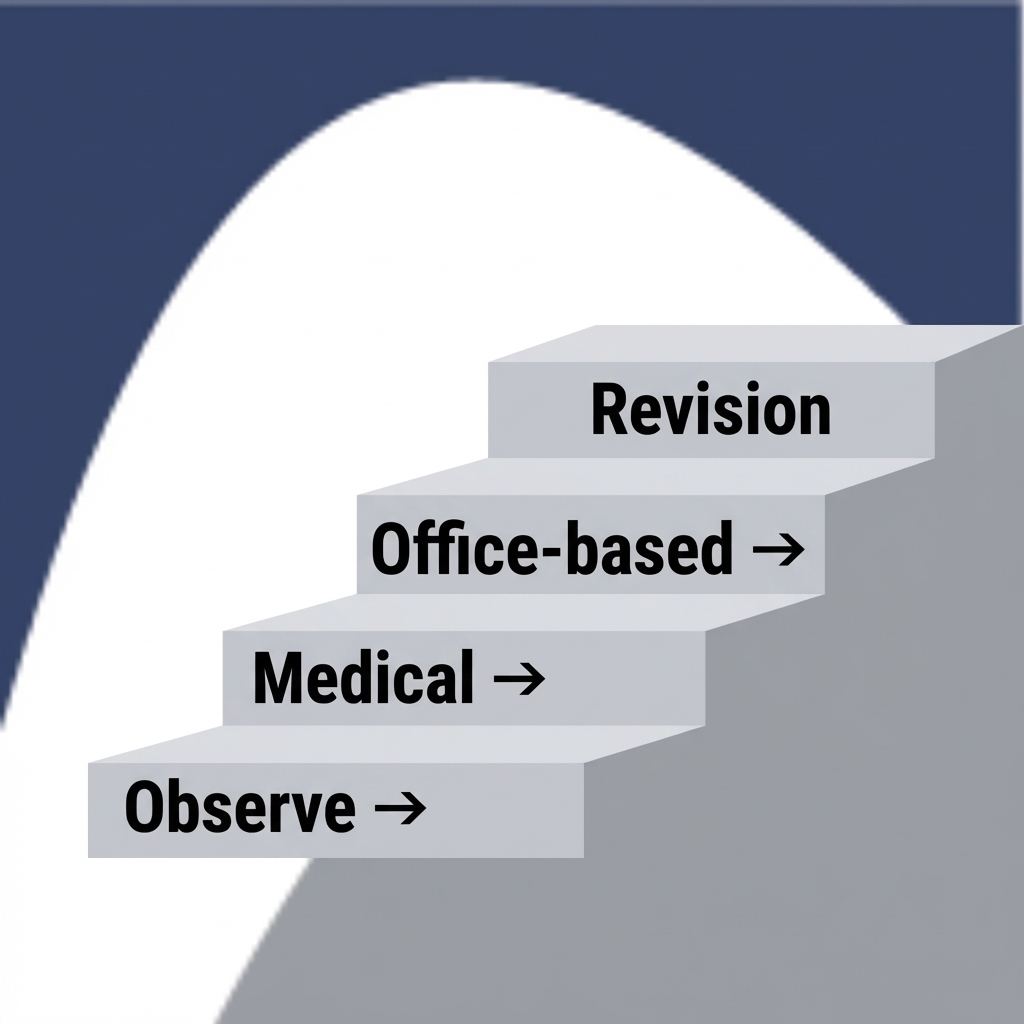
There isn’t one universal fix—treatment depends on whether the issue is swelling, inflammation, scarring, or true structural collapse.
Option 1 — Observation and time (when appropriate)
If changes appear swelling-related and trending better, observation may be part of the plan—because tissues can continue refining for many months. This can be frustrating, but it’s often protective: operating on tissue that hasn’t stabilized can increase scarring and reduce predictability.
Option 2 — Medical treatment for breathing and inflammation
When symptoms overlap with inflammation or allergies, clinicians may discuss approaches such as:
- Saline irrigations
- Topical nasal steroids (when appropriate)
- Allergy management strategies
(These are educational examples; your clinician will individualize options.)
Option 3 — Office-based or minimally invasive fixes (selected cases)
Depending on findings, some patients may be candidates for targeted treatments—such as addressing internal scar tissue/adhesions when they contribute to blockage. The goal is to match the least invasive option to the actual cause of the problem.
Option 4 — Revision rhinoplasty (surgical correction)
Revision rhinoplasty is generally considered when there is:
- Persistent structural deformity after healing
- Significant asymmetry that doesn’t improve
- Ongoing airway obstruction linked to support problems
Revision surgery often focuses on:
- Straightening/supporting the septum
- Rebuilding nasal valve support with grafts
- Refining tip/bridge contour problems
Research commonly identifies deformity, breathing problems, and dissatisfaction as major reasons people pursue revision (Rettinger, 2008; Neaman, 2013).
Option 5 — Fixing problems after nonsurgical rhinoplasty (fillers)
If hyaluronic-acid filler was used, evaluation may include whether dissolution with hyaluronidase is appropriate. When vascular compromise is suspected, time is critical—especially with skin changes or any visual symptoms (DeVictor, 2021).
- Bottom line: The best plan is stepwise—observe when safe, treat inflammation if present, and reserve revision surgery for persistent structural or airflow problems.
Lifestyle & Recovery Tips (Protect Results and Breathing)
Do’s after rhinoplasty (or revision)
In general, post-op instructions often emphasize:
- Protecting the nose from impact
- Following taping/splint and cleaning guidance
- Prioritizing sleep, hydration, and nutrition to support healing
If you’re unsure what’s allowed, ask. Small differences—like when to resume running or how to wear glasses—can matter during early healing.
Don’ts that can worsen outcomes
Common factors that can interfere with healing include:
- Smoking/vaping
- Strenuous exercise too early
- Heavy glasses without specific guidance
Breathing comfort tips while healing
Many patients are also advised to ask about:
- Saline spray/irrigation (as directed)
- Humidifier use at night
- Head elevation early in recovery
- Bottom line: Protect the nose, follow post-op guidance closely, and support healing with simple daily habits.
How to Reduce the Risk of a Bad Nose Job (Before You Commit)
How to choose the right surgeon/injector
To reduce the chance of an unsatisfactory rhinoplasty outcome, look for:
- Board certification and meaningful rhinoplasty volume
- Before/after photos with similar starting anatomy
- Comfort managing both cosmetic and functional concerns
- Experience with revision work (it often reflects deeper structural knowledge)
Questions to ask at your consult
Consider asking:
- “What are my top risks based on my anatomy?”
- “Will you address breathing (septum/valves/turbinates) if needed?”
- “What is your revision rate and why do revisions happen in your practice?”
- “What’s the plan if I’m unhappy at 12 months?”
Informed consent that’s actually informed
Even with excellent technique, revision can occasionally be necessary—revision rates are low but not zero, and healing takes time (Spataro, 2016; Heilbronn, 2020; Neaman, 2013; Rettinger, 2008).
- Bottom line: Pick a surgeon who treats function and form, ask targeted questions, and make sure timelines and tradeoffs are clear.
FAQs About Bad Nose Jobs and Botched Rhinoplasty
How do I know if my nose job is botched or just swollen?
Swelling can distort shape and symmetry for months. Many patients don’t see near-final refinement until around 1 year, especially at the tip. A structured follow-up plan helps separate temporary swelling from persistent structural issues.
What are the most common reasons people need revision rhinoplasty?
Commonly reported reasons include deformity, breathing problems, and dissatisfaction (Rettinger, 2008; Neaman, 2013).
When is the earliest I can have revision rhinoplasty?
Timing varies, but many surgeons prefer waiting until tissues stabilize (often around 12 months), unless there’s an urgent functional concern.
Can a bad nose job cause breathing problems?
Yes. Structural support changes can affect the nasal valve and airflow, and breathing complaints are a leading driver for revision (Rettinger, 2008; Neaman, 2013).
Is a liquid nose job safer than surgery?
Overall complication rates are low, but rare severe vascular events can occur with fillers, including skin necrosis and vision loss (DeVictor, 2021).
What should I bring to a revision consult?
Helpful items include pre-op photos, a timeline of symptoms, the operative report (if available), and a prioritized goal list (breathing vs. appearance).
When to See an ENT or Facial Plastic Specialist
“Functional first” approach
If breathing is worse than before surgery—or obstruction persists beyond the early healing phase—an evaluation focused on nasal airflow and structure can be useful.
What a good plan looks like
A thorough plan typically includes:
- A clear diagnosis (structural vs. swelling vs. inflammation)
- Stepwise options (medical → procedural → surgical when appropriate)
- Realistic timelines for healing and refinement
To learn more about how clinicians assess internal anatomy, here’s an overview of nasal endoscopy and safety: https://sleepandsinuscenters.com/blog/is-nasal-endoscopy-safe
- Bottom line: If breathing is part of the issue, prioritize a function-first evaluation to clarify the cause and right-sized next steps.
References
- Spataro et al., 2016. https://pmc.ncbi.nlm.nih.gov/articles/PMC5600890/
- Neaman et al., 2013. https://pubmed.ncbi.nlm.nih.gov/23277618/
- Rettinger, 2008. https://pmc.ncbi.nlm.nih.gov/articles/PMC3199839/
- Heilbronn et al., 2020. https://journals.sagepub.com/doi/full/10.1089/fpsam.2019.29007.won
- DeVictor et al., 2021. https://pubmed.ncbi.nlm.nih.gov/33588622/
This article is for educational purposes only and is not medical advice. Please consult a qualified healthcare provider for diagnosis and treatment.
Don’t let allergies slow you down. Schedule a comprehensive ENT and allergy evaluation at Sleep and Sinus Centers of Georgia. We’re here to find your triggers and guide you toward lasting relief.